Highlights
- Read the edict from the permitted position.
- Understand why Isila matters to Mauryan geography.
- Recognise megalithic remains without entering or moving them.
- Compare Brahmagiri with the separate Siddapura and Jatinga-Rameshwara edicts.
Brahmagiri near Siddapura in Molakalmuru taluk is an archaeological landscape where an Ashokan Minor Rock Edict, prehistoric settlement evidence and megalithic burials occupy the same granite country.

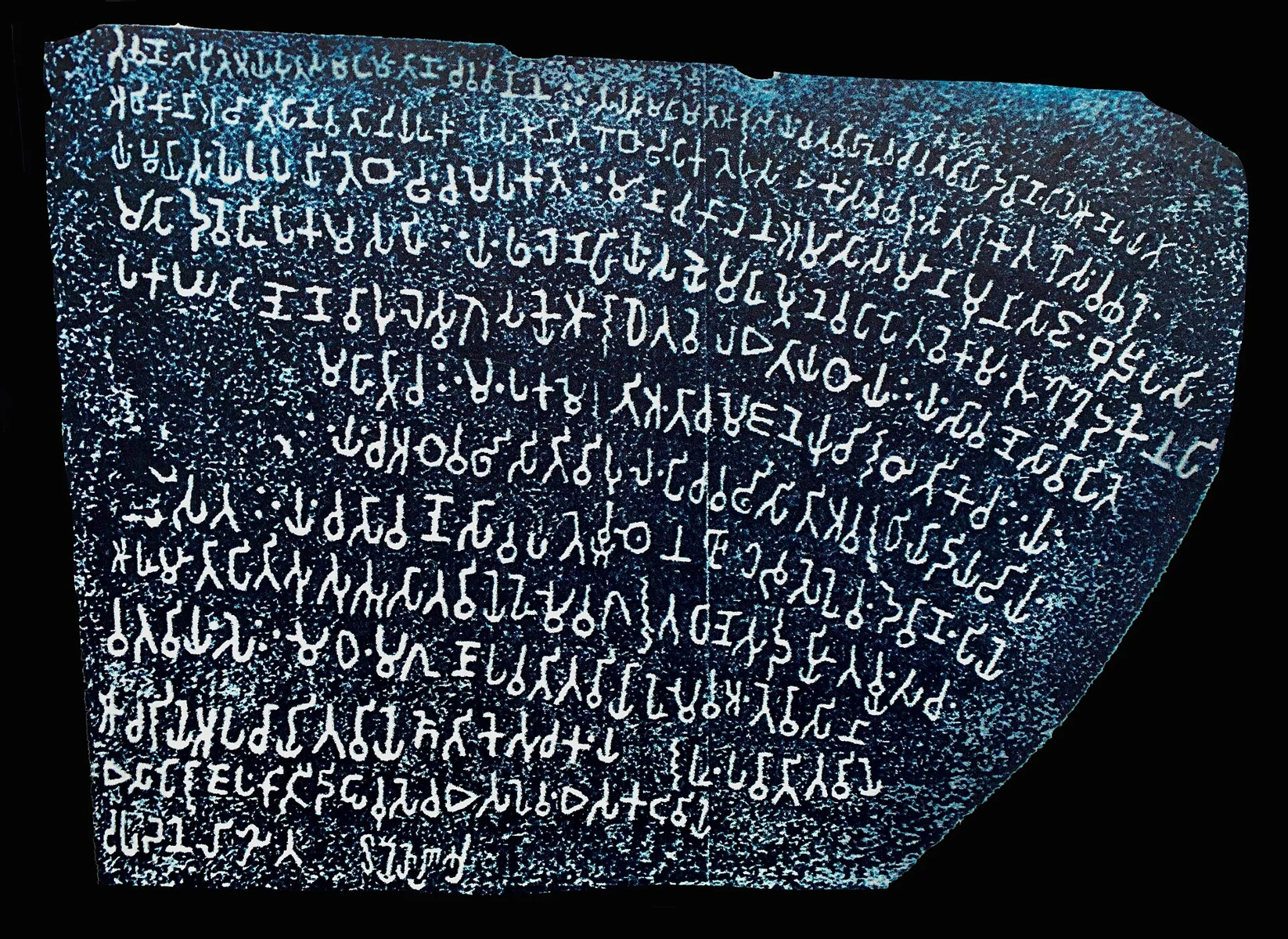
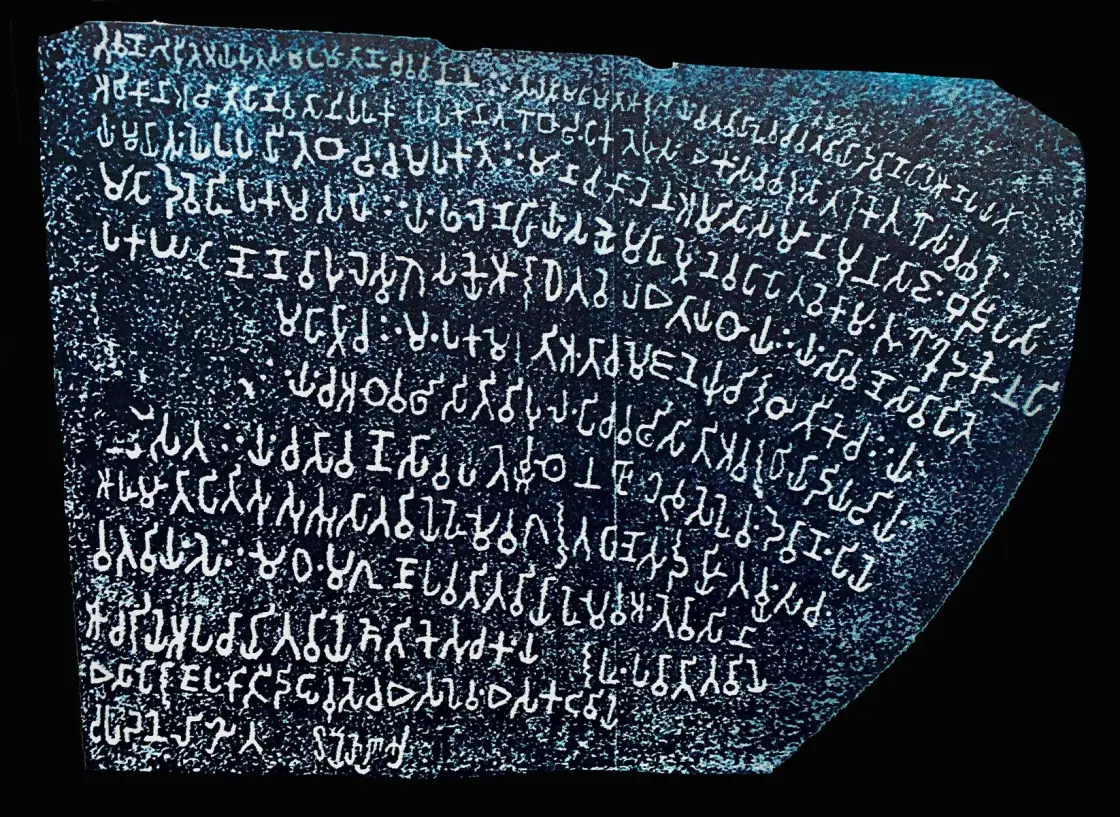
A documented copy of the third-century BCE Brahmagiri edict in Prakrit and Brahmi.
This is not one fenced object. The inscription and excavated archaeological sequence answer different questions, and a careful visit keeps the protected rock, burial landscape and nearby living temple distinct.
Karnataka Tourism records B. L. Rice’s 1892 identification of three Ashokan inscriptions in Molakalmuru taluk and describes the Brahmagiri text at Ganjigunte Mule on a gneiss boulder known locally as Aksharada Gundu.
The edict is in Prakrit and Brahmi, with a Kharosthi-form ending noted in the district account. Archaeological Survey of India excavations led by Mortimer Wheeler in 1947 established a long sequence that made Brahmagiri a type-site in South Indian archaeology.
Brahmagiri near Siddapura in Molakalmuru taluk is an archaeological landscape where an Ashokan Minor Rock Edict, prehistoric settlement evidence and megalithic burials occupy the same granite country.
This is not one fenced object. The inscription and excavated archaeological sequence answer different questions, and a careful visit keeps the protected rock, burial landscape and nearby living temple distinct.
Arrange a knowledgeable local or archaeological guide before setting out.
Use the recognised village approach in cool daylight and stay on existing paths.
Photograph without touching, wetting, chalking, tracing or rubbing the inscription.
The name Aksharada Gundu, or letter-rock, and older beliefs about the boulder’s properties belong to local memory. They explain how the stone was recognised before modern archaeology without replacing epigraphic evidence.
Karnataka Tourism records B. L. Rice’s 1892 identification of three Ashokan inscriptions in Molakalmuru taluk and describes the Brahmagiri text at Ganjigunte Mule on a gneiss boulder known locally as Aksharada Gundu.
The edict is in Prakrit and Brahmi, with a Kharosthi-form ending noted in the district account. Archaeological Survey of India excavations led by Mortimer Wheeler in 1947 established a long sequence that made Brahmagiri a type-site in South Indian archaeology.
Read the edict from the permitted position.
Understand why Isila matters to Mauryan geography.
Recognise megalithic remains without entering or moving them.
Compare Brahmagiri with the separate Siddapura and Jatinga-Rameshwara edicts.
November to February, early morning; raking daylight may help legibility without artificial treatment.
Live forecast loads in your browser.
Sun and moon are calculated for this location and shown in IST. Photography windows are the hour around sunrise and sunset; the sunset bearing is degrees clockwise from true north. Moon phase is accurate to about half a day.
Browse local stays, food, activities and useful shops. Confirm current service directly; rural options identify their own locality.
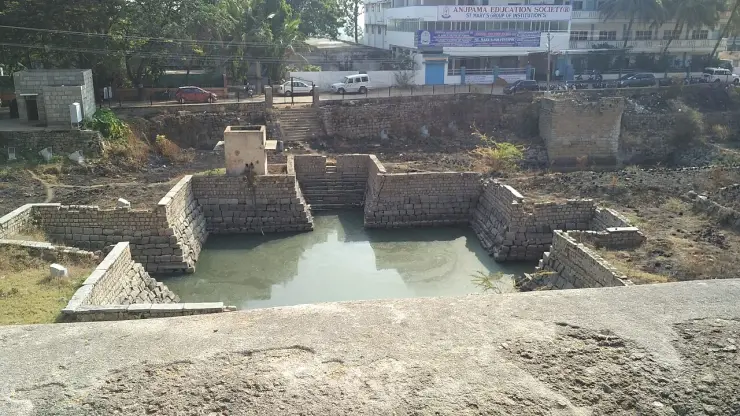
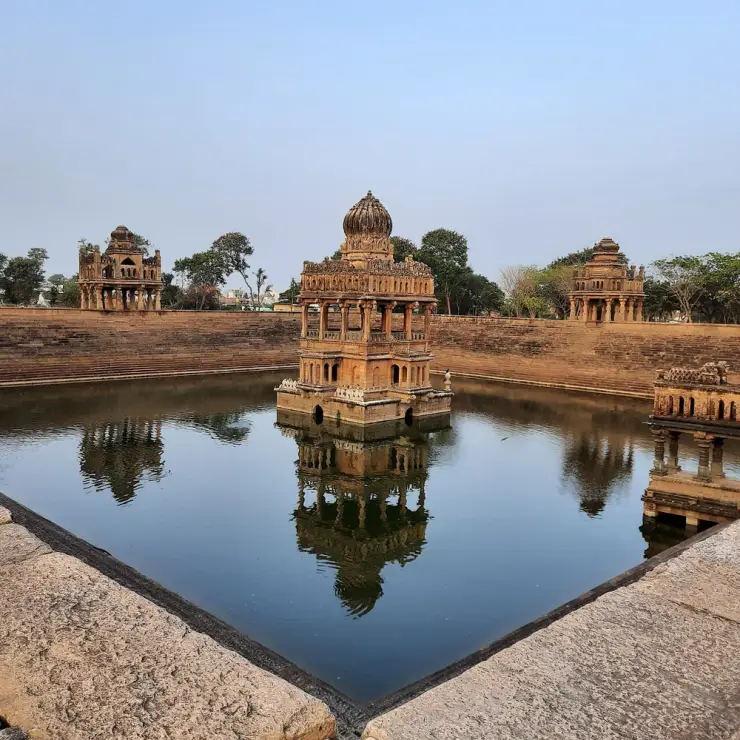
Mapped old temple near Molakalmuru with a kalyani; identify the site locally before describing it.
Book with the place itself. India’s cyber-crime coordination centre warned in April 2025 that convincing copies of hotel and pilgrimage booking sites are being pushed through sponsored search and social ads, taking payment for rooms the property never hears about. Every listing here links to the business’s own contact details and its own Google or Bing profile — we take no commission and sit in nobody’s payment path. If a booking page reached you through an ad, check the address bar against the property’s own site before you pay. Fraud can be reported on cybercrime.gov.in or on 1930.
Choose a local circuit or a separate road outing. Check worship, market and forest access independently; these places do not share one admission or timetable.

The Brahmagiri edict shown as epigraphic context; Siddapura is a separate site.
protected inscriptionSiddapura Ashokan EdictA separate edict site in the same taluk; use a guide and conservation rules.

Jatinga-Rameshwara landscape.
protected inscriptionJatinga-Rameshwara EdictThe third Molakalmuru edict lies by a living shrine and must not be confused with Brahmagiri.

Handloom weaving context.
handloom townMolakalmuru silk townAn arranged loom visit adds a living-craft layer to the archaeological journey.

Chitradurga district context for Nayakanahatti.
pilgrimage templeNayakanahatti TempleA separate major pilgrimage in eastern Chitradurga district.
Roampedia is commission-free — own or know a stay, eatery, guide or shop near Brahmagiri Ashokan Edicts & Megalithic Site? List it and it appears here once verified.
Add a nearby businessEntry: No current public tariff was found. Protected status and land access still apply.
Photography: Non-contact photography is appropriate. Never use chalk, water, oil, foil, paper rubbing or direct equipment against the inscription.
Parking: Stop only at a locally indicated public space and continue on foot without blocking village or field access.
Arrange a knowledgeable local or archaeological guide before setting out.
Online taxis: Do not depend on an app pickup at Brahmagiri Ashokan Edicts & Megalithic Site; arrange the return in advance when leaving the town centre.
If you are travelling by bus or ferry, check the return service with the operator before setting out. Leave time to reach the stop or jetty after your visit.
Ask at the jetty or stand for the time of the last service back, not the next one. If you miss it, an auto or app cab is the fallback — agree the fare before you get in.
Checked 6 September 2026 against source 1source 2source 3. Conditions change and surfaces vary with weather — if step-free access is essential, confirm with the site before you travel.
For toilets, drinking water or a cash machine, ask at the site or a nearby business. No local service locations are available on this page.
Emergency numbers are verified against official government and state tourism sources. 112 works anywhere in India.
Use molakalmuru or the nearest town centre for dependable meals and drinking water; do not assume an unstaffed site has refreshments.
Explore food in Molakalmuru →Choose a busy current town restaurant for idli, dosa or other fresh tiffin before departure.
Plan lunch around the town rather than carrying uncovered food into a shrine, wetland or archaeological site.
Local stops come first, followed by separate district outings. Check each place’s own access and return journey; this is a choice of visits, not a single walking circuit.

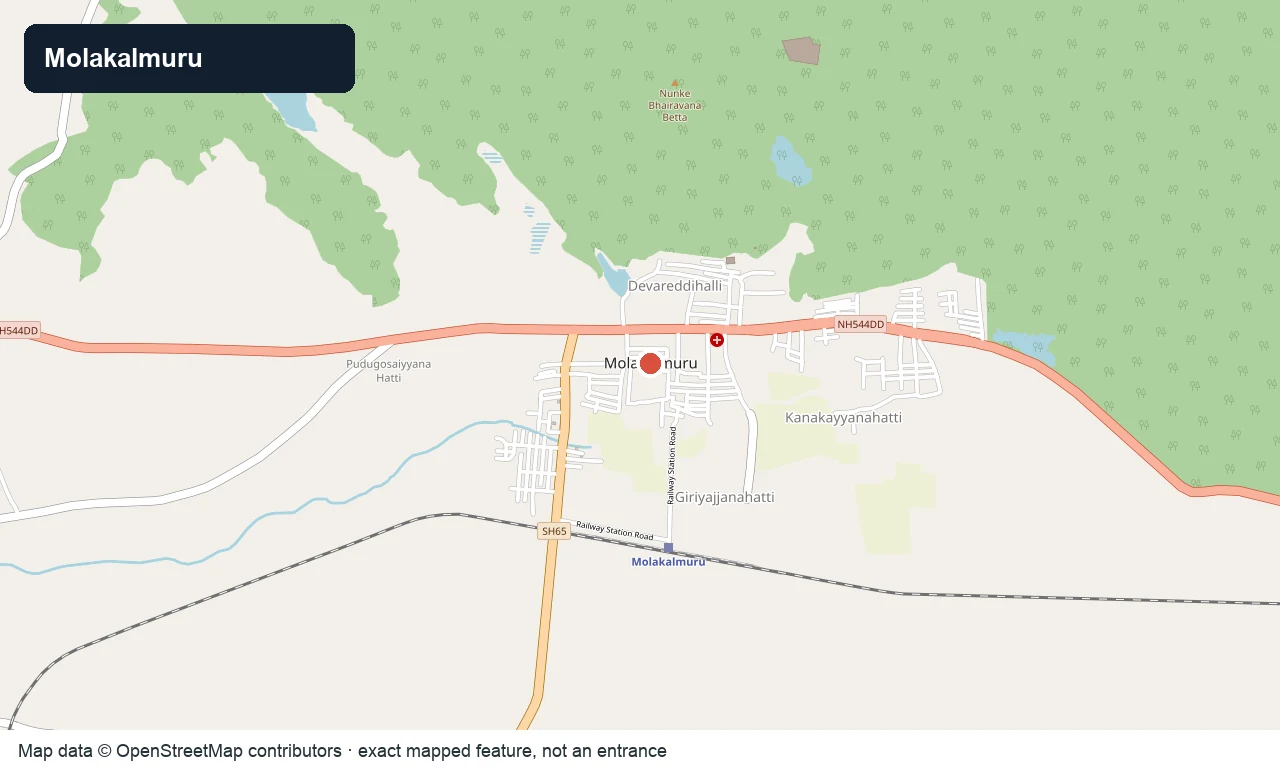
OpenStreetMap town view centred on Molakalmuru; individual workshops require their own directions and permission.
heritageMolakalmuruThe border town of Molakalmuru near the Andhra Pradesh line, famous for its handwoven Molakalmuru silk sarees — a distinctive pure-silk weaving tradition of intricate zari borders — and for the temple fairs of the surrounding taluk.
The Horamatha at Nayakanahatti, associated with Thipperudraswamy’s Jeeva Samadhi.
templeNayakanahatti Thipperudra Swamy TempleThe pilgrimage temple at Nayakanahatti needs its own road and worship plan. Festival crowds can change the approach; confirm the date and return arrangement before travel.
Nearby toilets, pharmacies, ATMs, seating and vets are community-mapped and may be incomplete or out of date. Map data © OpenStreetMap contributors | Walking times © openrouteservice.org by HeiGIT
The locator identifies the temple precinct. Use the currently open worship entrance and follow any procession diversions.
Brahmagiri near Siddapura in Molakalmuru taluk is an archaeological landscape where an Ashokan Minor Rock Edict, prehistoric settlement evidence and megalithic burials occupy the same granite country.
This is not one fenced object. The inscription and excavated archaeological sequence answer different questions, and a careful visit keeps the protected rock, burial landscape and nearby living temple distinct.
Approach through the Brahmagiri–Siddapura area and confirm the public path locally; the archaeological coordinate is not a gate. Reach Molakalmuru by regional bus, then retain a local vehicle for the site and return.
No staffed schedule is published; visit only in daylight with locally confirmed access.
No current public tariff was found. Protected status and land access still apply.
Rough ground and exposed rock make the full site unsuitable for independent wheelchair access. Ask whether any protected feature can be viewed from a stable lower route.
November to February, early morning; raking daylight may help legibility without artificial treatment.
Entry: No current public tariff was found. Protected status and land access still apply. Timings: No staffed schedule is published; visit only in daylight with locally confirmed access.
Allow 2–3 hours including the rural approach.
Nearby you can pair Molakalmuru, Nayakanahatti Thipperudra Swamy Temple.
The site is exposed, uneven and lightly serviced; carry water and avoid severe heat, rain and lightning. Do not enter burial features, climb protected rocks or cross fields without permission.
Local stories and practical reading for a visit to Brahmagiri Ashokan Edicts & Megalithic Site and its surroundings.

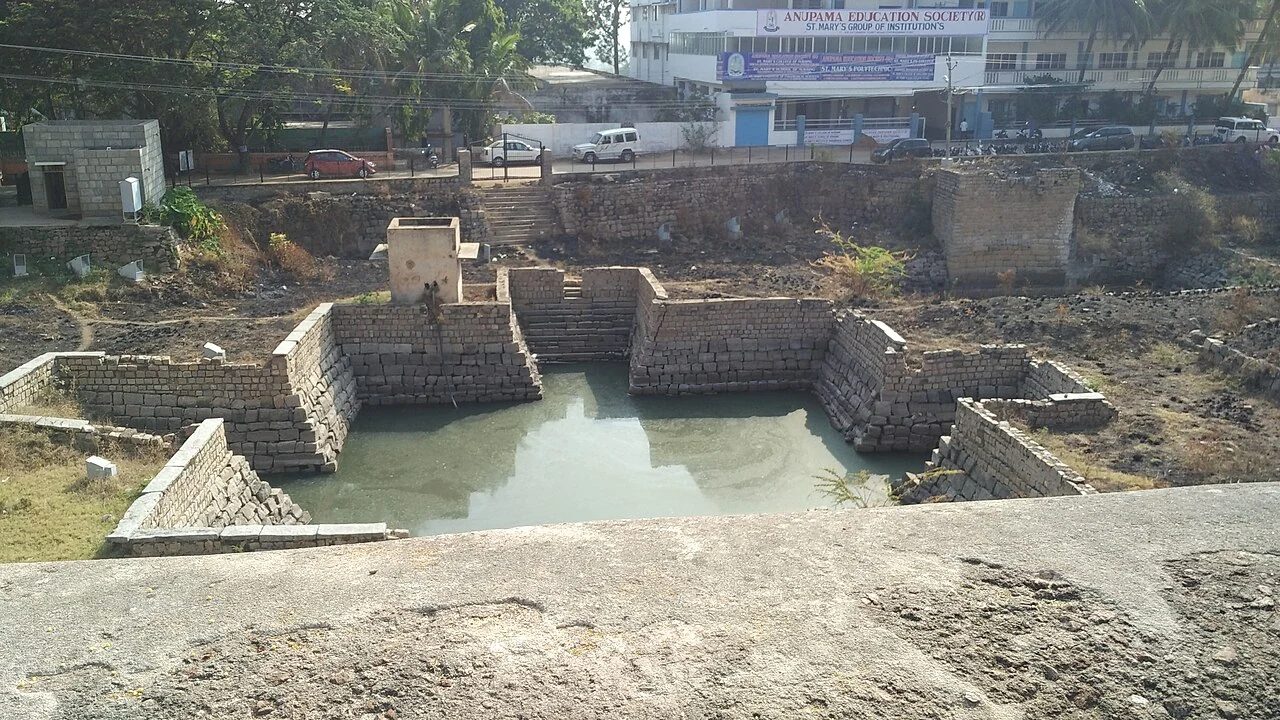
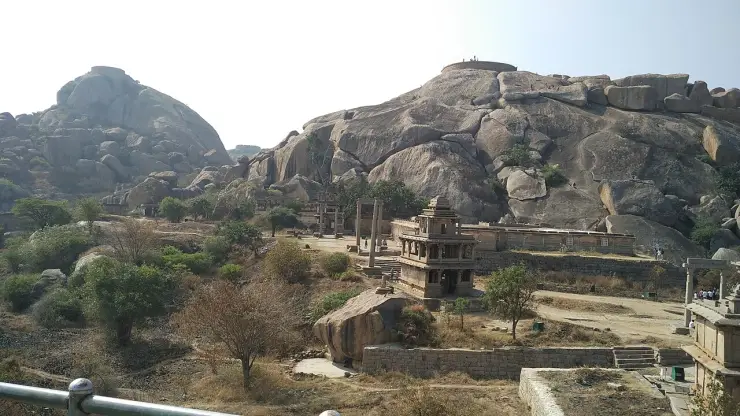
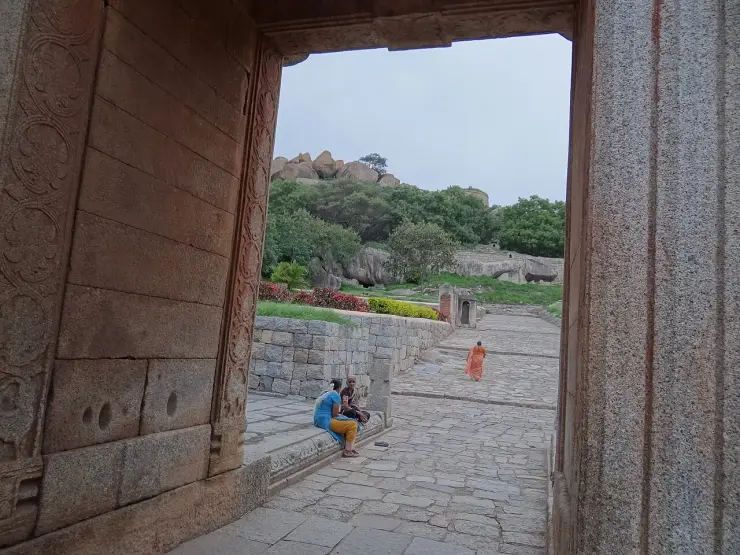
A distinct nearby subject used to explain the local circuit: Chitradurga_fort_Image_(10),_Karnataka,_India.

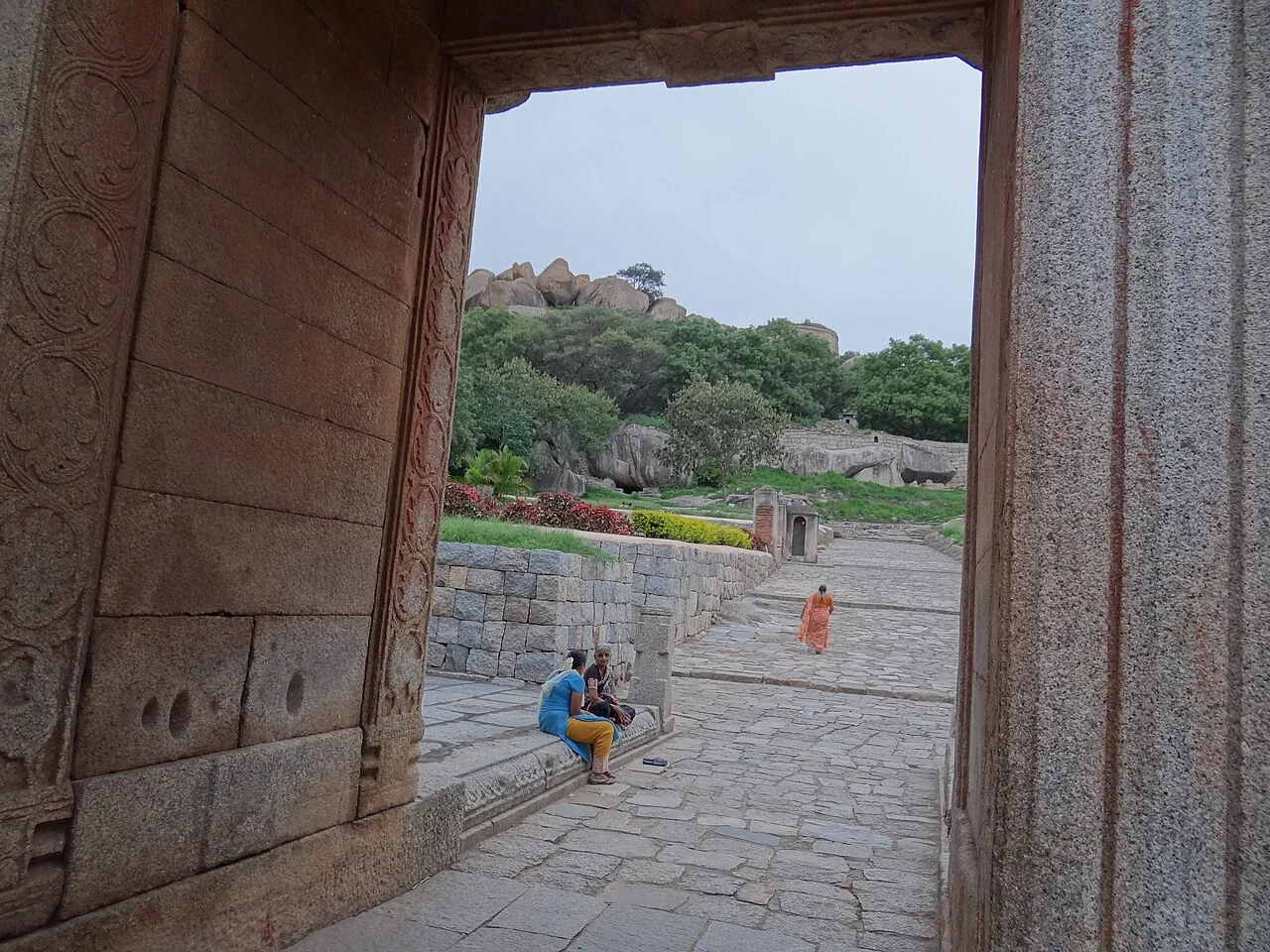
A distinct nearby subject used to explain the local circuit: Chitradurga_Fort_Gate.

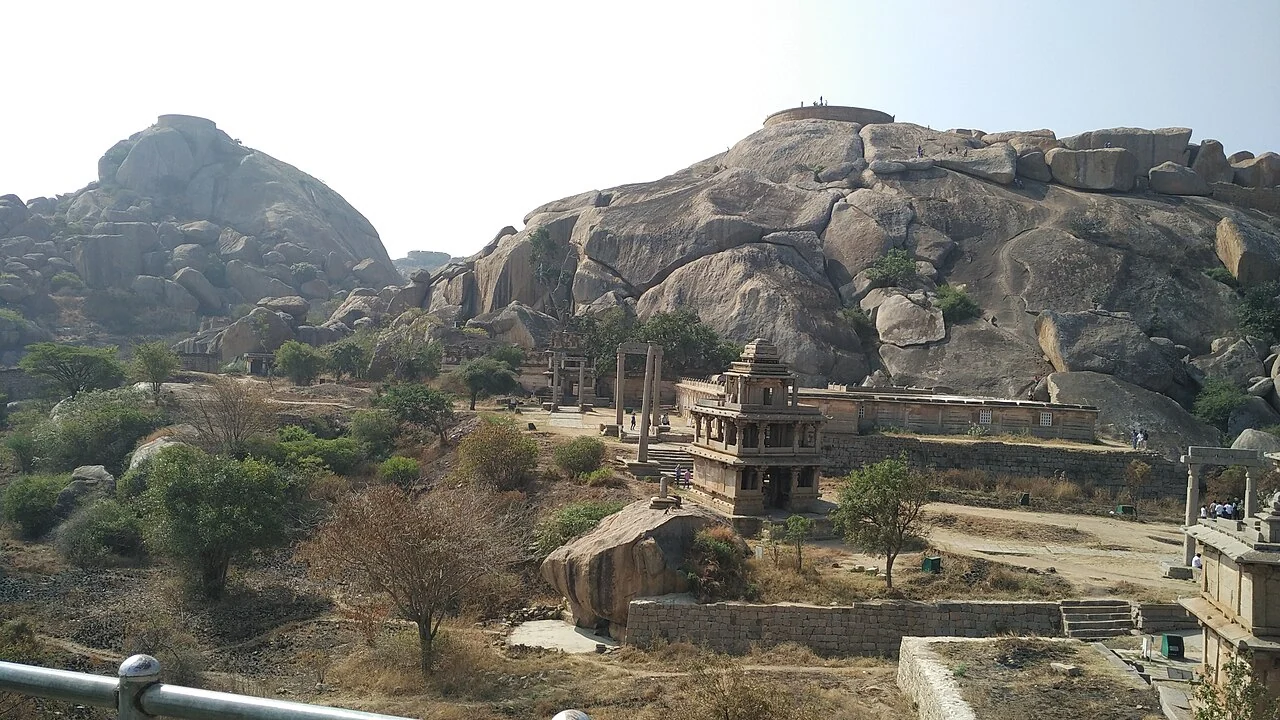
A distinct nearby subject used to explain the local circuit: Chitradurga_fort_Image_(1),_Karnataka,_India.

A distinct nearby subject used to explain the local circuit: Santhebennur.
Photographs: Ms Sarah Welch (CC0), Wikimedia Commons contributor (See linked Commons file page), OpenStreetMap contributors (ODbL 1.0), Masterzatak, CC BY-SA 4.0, via Wikimedia Commons (CC BY-SA 4.0), Wikimedia Commons contributor; see source page for licence. Wikimedia Commons.