Images of silk work often draw attention to repeated movements, thread and machinery. They can make a complex industry appear timeless. Sidlaghatta’s district record offers a more useful starting point: it identifies a town engaged in raw and twisted silk production and a government market within a wider sericulture system.
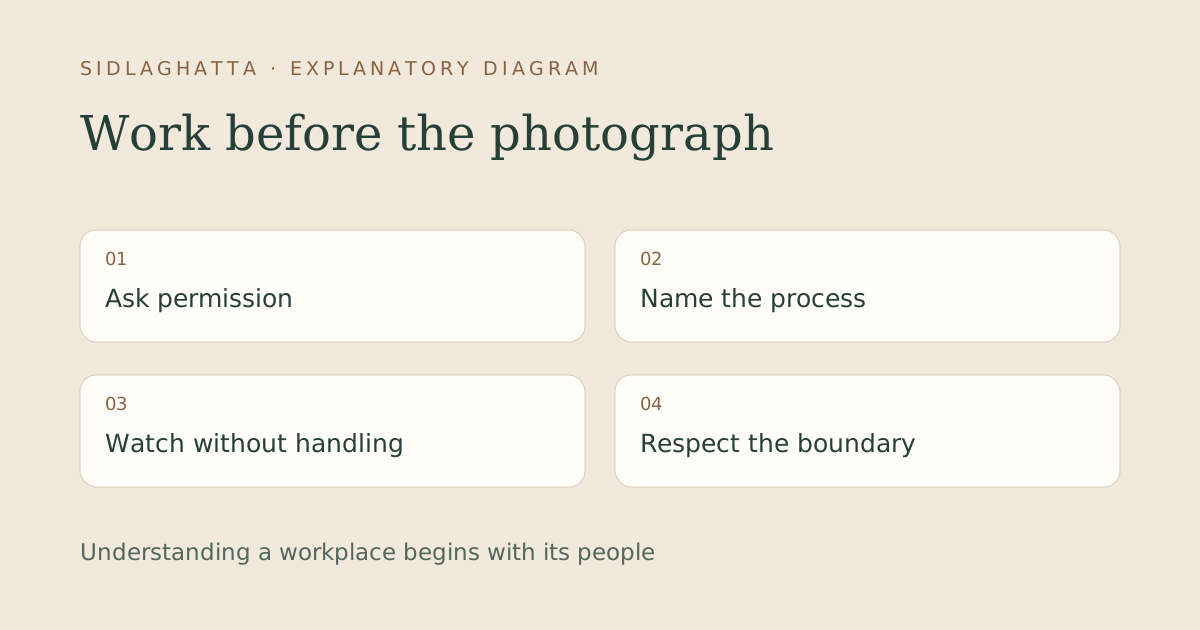
The diagram puts permission and careful observation before photography. It describes a way to approach a working place, not a booked visitor programme.
Several kinds of expertise
A finished textile can conceal the number of decisions made before weaving. The district department’s description includes cocoon markets, grainages and reeling activity. These institutional and production roles should not be collapsed into the single word weaving.
A visitor can begin by asking which stage a person is describing. Are they discussing the cocoon, raw silk, twisted yarn or a finished fabric? Precise questions show respect for specialised work and help avoid leaving with a confident but inaccurate explanation.
A photograph records one arrangement
An old image may show equipment or a working arrangement that differs from what is used now. Even a recent photograph shows only one workplace. Do not use it to promise that a visitor will see the same process in the same form in Sidlaghatta.
The same care applies to photographs you make. Ask the person and the person responsible for the workplace before recording. Keep trade documents, prices, accounts and identifying details out of a frame unless their inclusion has been agreed. Stay where the worker says it is safe to stand.
Interest without entitlement
A town can have a strong industrial identity without having an organised industrial-tourism programme. That does not make it less interesting. It means a visit begins with a conversation and may remain a street-level visit if private access is unavailable.
Read the district sericulture account before coming. If observation cannot be arranged, leave the workplace alone and use the surrounding public town or a separately confirmed nearby destination. Understanding a boundary is part of understanding a living place.