India’s beauty runs from the marble domes of the Taj Mahal to Kerala’s palm-lined backwaters and the bare, high-altitude drama of the Himalayas — few countries pack in such a range. Here are the places that define it, spanning desert forts, temple ghats, ancient ruins and tropical islands.
The classics
The Taj Mahal in Agra is the single image most people carry of India before they ever visit — a white-marble mausoleum built by a grieving emperor, at its best in the soft light just after sunrise. Varanasi, one of the world’s oldest continuously inhabited cities, is best experienced from the water: a boat at dawn past the ghats, where the city’s daily rhythm of bathing, prayer and cremation plays out along the Ganges. Rajasthan’s forts and palaces — Jaipur’s Amber Fort, Udaipur’s lake palaces, Jaisalmer’s golden sandstone fort rising from the Thar Desert — are the country’s grandest architectural set pieces, and a first-time itinerary through the state rarely disappoints.
The south and the coast
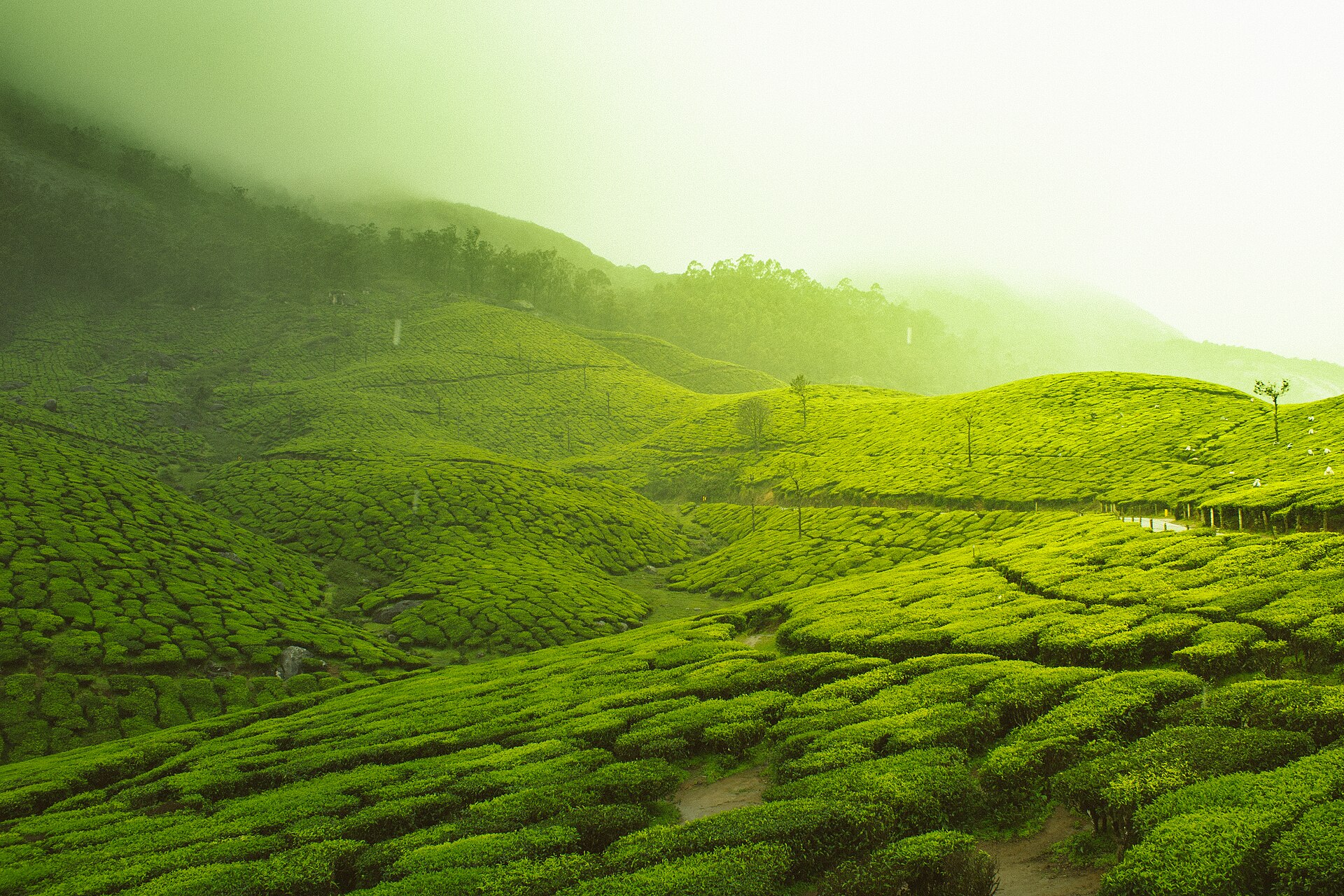
Kerala’s backwaters — the network of lagoons and canals around Alleppey and Kumarakom — are a different kind of beautiful: slow houseboats, coconut palms and village life along the water rather than a single monument. Munnar’s tea hills, rolling green plantations across the Western Ghats, are just as striking in their own quieter way. This is the one region on this list Roampedia covers in real depth today — see our Kerala hub for the full picture. Goa’s beaches, a legacy of Portuguese colonial history layered onto a laid-back coastline, remain India’s most popular beach escape, while Hampi, a ruined 14th-century empire’s capital scattered across a boulder-strewn landscape in Karnataka, is one of the country’s most atmospheric archaeological sites.
The mountains and the edges
Ladakh and the high Himalayas offer a stark, almost lunar beauty — monasteries perched on cliffs, high mountain passes and turquoise lakes at altitudes where the sky feels closer than the ground. Meghalaya, in India’s Northeast, is known for its living root bridges — footbridges grown from the roots of rubber fig trees over generations by the local Khasi and Jaintia communities — and for being among the wettest places on Earth. The Andaman Islands, out in the Bay of Bengal, close out the list with white-sand beaches and coral reefs that feel more Southeast Asian than mainland Indian.
Where Roampedia goes deep
This is a country too large for any one list to do justice — and honestly, Roampedia’s deepest coverage today is Kerala, starting with Fort Kochi. We are building out the rest of India state by state; until then, treat this as a map of what to seek out, and lean on our Kerala hub for the places we know best right now.
Frequently asked questions
What is the most beautiful place in India?
It is subjective — the Taj Mahal, Kerala’s backwaters and the Himalayas top most lists, but Rajasthan’s forts, Varanasi’s ghats and Hampi’s ruins are just as often named.
What is the best combination for first-time visitors?
A classic north India route (Delhi, Agra, Rajasthan) paired with a southern contrast like Kerala gives a genuinely representative first trip — two very different sides of the country.
Where does Roampedia cover India in depth right now?
Kerala, starting with Fort Kochi — see our Kerala hub. Coverage of other states is being built out over time.