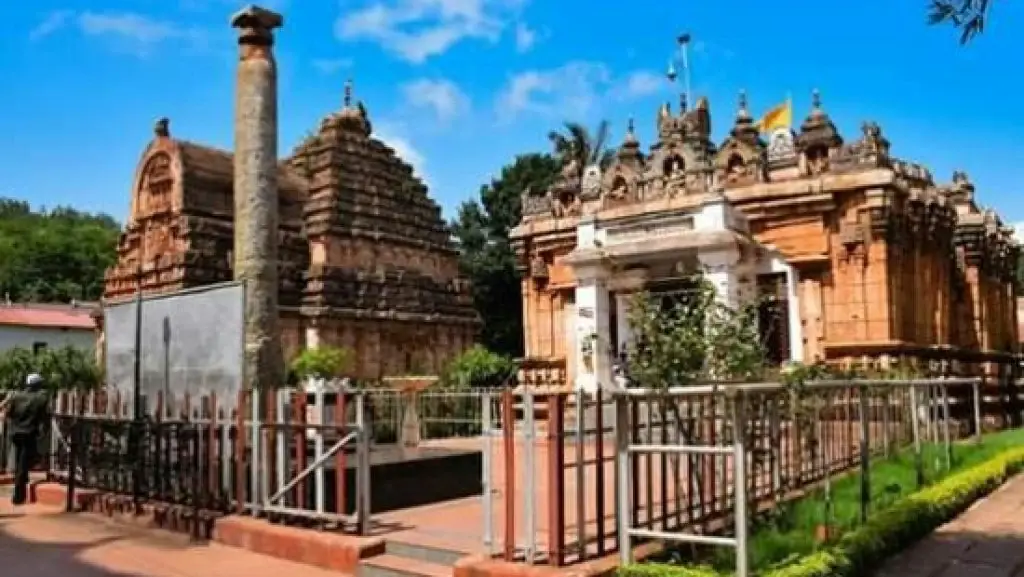
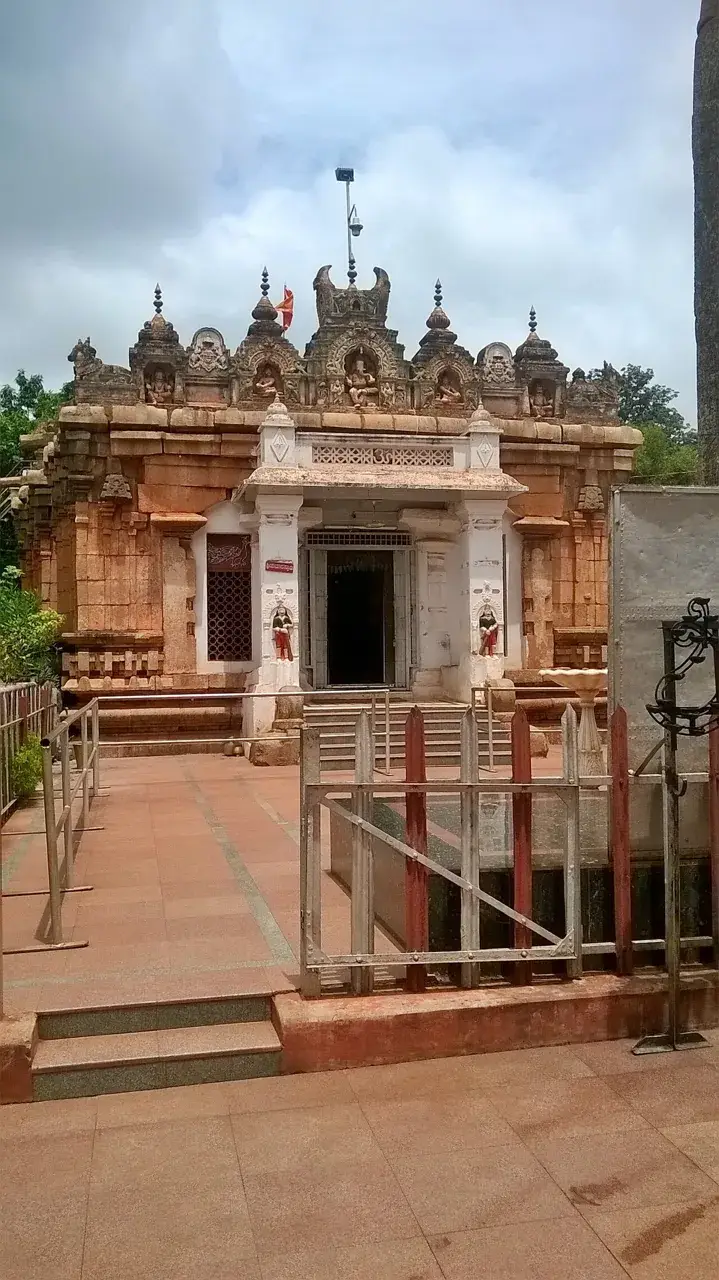
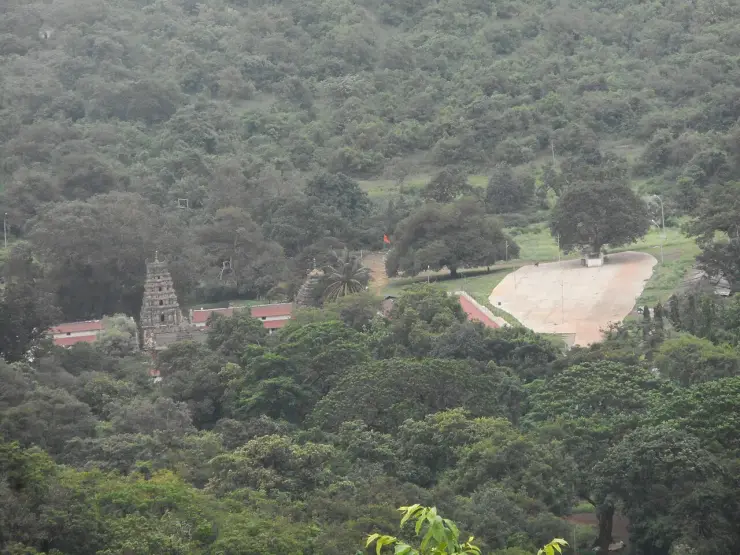
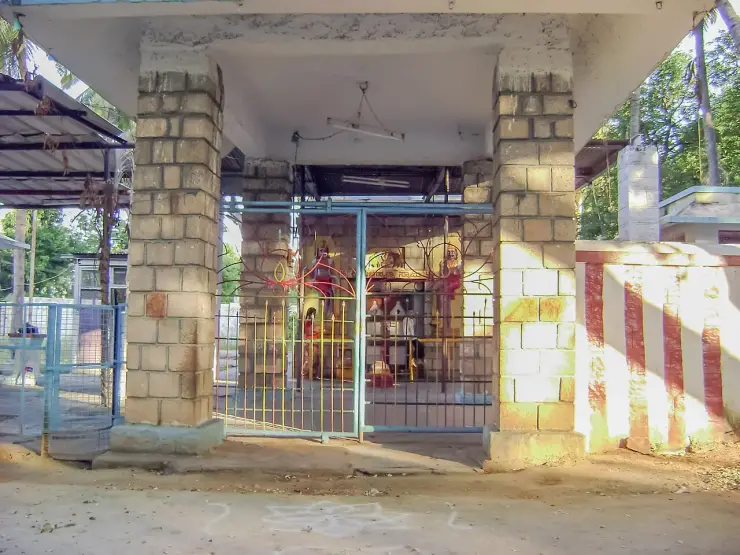
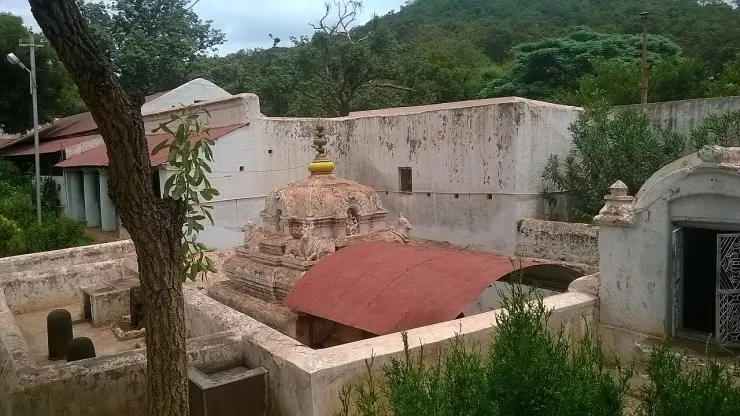
Kumaraswamy Temple stands at Krauncha Giri in the Sandur hills, where a protected Kumaraswamy shrine and an older Parvati shrine share one forested compound. The visit is both architectural and devotional, so the two buildings, their dates and current worship should be read separately.
The story of Kumaraswamy Temple, Sandur
The approach leaves Sandur town and enters a greener hill landscape before reaching the temple compound. Ballari district administration documents two nationally protected monuments here: the Parvati Temple, assigned to the seventh–eighth centuries, and the Kumaraswamy Temple, assigned broadly to the eighth–tenth centuries.
The Parvati shrine is the older and more architecturally elaborate building. Its southern vimana form, stone wall sculpture and later additions show a monument that has changed over time rather than a structure frozen in one century. Walk around only on permitted ground and use the differences in masonry as clues, without touching carvings.
The Kumaraswamy shrine is dedicated to Skanda, also known as Subrahmanya or Kartikeya. The district records the old Skandapuri name and the tradition that Kumaraswamy defeated Tarakasura in these hills. That sacred geography explains continuing pilgrimage, while the monument dates come from a different kind of evidence.
Make Sandur the practical base. Confirm the day’s access before leaving town, retain the vehicle for the return and allow enough daylight for the forest road. At the compound, follow footwear, darshan and photography directions and give each shrine time rather than treating the visit as a single exterior photograph.
Tradition and living practice
Kumaraswamy is worshipped as Skanda, Subrahmanya or Kartikeya; current darshan and ceremony rules take priority inside the active shrine.
The Skandapuri and Tarakasura account belongs to the temple’s living sacred tradition and should remain distinct from the architectural dating.
History
Ballari district administration dates the Parvati Temple to the seventh–eighth centuries and describes it as the older building in the compound.
The Kumaraswamy Temple is dated broadly to the eighth–tenth centuries; the two shrines are protected monuments of national importance.
The complex preserves inscriptions and later alterations, so a single dynasty label cannot explain every visible element.
Why visit
Compare two protected shrines from different early medieval phases.
Experience a living Subrahmanya pilgrimage in the Sandur hills.
Study carved stone, vimana form and later repairs at close range.
Understand how sacred tradition and protected architecture share one landscape.