What to expect
Highlights
- See the scale of the monolithic Ganesha.
- Observe the open-air relationship implied by Bayalu.
- Notice the later entrance tower without using it to date the image.
- Join darshan without obstructing local worship.
Bayalu Ganapati is Holalkere’s open-air Ganesha shrine, centred on a large monolithic image that remains the focus of everyday worship in the town.
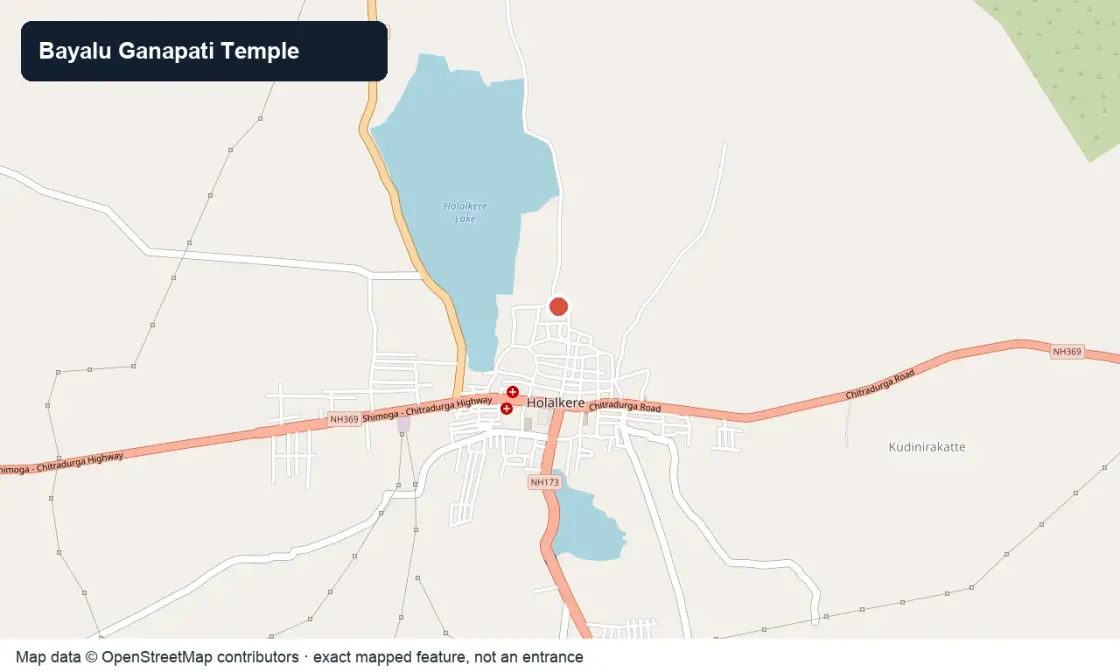
OpenStreetMap view centred on the mapped Bayalu Ganapati shrine in Holalkere; the marker is not a parking gate.
Check entry arrangements. Ask temple staff about visitor entry, dress requirements and access to the inner shrine before you travel, especially if you are visiting as a non-Hindu.
Dress respectfully and follow the institution’s admission and photography rules.
The name bayalu points to the deity’s open setting. The visit is brief in distance but richer when you notice how the monumental image, later gateway and active ritual space belong to different phases.
The temple is mapped at 14.047398, 76.184632 on the north side of Holalkere. Published visitor accounts associate the image with the local Nayaka period, but no inscriptional source was found to secure a precise year.
Holalkere lies in Chitradurga district on the historic road toward Shivamogga; the shrine functions as a town temple rather than an isolated archaeological enclosure.
Bayalu Ganapati is Holalkere’s open-air Ganesha shrine, centred on a large monolithic image that remains the focus of everyday worship in the town.
The name bayalu points to the deity’s open setting. The visit is brief in distance but richer when you notice how the monumental image, later gateway and active ritual space belong to different phases.
Arrive in a normal morning or evening worship period and confirm access at the gate.
Remove footwear, dress modestly and move with the local darshan flow.
Use Holalkere town for food and combine only with one realistic district stop.
The image is also called Jade Ganapati in local usage, a reference to the distinctive braided form visible behind the deity. Present the name as living tradition and ask the priest before attempting to view restricted sides.
The temple is mapped at 14.047398, 76.184632 on the north side of Holalkere. Published visitor accounts associate the image with the local Nayaka period, but no inscriptional source was found to secure a precise year.
Holalkere lies in Chitradurga district on the historic road toward Shivamogga; the shrine functions as a town temple rather than an isolated archaeological enclosure.
See the scale of the monolithic Ganesha.
Observe the open-air relationship implied by Bayalu.
Notice the later entrance tower without using it to date the image.
Join darshan without obstructing local worship.
October to February in the morning or early evening; Ganesh Chaturthi brings devotion and heavy crowds.
Live forecast loads in your browser.
Sunset is in about 51 minutes.
Sun and moon are calculated for this location and shown in IST. Photography windows are the hour around sunrise and sunset; the sunset bearing is degrees clockwise from true north. Moon phase is accurate to about half a day.
Browse local stays, food, activities and useful shops. Confirm current service directly; rural options identify their own locality.
Holalkere’s living open-air Ganesha shrine centred on a monumental stone image.
Town waterbody viewed only from a stable public edge, with no swimming or assumed promenade.
Mapped regional temple west of Holalkere; retain transport and confirm worship access locally.
Book with the place itself. India’s cyber-crime coordination centre warned in April 2025 that convincing copies of hotel and pilgrimage booking sites are being pushed through sponsored search and social ads, taking payment for rooms the property never hears about. Every listing here links to the business’s own contact details and its own Google or Bing profile — we take no commission and sit in nobody’s payment path. If a booking page reached you through an ad, check the address bar against the property’s own site before you pay. Fraud can be reported on cybercrime.gov.in or on 1930.
Choose a local circuit or a separate road outing. Check worship, market and forest access independently; these places do not share one admission or timetable.
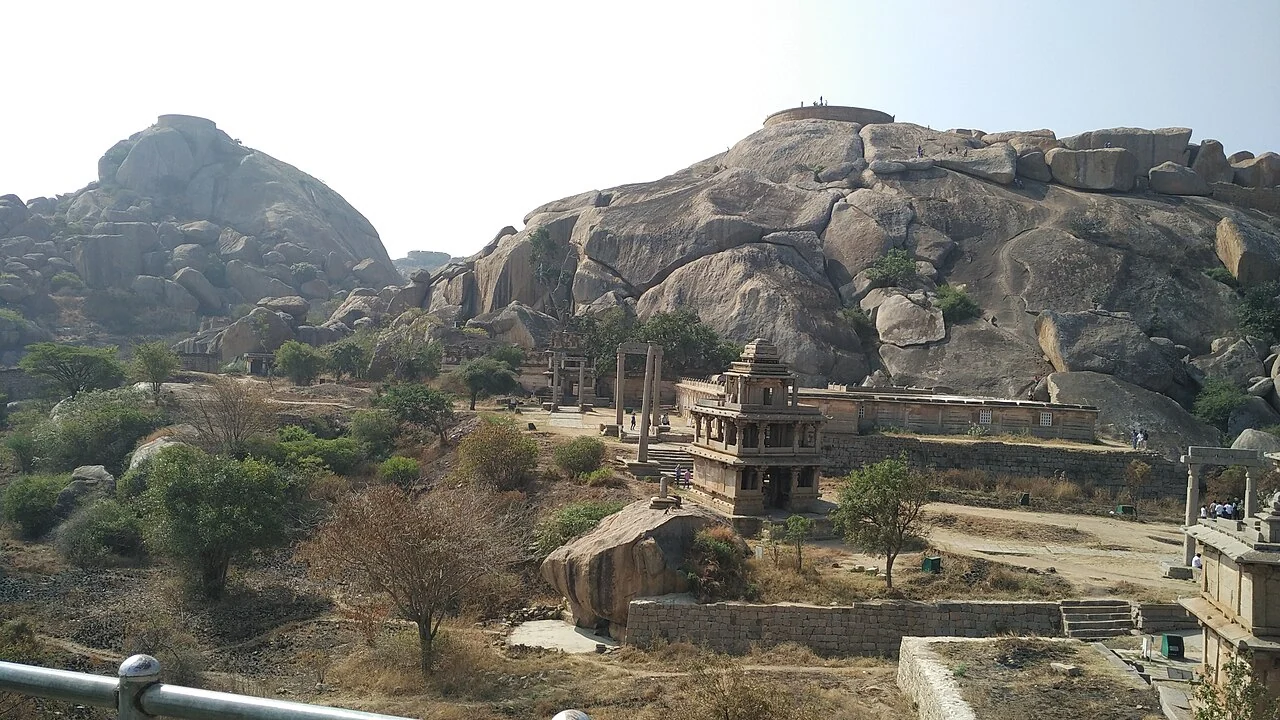
Chitradurga Fort.
hill fortChitradurga FortThe district’s major fort needs several hours and a separate ticket and heat plan.
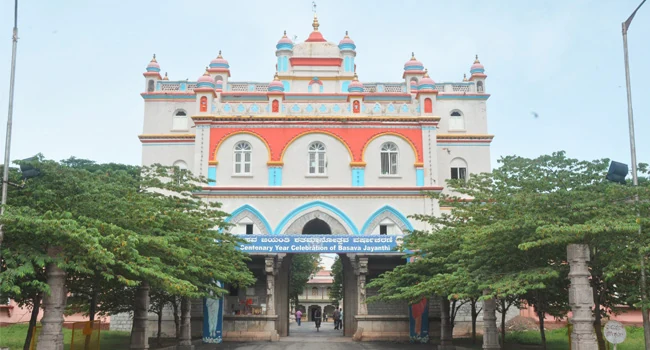
Muruga Rajendra Matha.
living institutionMurugharajendra MathaThe matha and sculpture garden form a separate Chitradurga town visit.
Vani Vilasa Sagara.
working damVani Vilasa SagaraA distant reservoir viewpoint near Hiriyur with operational restrictions.
Chitradurga district context for the Sirigere trip.
living mathaSirigere Taralabalu BrihanmathA separate institutional pilgrimage at Sirigere; confirm visitor access.
Roampedia is commission-free — own or know a stay, eatery, guide or shop near Bayalu Ganapati Temple, Holalkere? List it and it appears here once verified.
Add a nearby businessEntry: No authoritative ticket tariff was found; use current temple notices for paid sevas.
Dress code: Dress modestly, remove footwear where directed and keep worship routes clear.
Photography: Ask before photographing the deity, rituals or devotees; exterior and gateway photography is usually less intrusive.
Parking: Use town parking indicated locally and keep the temple frontage clear.
Arrive in a normal morning or evening worship period and confirm access at the gate.
Online taxis: Do not depend on an app pickup at Bayalu Ganapati Temple, Holalkere; arrange the return in advance when leaving the town centre.
If you are travelling by bus or ferry, check the return service with the operator before setting out. Leave time to reach the stop or jetty after your visit.
Ask at the jetty or stand for the time of the last service back, not the next one. If you miss it, an auto or app cab is the fallback — agree the fare before you get in.
Checked 6 September 2026 against source 1source 2source 3. Conditions change and surfaces vary with weather — if step-free access is essential, confirm with the site before you travel.
For toilets, drinking water or a cash machine, ask at the site or a nearby business. No local service locations are available on this page.
Emergency numbers are verified against official government and state tourism sources. 112 works anywhere in India.
Use holalkere or the nearest town centre for dependable meals and drinking water; do not assume an unstaffed site has refreshments.
Explore food in Holalkere →Choose a busy current town restaurant for idli, dosa or other fresh tiffin before departure.
Plan lunch around the town rather than carrying uncovered food into a shrine, wetland or archaeological site.
Local stops come first, followed by separate district outings. Check each place’s own access and return journey; this is a choice of visits, not a single walking circuit.

The rolling hills and plateau seen from Jogimatti.
viewpointJogimattiThe forested hill landscape is a separate daylight outing from the zoo or fort. Confirm the permitted road, entry and return arrangements with forest staff before leaving town.
A religious institution at Sirigere requiring a separate road outing. Ask about current visitor access and worship etiquette; campus activity does not imply an unrestricted sightseeing circuit.

The lake outside Chandravalli’s caves, photographed in 2013. The boat in this older image is not a promise of current boating access.
caveChandravalliThe archaeological valley beside Chitradurga combines settlement history, caves and a lake. Confirm any cave access locally; use established paths and keep open water separate from the visit.

The planted garden and seating area at Adumalleshwara; this photograph does not show the cave shrine.
templeAdumalleshwaraThe cave shrine and separately managed mini-zoo require distinct worship and zoo-entry decisions. Check current zoo hours and retain transport for the return to Chitradurga.

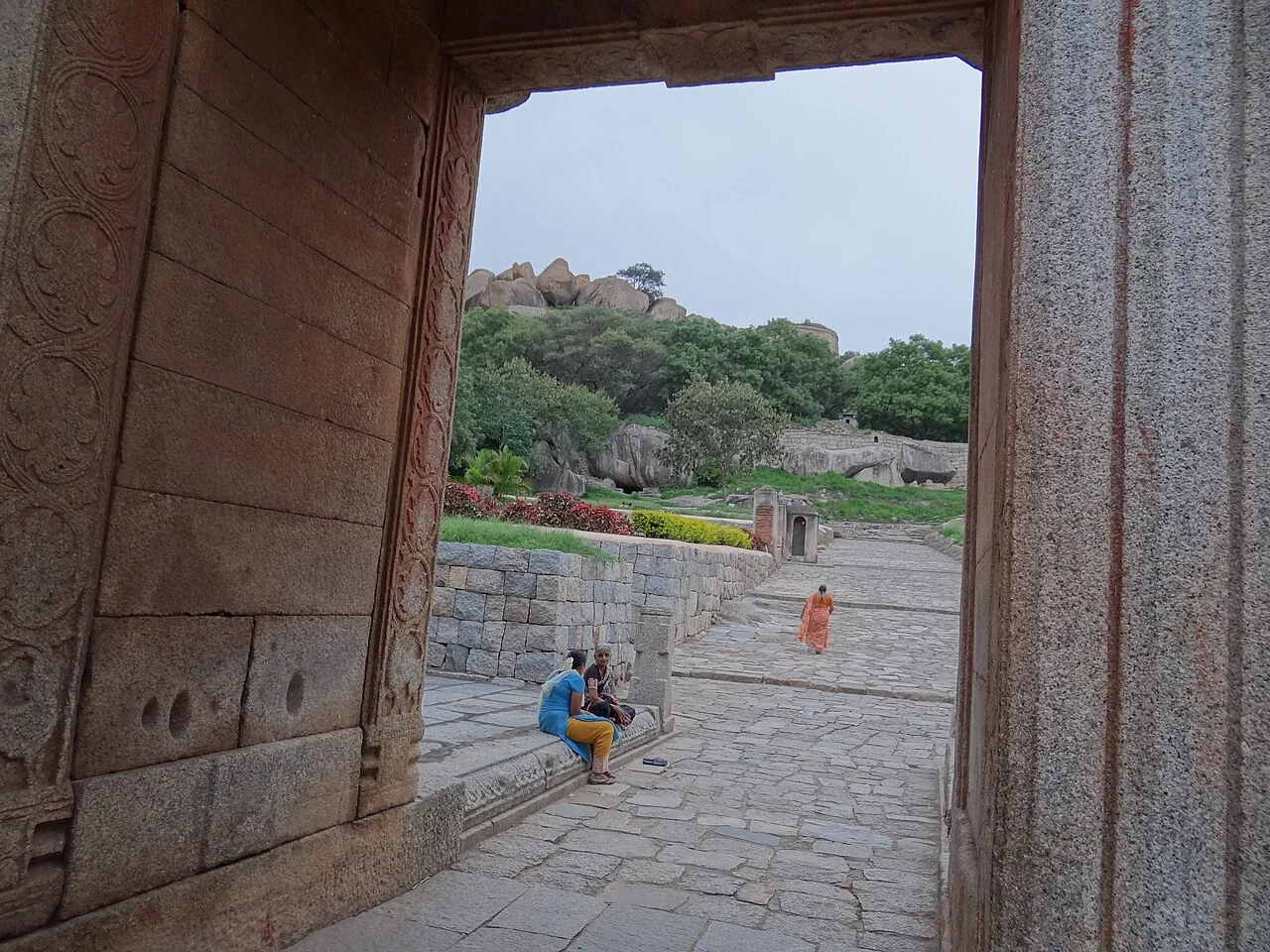
The narrow Onake Obavva passage between rock and masonry inside Chitradurga Fort.
heritageOnake Obavva KindiThe remembered defensive passage is inside the Chitradurga Fort visit. Reach it through the permitted fort circuit; it is not a separate road destination or a second fort admission.

Temple structures and rocky terrain inside Chitradurga Fort, with the town beyond.
fortChitradurga FortThe fort’s gates, temples and water structures deserve a separate cool part of the day. Its steep stone route is different from the zoo’s garden circuit; carry water and stay off unstable masonry.
The public entrance to Muruga Rajendra Matha in Chitradurga.
heritageMurugharajendra Matha & Muruga VanaThe matha and associated grounds form a separate institutional and religious stop around Chitradurga. Confirm which visitor areas are open and follow current campus instructions.

Vani Vilasa Sagara dam and reservoir near Hiriyur; enter only areas currently open to visitors.
damVani Vilasa Sagara (Mari Kanive Dam)The reservoir and dam landscape near Hiriyur is a separate excursion. Use only permitted viewing areas and follow water-project security; no swimming or boating access is promised.

The sculptured gopura over the entrance to Teru Malleshwara Temple in Hiriyur.
templeTeru Malleshwara Temple, HiriyurA temple stop in Hiriyur for a separate district circuit. Check the current worship entrance and opening locally, particularly if combining it with the reservoir landscape.
Nearby toilets, pharmacies, ATMs, seating and vets are community-mapped and may be incomplete or out of date. Map data © OpenStreetMap contributors | Walking times © openrouteservice.org by HeiGIT
The locator identifies the temple precinct. Use the currently open worship entrance and follow any procession diversions.
Bayalu Ganapati is Holalkere’s open-air Ganesha shrine, centred on a large monolithic image that remains the focus of everyday worship in the town.
The name bayalu points to the deity’s open setting. The visit is brief in distance but richer when you notice how the monumental image, later gateway and active ritual space belong to different phases.
The named Ganesha Temple node at 14.047398, 76.184632 provides the exact orientation point in Holalkere. KSRTC and regional buses reach Holalkere; the shrine is a short local-auto trip from the bus stand.
No official daily timetable was found. Confirm locally rather than relying on repeated web listings.
No authoritative ticket tariff was found; use current temple notices for paid sevas.
The urban approach is short, but thresholds, footwear areas and crowding may limit wheelchair movement. Ask at the gate for the closest level route.
October to February in the morning or early evening; Ganesh Chaturthi brings devotion and heavy crowds.
Entry: No authoritative ticket tariff was found; use current temple notices for paid sevas. Timings: No official daily timetable was found. Confirm locally rather than relying on repeated web listings.
Allow 30–60 minutes.
Nearby you can pair Jogimatti, Sirigere Taralabalu Brihanmath, Chandravalli, Adumalleshwara.
Stone floors can be hot or slippery; supervise children near lamps and crowd movement. Festival traffic can constrict the town approach.
Local stories and practical reading for a visit to Bayalu Ganapati Temple, Holalkere and its surroundings.
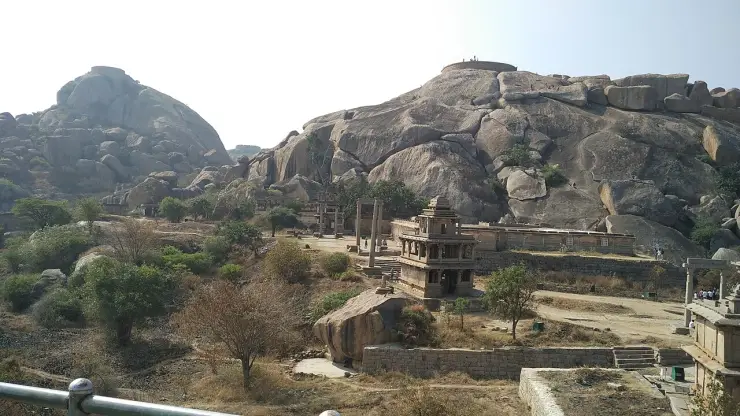
A distinct nearby subject used to explain the local circuit: Chitradurga_fort_Image_(10),_Karnataka,_India.
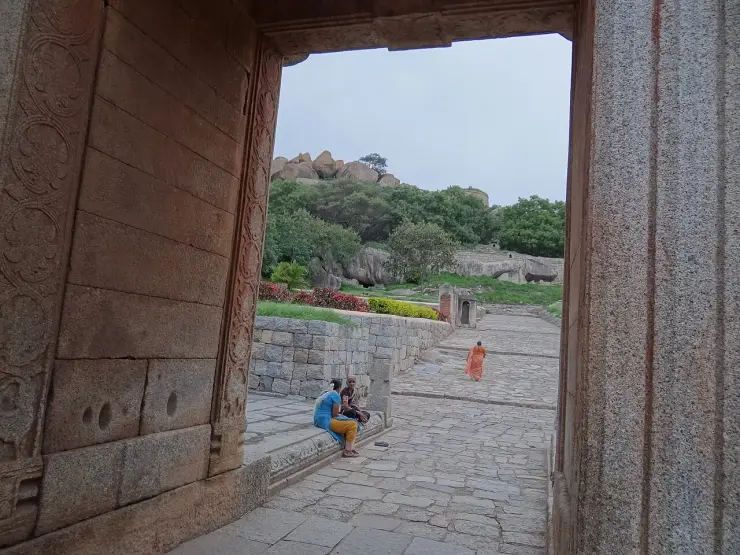
A distinct nearby subject used to explain the local circuit: Chitradurga_Fort_Gate.
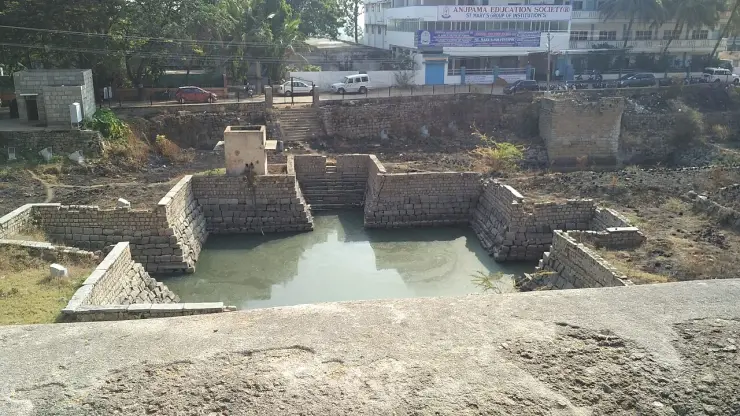
A distinct nearby subject used to explain the local circuit: Chitradurga_fort_Image_(1),_Karnataka,_India.
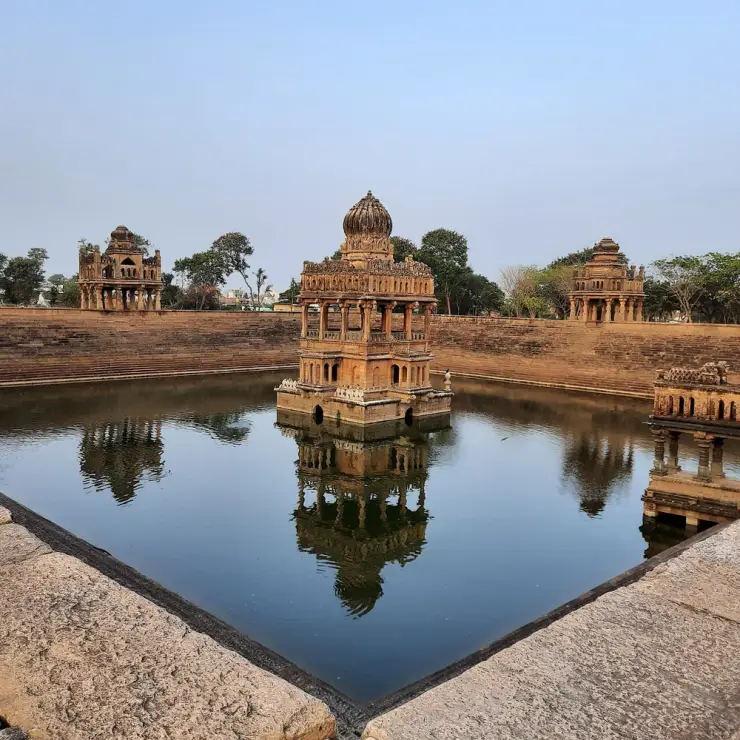
A distinct nearby subject used to explain the local circuit: Santhebennur.
Photographs: OpenStreetMap contributors (ODbL 1.0), Wikimedia Commons contributor (See linked Commons file page), Ramjaiswal75, CC BY-SA 4.0, via Wikimedia Commons (CC BY-SA 4.0), Nikhil0000711 (Public domain), Nagarjun Kandukuru from Bangalore, India, CC BY 2.0, via Wikimedia Commons (CC BY 2.0), Basavaraj M, CC BY-SA 4.0, via Wikimedia Commons (CC BY-SA 4.0), Singhv796, CC BY-SA 4.0, via Wikimedia Commons (CC BY-SA 4.0), Dineshkannambadi (CC BY-SA 4.0), Wikimedia Commons contributor; see source page for licence. Wikimedia Commons.