
The best things to do in Gokarna split cleanly in two: an ancient Shaivite temple town, and a string of walkable beaches strung along the headlands below it. Pilgrims come for the Mahabaleshwara temple and its sacred Atmalinga; travellers come for the cliff-linked coves that run south from the town shore. The two overlap in a small, laid-back place on the Kanara coast of Karnataka, where you can walk from a working temple street to a quiet beach cafe in under an hour. This guide runs through the temple, the beaches, the coastal trek that joins them, and the best places to visit in Gokarna within easy reach — all commission-free, with each place linking to its own page and its own contact details, never a booking middleman.
- The beaches, north to south: Gokarna Town Beach, then Kudle, Om, Half Moon and Paradise — walkable in that order along the cliffs.
- Don't-miss: the Mahabaleshwara Atmalinga temple, a beach day at Om, sunset at Kudle, and a day trip to the giant Shiva at Murudeshwara.
- Best months: October to March. Avoid the June-September monsoon, when the sea is rough and the shacks and boats close.
- Getting around: autos run from town to the road-accessible beaches; the rest are reached on foot along the cliff paths or by boat from Om Beach.
Mahabaleshwara Temple and the Atmalinga
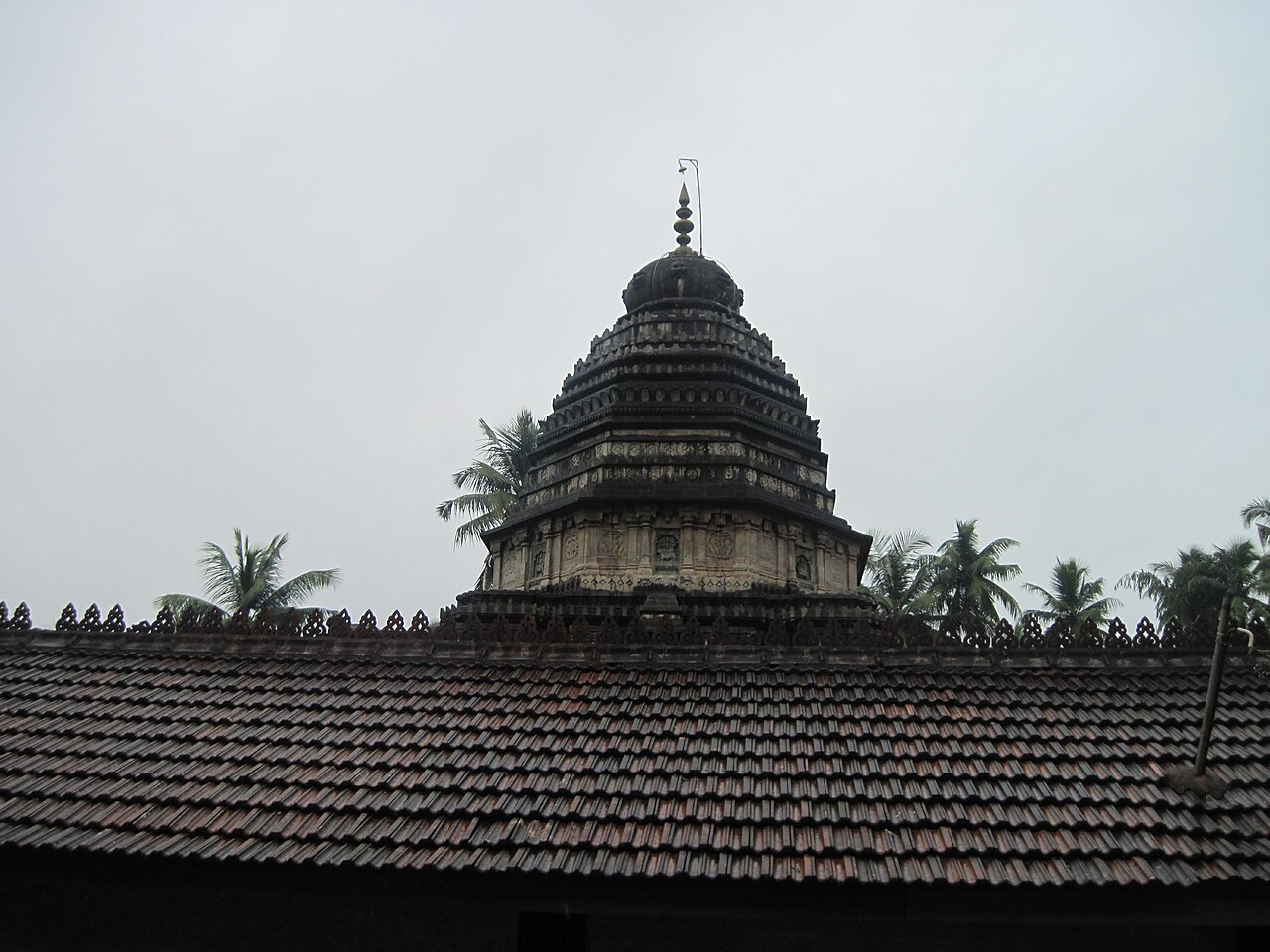
The heart of the town is the Mahabaleshwara Temple, a classical Dravidian granite temple near the sea that enshrines the Atmalinga — one of the most revered Shiva lingas in South India, which is why Gokarna is known as a "Dakshina Kashi" (a Kashi of the South). By tradition the linga was carried here from Kailash by Ravana and set on the ground through a trick by Ganesha, after which it could never be moved; Ravana's failure to lift it is said to give the shrine its name, Mahabaleshwara, the "all-powerful". It is a strict, living temple: dress modestly, leave footwear outside, and note that sanctum dress rules apply and non-Hindus may face restrictions. Come around the great Maha Shivaratri car festival (February-March) and you will find a huge temple chariot pulled through the streets — spectacular, but very crowded.
Gokarna Beach
In front of the town lies Gokarna Beach, the broad town shore where pilgrims perform ritual bathing and last rites and where fishing boats pull in. It is livelier and more local than the backpacker beaches to the south, and less about sunbathing than about the everyday life of a pilgrimage town. It is also the trailhead: the cliff path that climbs over the southern headland from here is what links the town to Kudle, Om and the coves beyond. Because it is a sacred beach used for rituals and cremations, dress modestly, be respectful, and do not photograph ceremonies.
Kudle Beach
The first cove south is Kudle Beach (also spelt Kudlee), a wide crescent of sand about a 20-minute walk over the headland from town, or a short auto ride to the top followed by steps down. It is the mellow, long-stay beach — backed by simple guesthouses and cafes, known for its sunsets, its yoga and an unhurried pace. If Om is where you go for the scene, Kudle is where you go to slow down. Card facilities are limited, so carry cash, and take care on the cliff steps after dark.

Om Beach
A little further south is Om Beach, named for its shape: two joined curves that together trace the Om (ॐ) symbol. It is the most popular and most developed of Gokarna's beaches, with shacks, water sports, boat rides and a relaxed traveller scene, and it is the usual base for a beach stay. It sits about 6 km from the town by road, or you can walk in along the cliffs from Kudle. From here, cliff paths and boats link on to Half Moon and Paradise. Swim where flagged — the headlands create currents — and wear good shoes for the exposed cliff trails.
Half Moon Beach
Beyond Om, the crowds thin fast. Half Moon Beach is a small, half-moon-shaped cove reached only by a cliff trek of roughly 30 to 40 minutes from Om, or by a short boat ride. There are just a handful of shacks — a place for a swim, a hammock and a simple meal by the sea rather than any nightlife. Carry water and cash, watch the tide, and time your return so you are off the exposed trail before dark. It pairs naturally with the walk on to Paradise.
Paradise Beach
The last and most remote of the string is Paradise Beach, also called Full Moon Beach — an isolated stretch of sand and rock reached by boat from Om or a long cliff trek beyond Half Moon. It long drew campers and free spirits; overnight camping is now restricted, so most people visit for the day and return by boat. There are no facilities at all, so carry your own water and food, take your litter out, and confirm the last return boat before you set off, since the water is clear and the seclusion is the whole point.
Walking the beach trek
The single most rewarding thing to do in Gokarna is to walk the beaches in order — town beach, then Kudle, Om, Half Moon and Paradise — along the cliff paths that connect them. Done in full it is a day's walk over headlands with big sea views, and you can drop out at any point: many people walk town-to-Om, spend the afternoon, and take an auto back. The trail is unshaded and rocky in places, so start early, wear proper shoes, carry water and cash, and avoid the exposed sections after dark. Boats from Om Beach are the easy fallback for the two southern coves, and a sensible way home if the tide or the light turns against you.
Mirjan Fort
For a change from sand and temple streets, Mirjan Fort stands near Kumta on the Aghanashini estuary, about 20 km from Gokarna off NH-66. It is a fort of laterite blocks with high bastions, arched gateways and stepped wells, wrapped in greenery and usually quiet enough to explore at your own pace. It is linked to the 16th-century queen Chennabhairadevi, the "Pepper Queen" who controlled the spice trade of this coast. Entry is free or nominal; wear good shoes for the uneven walls and open wells, and go early to beat the heat.
Day trip to Murudeshwara
The big day trip south is to Murudeshwara Temple, on a headland jutting into the Arabian Sea about 75 km from Gokarna. Its temple is crowned by one of the tallest statues of Shiva in the world — a seated figure around 37 m high — beside a towering 20-storey Raja Gopura with a lift you can ride for a view over the statue and the sea. Dedicated to Shiva and linked to the same Atmalinga tradition as Gokarna, and washed by the sea on three sides, it is one of the most striking coastal temples in India. Go for sunset if you can; it has its own station on the Konkan railway, so the train is an easy way down, and it gets very busy on weekends and festival days.

Gokarna's beaches at a glance
| Beach | Vibe/character | Access | Best for |
|---|---|---|---|
| Gokarna Beach | Broad town shore, pilgrims and fishing boats, local and unpolished | In town, short walk from the temple | Ritual life, a first shore stroll, the trailhead |
| Kudle Beach | Wide crescent, mellow, cafes and yoga | ~20-min cliff walk from town, or auto plus steps | Sunsets and long, slow stays |
| Om Beach | Twin Om-shaped bays, shacks and water sports, busiest | ~6 km by road, or cliff walk from Kudle | A beach base and activities |
| Half Moon Beach | Small secluded cove, only a few shacks | Cliff trek or boat from Om | A quiet swim away from the crowds |
| Paradise Beach | The most remote, isolated sand and rock, no facilities | Boat from Om, or a long trek via Half Moon | Seclusion on a day trip |
Two or three unhurried days cover the temple, the full beach walk and a day trip to Murudeshwara without rushing. If Gokarna leaves you wanting more of Karnataka's backpacker circuit, the ruined-city walks and river beyond pair well with it — see our guide to things to do in Hampi to plan the next leg.
Frequently asked questions
What are the best things to do in Gokarna?
Visit the Mahabaleshwara temple and its sacred Atmalinga, then walk the beach trail from the town shore south through Kudle, Om, Half Moon and Paradise. Add Mirjan Fort near Kumta and a day trip to the giant Shiva statue at Murudeshwara.
Which is the best beach in Gokarna?
It depends on what you want. Om Beach is the most popular and best set up, with shacks and water sports. Kudle is the mellow beach for sunsets and long stays, while Half Moon and Paradise are the secluded coves for escaping the crowds.
How many days should I spend in Gokarna?
Two to three days is a good fit — one for the temple and town, one to walk the beaches, and one for a day trip such as Murudeshwara or Mirjan Fort. Beach-focused travellers often stay longer and slow right down.
What is the best time to visit Gokarna?
October to March, when the sea is calmer and the beach shacks and boats are running. Avoid the June-September monsoon, when the sea is rough, many shacks close and the cliff trails are slippery.
How do you get to Gokarna?
Gokarna Road station on the Konkan railway is the main rail gateway, and the town is roughly 90-100 km from Goa's Dabolim airport. KSRTC and private buses, autos and taxis serve it along the NH-66 coastal highway.