Places to Visit in Belur

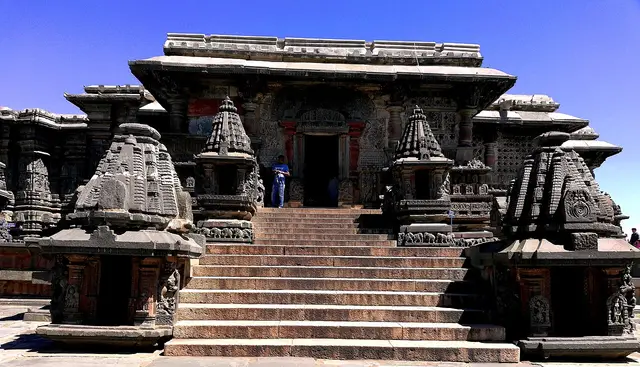
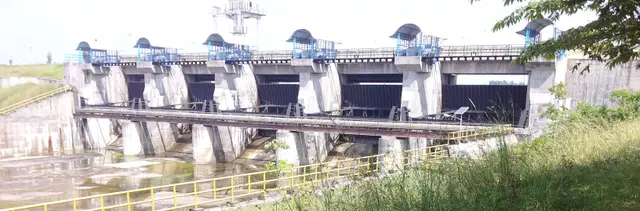
The Yagachi-river town around the Chennakeshava temple — the finest of the Hoysala star temples — with the Yagachi reservoir just outside for boating and sunsets.

Belur
Practical guide

Plan Belur

Who's going?Tailor Belur to your trip
DistrictHassan
RoleHoysala temple base
Time neededHalf a day for the temple compound…
Places to visit2Listed businesses10

Belur is a town of a few thousand people in Belur taluk of Hassan district, on the Yagachi — a river coming out of the Western Ghats near Chikkamagaluru and running down to the Hemavati. It was Velapuri once, and Beluhur and Velur before that, and it was the first capital of the Hoysalas. Medieval texts call it bhuloka Vaikuntha, the Vaikuntha of the earth. Karnataka Tourism, Wikipedia and the temple’s own department all put it on the Yagachi; Wikivoyage says the Bhadra, and Wikivoyage is wrong about that.

The shape of the town follows from one decision taken nine hundred years ago. Vishnuvardhana commissioned the Chennakeshava temple here in 1117 and then moved his capital to Dorasamudra — the place now called Halebidu, “old capital” — so Belur was the centre of a kingdom for about a generation and has been the place with the first great Hoysala temple ever since. What that leaves is a four-acre walled compound holding five temples and a stepped tank, and around it a working small town: a bus stand, a government hospital, a Catholic parish, one commercial street of shops and eating houses running from the stand down to the temple gate.

Almost everything a visitor needs is on that street or just off it, inside a ten-minute walk of the gate. The state tourism corporation runs both of the obvious places to stay — Hotel Mayura Velapuri on Temple Road, five minutes from the compound, and Hotel Mayura Yagachi opposite the dam 3.5 km north — and Hassan district’s own hotel list adds Vishnu Regency on K.G. Road and Sumukha Residency on Temple Road. The food within walking distance is almost entirely vegetarian; the non-vegetarian places are out on the Hassan road.

Belur is small and does not pretend otherwise. Wikivoyage’s own verdict is that “the main thing to see are the temples” and there is “no other major activity to do here”, which is fair. What that misses is that the temple is genuinely a half day rather than an hour, that the four smaller shrines in the same courtyard are nearly always walked past, and that Halebidu is 21.6 km up the road — not the 16 km almost every source prints, which is the straight line.

What to expect

Highlights

  • Chennakeshava Temple, Belur — The Hoysala masterpiece begun in 1117 by King Vishnuvardhana to mark a victory over the Cholas — a star-platform Vishnu temple worked for over a century, covered in soapstone friezes, madanika bracket figures and pierced stone windows, and still in active worship.
  • Yagachi Dam — A reservoir on the Yagachi river 3.5 km north of the Chennakeshava temple at Belur, backed by low hills, popular for boating, kayaking and other water sports and as a quiet sunset picnic spot.
Getting there

How to visit

  • Nearest airport: Mangaluru (IXE) at about 153 km, roughly two hours across the ghats, is the nearest and the one Karnataka Tourism names for Belur. Bengaluru (BLR) is 236 km and about three and a half hours, and it is the one most visitors actually fly into because it has the network. There is no airstrip at Hassan.
  • Rail gateway: Hassan, about 37 km and an hour away, is the railhead, with services to Bengaluru, Mysuru, Mangaluru, Hubballi and Shivamogga. Chikkamagaluru station is nearer in a straight line — Wikivoyage puts it at 18 km — but carries far fewer trains. There is no station at Belur; from Hassan take a bus from the KSRTC stand or a taxi on SH57.
  • Belur's own bus stand sits at the top of the shop street, 876 m and about eleven minutes' walk from the temple gate, and state buses run from it to Hassan, Halebidu, Chikkamagaluru, Arsikere, Shravanabelagola, Mangaluru and Bengaluru. KSTDC runs a Belur–Halebidu–Shravanabelagola coach out of Bengaluru and Mysuru — daily April to June and September to November, four times a week otherwise — and Wikivoyage's caveat is worth heeding: the air-conditioned Volvo runs at weekends and the weekday buses are not. For Halebidu, 21.6 km on, buses exist but are thin enough that most visitors take a half-day taxi.

Distance by road

  • Chikkamagaluru25 km
  • Hassan37 km
  • Shivamogga122 km
  • Madikeri126 km
  • Mangaluru153 km
  • Mysuru156 km
  • Udupi180 km
  • Davanagere182 km
  • Bengaluru236 km

Road distances measured on real routed roads to Belur itself, not to the district headquarters, on 25 August 2026. Driving time is deliberately not published: free-flow routing badly understates a Deccan single-carriageway highway, so allow more than the distance suggests.

Timing

Best time to visit Belur

October to February, which is what Karnataka Tourism recommends and what the weather supports: dry, cool enough to walk a stone courtyard barefoot, and clean light on shallow carving. March to May is hot on an open terrace with no shoes on. The south-west monsoon from June to September is not a reason to stay away — the crowds thin and the soapstone goes a deep wet grey — but the ghat road up from the coast is a different proposition in heavy rain. Whichever month, the hour matters more: first thing in the morning, or the last hour before the temple closes.

Weather in BelurSeasonal guide

Live forecast loads in your browser.

Today at Belur
Sunrise6:16 am
Sunset6:37 pm
Golden hour best light5:37 pm–6:37 pm
Blue hour after sunset6:37 pm–7:02 pm
Sun sets toward compass bearingW · 278°
Moon tonight🌖 Waning gibbous · 64%
South-west monsoon. June to September is the south-west monsoon in Karnataka. Expect heavy showers, mostly in bursts rather than all day — carry rain cover, allow extra time for getting around, and note that ferries and open-air sites are the first things affected.

Sun and moon are calculated for this location and shown in IST. Photography windows are the hour around sunrise and sunset; the sunset bearing is degrees clockwise from true north. Moon phase is accurate to about half a day.

Visitor notes

  • The temple’s midday break — 1:00 PM to 2:30 PM — catches out most day visitors arriving from Bengaluru.
  • Halebidu is 21.6 km by road, not the 16 km published nearly everywhere; 16 km is the straight line.
  • Food within walking distance of the gate is almost entirely vegetarian. Non-vegetarian is out on the Hassan road.
  • There is no railway station at Belur and no airport nearer than Mangaluru. Hassan is the railhead.
The story

The story of Belur

The Hoysalas’ first capital, on a river out of the Western Ghats, which their own poets called the Vaikuntha of the earth. It was the capital for about a generation and has been the town with the great temple ever since. Belur is a single shop street running downhill to a wall, and behind the wall is a four-acre courtyard that took about a century to carve and has been in daily worship since 1117 — long enough that the town’s whole shape, its bus stand, its lodges, its eating houses and its hospital, is arranged around a building finished eight hundred years before any of them. Since 2023 it has been a UNESCO World Heritage Site, one of three Sacred Ensembles of the Hoysalas. It is small, it is flat, it is walkable end to end in twenty minutes, and almost everybody gives it an hour when it is worth half a day.

Belur is a street of shops that ends at a wall, and behind the wall is a courtyard of about four acres holding five temples, a stepped tank and 118 inscriptions. That is the town, honestly stated. Everything else here — the bus stand, the government hospital, the Catholic parish in J. P. Nagar, the lodges on Temple Road — exists around it.

It has had other names. Old inscriptions and medieval texts call it Beluhur, Velur and Velapura; Karnataka Tourism lists Velapuri, Velur and Belapur. The Hoysalas thought so highly of it that the texts of the period describe it as bhuloka Vaikuntha, the Vaikuntha of the earth — Vishnu’s own heaven, on the ground, in Hassan district.

Vishnuvardhana came to power in 1110 and held court here. He commissioned the Chennakeshava temple in 1117, one of what his court called the five foundations of his reign, and then moved the capital to Dorasamudra — Dvarasamudra, now Halebidu, whose name simply means “old capital”. So Belur’s time at the centre of a kingdom was short, and its long career has been as the town where the first great Hoysala building is.

The river is the Yagachi, a tributary of the Hemavati that rises in the Ghats near Chikkamagaluru; historic texts also call it the Badari. Its dam is 3.5 km north of the temple on the Chikkamagaluru road, with the state tourism corporation’s second hotel standing opposite the water. Travel pages that put Belur on the Bhadra are repeating an error: the Bhadra is a different river in the next district.

What makes the courtyard worth the half day is that it is not one building. The great temple stands in the middle on a low platform; south of it is the smaller Kappe Chennigaraya that the queen paid for; west is Viranarayana; and there are the Soumyanayaki and Andal shrines, a pillared hall by the bathing tank, a free-standing lamp pillar forty-two feet high cut from one rock, and a stepped tank in the north-east corner that Ballala II had cut in 1175. Nearly everyone walks straight to the big one and straight back out again, and misses four temples on the way.

The stone is soapstone — chloritic schist, quarried near Tumkur about 200 km away and carted here. It is the reason the carving looks the way it does. Fresh out of the ground it cuts almost like wood, so a sculptor could take it down to detail no harder stone would allow: bracelets that slide on a figure’s arm, a bull the size of a lentil grain. Exposed to air it hardens towards iron. The department has the surface treated and wax-polished about once in ten years, which is why a twelfth-century wall still catches light like something finished last year.

The tower is missing, and once you know it you cannot stop seeing it. The vimana over the sanctum was brick and mortar on a timber frame, plated with gilt copper sheet, and by the nineteenth century it was coming down. It was dismantled in 1879 to save the levels underneath and never replaced. So the most photographed Hoysala temple in Karnataka is a building with its roof taken off, and the flat top you see in every picture is a repair, not a design.

The gateway you walk under is not Hoysala either. A Delhi Sultanate officer burned the original in the fourteenth century, and the seven-storey brick gopura that replaced it went up in 1397 under Vijayanagara, along with four granite pillars added in 1381 to prop a failing roof and a gold-plated finial in 1387. Then repairs in 1709, 1717, 1736 and 1774 — one of them by an officer of Hyder Ali — and a full cleaning in 1935 paid for by the Mysore government and the Wadiyars. Every one of those repairs was cut into the stone as an inscription. The 118 inscriptions in this courtyard are not a bonus feature; they are the building’s maintenance log, kept for nine hundred years.

The town around it is honestly small. There is one commercial street, a bus stand at the top of it, a government hospital, a police circle office, a handful of bank branches and ATMs, a Catholic parish 860 m out in J. P. Nagar, and lodging that runs from two state tourism corporation hotels to a short list of private lodges on Temple Road and K.G. Road that the Hassan district administration publishes itself. There is no railway station and no airport; Hassan, 37 km away, is the railhead for both. Nothing here is more than a walk from anything else.

Belur is almost always visited as half of something. The pairing with Halebidu — 21.6 km up the road, the capital this town lost the court to — is so standard that the state tourism corporation runs a coach doing Belur, Halebidu and Shravanabelagola in a day, and most private taxis do the first two. That is a fair way to see them, and it is also why so many people see Belur without ever really stopping in it — in through the gate, round the temple, back in the car, and the town itself gets a parking charge and nothing else. The alternative is to stay the night: the temple opens at 7:30 and shuts at 7:30, and the hour at each end, with low light on shallow carving and the coaches gone, is what everybody who loves this place is talking about.

Legend & myth

Belur’s legends are not all told in the past tense. The temple’s own department publishes one that is still, by tradition, performed every day. Vishnuvardhana, the story goes, was spending a night in the forest on the Baba Budan range when he dreamt of Keshava, and he built this temple on the strength of the dream. But in bringing the god down to the Yagachi he had separated him from his consort, who stayed on the hill. So the god walks back to the range at night to see her, and the sandals wear out. The cobblers of Belur have answered that for centuries by leaving a fresh pair at the shrine each day, and the town will tell you the old pair is gone by morning. Read it however you like; what is not in doubt is that a working community in this town has a standing daily obligation to a twelfth-century building, and keeps it.

The small temple in the south of the courtyard is called Kappe Chennigaraya, and kappe is Kannada for frog. The temple’s own page gives the short version — a frog was found at the navel of the image. The long version is one of the best-known stories in Karnataka, and it does not end in Belur at all.

Jakanachari, remembered by the epithet Amarashilpi, the eternal sculptor, left his village near Tumkur soon after his marriage and spent his life building temples for other people’s kings. His wife bore a son he never met. The son grew up a sculptor too, went looking for his father, and found him at Belur, working on the image for the sanctum. The young man said the stone was flawed. The old man, who was the most celebrated craftsman of his age and had been told this by a stranger half his years, swore he would cut off his own right hand if it were true. The son chiselled where he had pointed, and water, sand and a frog came out of the block. Jakanachari took off his hand before anyone could stop him, and only then learned who the stranger was. Later, the story says, he was told in a vision to build a temple in his own village; when he did, the hand was restored, and the village has been called Kaidala — the restored hand — ever since. The temple’s department tells it with the son as Dakanachari and the creature as a frog; other tellings name him Dankanacharya and make it a toad. Nobody claims it as history. It is how this town explains a name.

The bigger name has moved too, and that one is documented rather than legendary. In the inscriptions of its own century the great temple is Vijayanarayana and the queen’s smaller one is Chennakesava, “handsome Kesava”. Eight hundred years later the names have traded buildings. The town, the signboards and UNESCO all say Chennakeshava for the big one; the priests still address the god in the sanctum by the older name.

The men who cut the stone are the other thing this town is haunted by, because they signed it, and they signed it rudely. Dasoja of Balligavi calls himself the smiter of the crowd of titled sculptors. Malliyanna is the tiger among sculptors. Padari Malloja is a pair of large scissors tied around the necks of titled sculptors. Chikkahampa is champion over his rivals; Nagoja is the confounder of sculptors. Ruvari Mallitamma, who signed more than forty pieces here and went on to work at Halebidu and Somanathapura, needed no epithet at all. These are not craftsmen’s marks. They are a workshop quarrel, in stone, in the first person, and it is still legible.

Two of their smaller jokes have outlived them. On the Narasimha pillar in the hall there is a bull carved no larger than a grain of Bengal gram, and beside it a patch the sculptor is said to have left blank on purpose — a space for anyone who thought he could do better. Nobody has. One of the bracket figures wears bracelets that still slide up and down her arm; another has a ring in her headdress that turns. All of it was cut from a single block, and all of it out of a stone soft enough to work like wood on the day it comes out of the quarry and hard as iron a few years later.

The tradition that the mirror lady — the Darpana Sundari — is Shantala Devi herself is repeated by Karnataka Tourism and by every guide at the gate. No inscription says so. The queen was real, she was a Jain, she paid for the small temple, and the town has told this story about her for a very long time; that is the honest shape of it, and it is not worth less for being a story.

Behind all of them is the dynasty’s own founding legend, which belongs to Belur in a specific way: a boy called Sala in the forest at Sosevur, a Jain teacher shouting “hoy, Sala” — strike, Sala — as a beast came at them, and a name taken out of the shout. The department’s account makes the beast a tiger; historians who doubt the whole thing note that a hill chief remembered for killing a tiger or a lion is exactly the sort of ancestor a rising family invents. What is not disputed is where the earliest surviving telling of it is written down: in Vishnuvardhana’s own inscription here, of about 1117. The legend that names the dynasty was first committed to stone in this town.

One last thing, offered as the contradiction it is. The temple department’s own history page says Belur was chosen as the Hoysala capital “after the sacking and destruction of their capital at Dwarasamudra”. The inscriptions run the other way: Vishnuvardhana ruled from here first and moved the court to Dorasamudra in the 1120s, and the sackings came two centuries later. We follow the inscriptions. We print the department’s version too, because a temple that has been continuously in worship since 1117 is entitled to its own account of itself, and because you may well hear it at the gate.

More about Belur

History

1110 CE — Vishnuvardhana, born Bittiga, comes to power and rules from Velapuri. He beats the Cholas at Talakadu in 1116 and pushes the Western Chalukyas back out of Karnataka. The temple here is traditionally read as a victory monument for Talakadu; the temple’s own department adds the other tradition, that he built it on adopting Vaishnavism under the influence of Ramanujacharya. Both are offered, neither is settled.

1117 CE — the main shrine is consecrated, dedicated to Vijayanarayana, and an inscription by the northern entrance of the hall records Vishnuvardhana installing the image. The queen, Shantala Devi, a Jain, builds the smaller Chennigaraya temple beside it at the same time and her stepson later endows its worship. Construction had begun about 1116 and the complex kept growing for roughly a century — the department’s own figure is 103 years to finish.

c. 1120s — the court moves to Dorasamudra, 21.6 km away, and the Hoysaleswara temple is begun there. Dvarasamudra is now Halebidu, a name that simply means “old capital”. Belur’s spell at the centre of a kingdom was about a generation; everything since has been the long career of the town with the temple in it.

1175 CE — Ballala II adds a kitchen and a grain store to the complex and cuts the stepped tank in its north-east corner — a working temple being equipped to feed people, not decorated.

1292–1343 — under Veera Ballala III the courtyard is walled, a gateway added and the open hall closed with perforated stone screens. A security programme, and it tells you what the fourteenth century felt like here.

Early 14th century, then again in 1326 — Delhi Sultanate armies, first under Malik Kafur and then a second force, plunder Belur and Halebidu. An officer of the Tughlaqs named Ganga Salar burns the original wood-and-brick gateway. Halebidu never recovered its position; Belur, smaller and already past its moment, did.

1377–1404 — Vijayanagara repairs the temple under Harihara II: four granite pillars added in 1381 to carry a failing roof, a gold-plated kalasa in 1387, and in 1397 the seven-storey brick gopura you still walk under, built by his general Gunda to replace what Ganga Salar burned. So the gateway everybody photographs is Vijayanagara work, two and a half centuries younger than the temple behind it.

1879 — the vimana over the sanctum, brick and mortar on a timber frame plated with gilt copper, is dismantled because it is collapsing and threatening the sanctum under it. It was never replaced, and the flat top the temple has today is that repair. Restorations are also recorded in 1709, 1717, 1736 and 1774, the last by an officer of Hyder Ali.

1935 — the Mysore government and the Wadiyar dynasty fund a cleaning and restoration, and cut the record of it into stone exactly as every earlier repair had done. That habit is why this courtyard holds 118 inscriptions running from 1117 into the eighteenth century: they are the building’s maintenance log.

18 September 2023 — the Chennakeshava temple is inscribed on the UNESCO World Heritage List as part of the Sacred Ensembles of the Hoysalas, site 1670, under criteria (i), (ii) and (iv), together with Halebidu and Somanathapura. It remains, throughout, a temple in daily worship rather than a monument — pujas morning and evening, without a break, since 1117.

Why visit

For a Hoysala temple that is still a temple. Priests, garlands, a published seva rate card and a sanctum that shuts at one o’clock — this is not a monument with a temple inside it.

For the four shrines in the same courtyard that nearly everyone walks past: Kappe Chennigaraya, Viranarayana, Soumyanayaki and Andal.

Because it pairs. Halebidu is 21.6 km up the road, Belavadi 15.5 km, Yagachi 3.5 km, and Shravanabelagola 97 km on the way back to Bengaluru.

Because the town is walkable and cheap, and staying a night is the only way to have the temple at opening and at closing, which is when it is worth having.

For the signatures. The sculptors carved their own names into their work here, with boasts attached, and you can still read the rivalry between the workshops eight hundred years later.

Because it is a UNESCO World Heritage Site that has not been turned into one — inscribed in 2023, and still a working temple where the ticket office is a seva counter.

Before you go

Belur — at a glance

HoursThe town does not close, but the temple does, and the temple is the reason you are here. Darshan is published by the department as 7:30 AM to 1:00 PM and 2:30 PM to 7:30 PM. Plan the day around that break rather than around the shops, which keep ordinary small-town hours and thin out sharply after dark.

Entry: There is no charge to be in Belur and no ticket for darshan at the Chennakeshava temple, which is a living temple administered by the state’s Hindu Religious Institutions and Charitable Endowments department. What costs money here is a government-approved guide at the temple gate, which Wikivoyage puts at ₹125–250, a parking charge for a car or taxi at the temple that covers you for the day, and a seva if you want one — the department’s own rates run from ₹5 for a coconut and mangalarathi to ₹2,000 for an abhisheka of the main deity. Water sports at the Yagachi dam, 3.5 km north, are charged separately and are seasonal.

Parking: There is a paid car park in front of the temple and the charge covers the vehicle for the day — Wikivoyage notes that the same arrangement holds at Halebidu, so a taxi doing both pays at each but neither is by the hour. It fills on weekends, public holidays and the Bengaluru school breaks, and the overflow parks along the approach street. Nothing is formally attended, so take your valuables with you. Fuel is in the town; there is none at the temple and none at Halebidu worth relying on.

Getting here

How to reach Belur

On the Yagachi in Belur taluk, Hassan district. Hassan, the district headquarters and the nearest railhead, is 37 km; Chikkamagaluru 25 km; Halebidu 21.6 km; Bengaluru 236 km. The bus stand is at the top of the shop street, 876 m and about eleven minutes’ walk from the temple gate.

Getting around

Getting around Belur

On foot, for everything that matters. The bus stand, the shop street, the eating houses, the two state tourism hotels and the lodges on Temple Road and K.G. Road are all inside a ten-minute walk of the temple gate, and the town is flat. Autos wait at the bus stand and near the temple for short hops and for the Yagachi dam, 3.5 km north. Beyond the town you need a vehicle: buses to Halebidu exist but run infrequently enough that a half-day taxi from Belur or Hassan is the usual answer, which is exactly the gap the KSTDC Belur–Halebidu–Shravanabelagola coach fills.

  • 🚕︎ Online taxis Do not plan on an app. Neither Ola nor Uber has meaningful driver supply in a town this size, and even in Hassan, 37 km away, coverage is thin and outstation runs are arranged by phone rather than in-app. Use the taxi stand at the bus stand, your hotel’s desk, or a Hassan operator booked ahead. If you have come out from Bengaluru by app cab, keep the same car for the return — there is nothing here to catch back.
Getting back

Work out your return before you settle into the day. Services in Karnataka thin out sharply in the evening, and Belur is easier to reach than to leave once the last long-distance bus has gone. We do not publish departure times: there is no official live feed we are permitted to republish, and a wrong time here would strand you. Check the operator directly on the day.

Ask at the bus stand for the time of the last service back, not the next one. If you miss it, an auto or a taxi is the fallback — agree the fare before you get in.

Do

Things to do in Belur

  • Give the Chennakeshava courtyard a half day rather than an hour. It is about four acres holding five temples, a stepped tank and 118 inscriptions, and the carving that people come for is the band of 38 surviving bracket figures under the eaves — you have to walk the whole way round the outside, slowly, to see them. The temple has its own page here with the full detail.
  • Take a government-approved guide at the gate. This is the rare case where it genuinely changes the visit: the hall is dark behind fourteenth-century perforated stone screens, the best things in it are small, and nothing is labelled. Wikivoyage puts the fee at ₹125–250.
  • Walk the shop street from the bus stand down to the temple gate — 876 m, about eleven minutes — rather than being driven to the door. It is the whole of the town’s commercial life in one street, and it is the only way you see Belur as a place people live in rather than an entrance.
  • Go out to the Yagachi dam, 3.5 km north on the Chikkamagaluru road. There is a reservoir, a view back towards the Ghats, the state tourism corporation’s second hotel opposite the water, and seasonal operator-run water sports. It is the only thing here that is not a temple.
  • Do Halebidu the same day — 21.6 km, about 25 minutes. The Hoysaleswara temple there is the second of the three Sacred Ensembles of the Hoysalas and is the obvious companion to this one; the Jain basadis are 22.9 km. A half-day taxi from Belur or Hassan is the usual arrangement, because the buses are infrequent.
  • See the temple twice if you stay the night — at 7:30 when it opens and again in the last hour before it closes at 7:30 in the evening. Low light on shallow soapstone carving is the whole point, and the day visitors from Bengaluru are not there for either.
  • Add Doddagaddavalli on the way to Hassan. The Lakshmi Devi temple there is 21.7 km from Belur, is one of the earliest dated Hoysala buildings, and has almost nobody at it.
  • Eat where the town eats. The places within a few hundred metres of the gate are almost entirely vegetarian and almost entirely Udupi — the Sri Sai Udipi Hotel is 214 m away and a lassi shop 180 m. Non-vegetarian food is out on the Hassan road.
Plan

Good to know

  • Go first thing or in the last hour. Between March and May the courtyard stone is genuinely hot by mid-morning and you walk it barefoot.
  • Plan around the temple’s midday break, 1:00 PM to 2:30 PM. It is what catches out day visitors driving in from Bengaluru, and Belur does not take an hour and a half to fill.
  • Budget 21.6 km to Halebidu, not the 16 km printed nearly everywhere. Sixteen is the straight line, and Karnataka Tourism itself publishes both 16 and 20.
  • Take the guide. The best carving is small, the hall is dark and nothing inside is labelled.
  • Draw cash before you need it. There are ATMs and bank branches in the town centre, but this is a small town and a queue or an empty machine on a festival weekend is not unusual.
  • Do not plan on an app cab. Neither Ola nor Uber has real driver supply here, and coverage is thin even in Hassan. If you came out by app cab, keep the same car for the return.
  • Stay a night if you can. The temple at opening and at closing is a different building from the temple at noon, and this is the only way to get both.
  • Say no once and mean it. Souvenir sellers work the temple exit persistently; they take a clear answer.
  • Wear socks you do not mind losing, and carry your shoes rather than leaving anything you care about at the stand.
Facilities

On site

  • A KSRTC bus stand at the top of the shop street, 876 m from the temple gate — the town’s only public transport link, with services to Hassan, Chikkamagaluru and Bengaluru.
  • A government hospital in the town on Lakshmi Devi Temple Road, plus a veterinary hospital. Anything serious goes to Hassan, 37 km.
  • Bank branches and ATMs in the town centre — State Bank of India, Canara Bank and HDFC among them. Note that our map data is OpenStreetMap’s and a branch name on it may predate the bank mergers, so the sign may not match the label.
  • A police circle inspector’s office in the town.
  • Public toilets at the temple; the courtyard itself has none, so use them before you go through the gate.
  • Two state tourism corporation hotels — Mayura Velapuri on Temple Road, five minutes’ walk from the gate, with 14 rooms, two dormitories and a restaurant; and Mayura Yagachi out at the dam. Private lodges on Temple Road and K.G. Road.
  • Fuel in the town. There is none at the temple and none at Halebidu worth relying on, so fill up here if you are doing both.
  • Paid car parking in front of the temple, charged for the day rather than by the hour, unattended — take your valuables with you.
  • Eating houses within a few hundred metres of the gate, almost all vegetarian. Non-vegetarian is out on the Hassan road.
  • St Michael’s Church, the Catholic parish, 860 m away in J. P. Nagar.
Stay safe

Safety

  • The temple courtyard is uneven stone walked barefoot, with two flights of steps and no handrails — go carefully with children and with anyone unsteady.
  • The Mangaluru road climbs through the Charmadi and Shiradi ghats and is a genuine mountain road; landslips and poor visibility are routine in the monsoon. Drive it in daylight.
  • The Yagachi dam is a working reservoir. Water sports are operator-run and seasonal; do not swim off the bank.
  • The nearest large hospital is in Hassan, 37 km. There is a government hospital in Belur on Lakshmi Devi Temple Road.
Getting around BelurPartly wheelchair accessible
From the entrance
The town itself is flat and short — the whole of it is within about a kilometre of the temple gate, on level ground, and the walk from the bus stand down the shop street is easy. The temple compound is the harder part, and the difficulty is specific: it is entered barefoot, the courtyard is uneven historic stone, the main temple stands on a jagati terrace about three feet up, and there is one flight of steps to the terrace and a second into the hall. Neither has a ramp or a handrail. The terrace itself, once you are on it, is broad and level and can be circled — and that circuit is most of what there is to see.
Step-free access
The courtyard is reachable and the gopura, the two pillars and the outside of the main temple can all be seen from it, which is a real visit rather than a consolation. The jagati terrace and the hall are not: steps, no ramp, and no accessible route published by the temple or by the Archaeological Survey. We have not found one and we are not going to invent one. Ask at the temple office (08177 222218) before travelling if this matters.
Prams
Fine in the town and across the courtyard. Not up onto the terrace or into the hall.
  • The whole compound is walked barefoot, and the stone gets hot enough between March and May to be a real problem by mid-morning. Socks, or come at 7:30 when it opens.
  • Two flights of steps with no handrails, on eight-hundred-year-old stone.
  • The nearest large hospital is in Hassan, 37 km away; Belur has a government hospital on Lakshmi Devi Temple Road.
  • Neither Ola nor Uber operates here. Arrange transport by phone or at the bus stand.

Checked 25 August 2026 against source 1source 2source 3source 4. Conditions change and surfaces vary with weather — if step-free access is essential, confirm with the site before you travel.

If you need help at Belur
112All emergencies (police · fire · medical)The single number to call in any emergency (ERSS).

Emergency numbers are verified against official government and state tourism sources. 112 works anywhere in India.

Practical things near Belur
What the cash actually costs
  • Withdrawing from a bank that is not your own is free for a set number of times a month, then costs up to ₹23 plus GST — about ₹27 a withdrawal. This is not one of the RBI’s six metro centres, so the allowance here is the higher one: at least five free other-bank withdrawals a month, and at least five at your own bank.
  • That free allowance belongs to Indian bank accounts. On a card issued abroad your own bank’s international withdrawal and exchange charges apply instead. If the machine offers to bill you in your home currency, choose rupees — the conversion rate on that offer is set by the machine, not by your bank.
  • Given a choice, use an ATM inside or attached to a branch: it sits in view of staff and cameras, and there is someone to ask if the machine keeps your card. A machine standing alone on a tourist street is the one to be wary of. Banks are listed here alongside the ATMs, but the map data does not record which ATMs sit inside a branch — check when you get there.

Charge cap and free-transaction limits: Reserve Bank of India, in force since 1 May 2025.

Mapped within about 1.2 km of Belur, with real walking routes rather than straight-line distances. Community-mapped data: opening hours are shown only where they are recorded, and this is not a complete list — something unmapped may well be closer. Please confirm on the ground.

In the district

Where Belur sits in Hassan district

Nearest airportMangaluru (IXE) at about 153 km, roughly two hours across the ghats, is the nearest and the one Karnataka Tourism names for Belur. Bengaluru (BLR) is 236 km and about three and a half hours, and it is the one most visitors actually fly into because it has the network. There is no airstrip at Hassan.
Rail gatewayHassan, about 37 km and an hour away, is the railhead, with services to Bengaluru, Mysuru, Mangaluru, Hubballi and Shivamogga. Chikkamagaluru station is nearer in a straight line — Wikivoyage puts it at 18 km — but carries far fewer trains. There is no station at Belur; from Hassan take a bus from the KSRTC stand or a taxi on SH57.
Bus / road accessNH-75 from Bengaluru (~185 km) via Channarayapatna; KSRTC and private buses, with taxis best for the temple and ghat circuit.
District HQHassan
LandscapeSouthern-Karnataka plains rising west into the Western Ghats, ~980 m at Hassan town

Hassan district is known for: The Hoysala heartland — the star temples of Belur and Halebidu, the Jain colossus at Shravanabelagola, and the Western Ghats coffee country around Sakleshpur.

Chennakeshava Temple, BelurHoysaleswara Temple, HalebiduGommateshwara, Shravanabelagola
Stay · eat · do · rent · see · shop

Places in Belur

Every verified place in Belur — filter by what you’re after.

H
Hotel Mayura Velapuri
Place to stay
Top pick
Hotel
Hotel Mayura Velapuri

The state tourism corporation's hotel on Temple Road, five minutes' walk from the Chennakeshava compound — which is the whole argument for it, because the temple is at its best in the first hour after it opens and the last before it closes, and staying here means you can do both. Fourteen rooms including a suite, air-conditioned and not, two dormitories, a restaurant and a bar. Hassan district's 2018 hotel list put it at ₹1,200 to ₹1,500; treat that as an indication. Book through KSTDC direct.

Directions Commission-freeView details
K
Kappe Chennigaraya Temple
Sight
Top pick
Temple
Kappe Chennigaraya Temple

The queen's temple, immediately south of the main shrine and built at the same time as it: Shantala Devi, Vishnuvardhana's queen, paid for it, and the inscriptions of that century call THIS one Chennakesava and the big one Vijayanarayana — the two names have since traded places. It measures 124 ft by 105 ft and holds two sanctums, one for Venugopala and one for Chennigaraya. The name comes from a kappe, a frog, said to have been found at the image's navel. 234 m on foot from the main steps.

DirectionsView details
H
Hotel Mayura Yagachi
Place to stay
Top pick
Hotel
Hotel Mayura Yagachi

The state tourism corporation's own hotel, standing directly opposite the Yagachi dam about 3.5 km north of the temple on the Chikkamagaluru road. KSTDC runs it as a budget unit with a restaurant, and the point of it is the water: the rooms face the dam, and Belur, Halebidu, Hassan and the Chikkamagaluru coffee country are all inside an easy drive. Book through KSTDC rather than a travel agent — it is a government corporation and it sells its own rooms.

Directions Commission-freeView details
V
Viranarayana Temple
Sight
Top pick
Temple
Viranarayana Temple

A small but complete temple west of the main shrine, 70 ft by 56 ft, with a nine-square navaranga and a sanctum, and 59 large reliefs around its outer walls — Vishnu, Shiva, Brahma, Bhairava, Lakshmi, Parvati, Saraswati and others, with some panels telling the Bhima story from the Mahabharata. It is 12th-century work like the main temple, and KSTDC's own description of Belur names it alongside Chennakeshava and Chennigaraya as one of the three temples worth the walk.

DirectionsView details
S
Soumyanayaki Shrine
Sight
Top pick
Temple
Soumyanayaki Shrine

A 12th-century shrine to Soumyanayaki, a form of Lakshmi, standing south-west of the main temple and enlarged later. It matters more than its size suggests: local tradition holds that its tower is a miniature of the great tower that once rose over the Chennakeshava sanctum and was taken down in the 1800s, so this is the nearest thing to a picture of what has been lost. The temple's own seva list prices abhisheka here separately from the main sanctum.

DirectionsView details
A
Andal (Ranganayaki) Shrine
Sight
Temple
Andal (Ranganayaki) Shrine

North-west of the main temple, the Andal shrine — also called the Ranganayaki shrine — was added under the Vijayanagara kings. Its outer wall carries elephants, foliage and 31 large images drawn from the Vaishnava, Shaiva and Shakta traditions together, with finely cut Venugopala, Mohini and Lakshmi panels and friezes of Puranic stories. 229 m from the main steps, and usually much quieter than the temple it stands beside.

DirectionsView details
V
Vishnu Regency
Place to stay
Hotel
Vishnu Regency

A twenty-room lodge on K.G. Road, 825 m and roughly ten minutes' walk from the temple gate, with parking inside its own compound and a restaurant on site. It is one of only four Belur properties that Hassan district's official hotel list carries; that list — compiled in 2018, so read the money as an indication and not a quote — put its rooms in the ₹400 to ₹1,500 band. Rooms are plain, air-conditioned and not.

Directions Commission-freeView details
K
Kalyani stepped tank
Nature
Stepped tank
Kalyani stepped tank

The stepped tank in the north-east corner of the Chennakeshava compound, called the kalyani in ordinary speech and Vasudeva-sarovara in the temple's own inscriptions. Ballala II had it cut in 1175 CE, in the same works that added the kitchen and the grain store, and a pair of stone elephants still stands at its edge. It is 136 m from the main temple steps — under two minutes on foot — and it is where the light is best in the last hour of the afternoon.

DirectionsView details
S
Sumukha Grand
Where to eat
Restaurant
Sumukha Grand

The dining room attached to Sumukha Residency on Lakshmi Devi Temple Road, 629 m from the temple gate and opposite the government hospital. It is a vegetarian multi-cuisine room — south Indian breakfast, north Indian thalis at midday — and it takes the overflow from the residency's function hall, so it can be busy on wedding dates. The residency itself is on Hassan district's official hotel list at 08177 222181; the restaurant's own website is no longer live, so hours are unverified.

Directions Commission-freeView details
B
Belur Bus Stand
Things to do
Bus station
Belur Bus Stand

The town's bus stand, 876 m and about ten minutes' walk north-east of the temple gate, and the reason most visitors can do Belur without a car. Karnataka's state buses run from here to Hassan (about 37 km), Halebidu, Chikkamagaluru (about 27 km), Arsikere, Shravanabelagola, Mangaluru and Bengaluru. Wikivoyage's Belur page is blunt that the monuments themselves are awkward to reach on public transport once you are past the town, so plan the Halebidu leg by bus, taxi or the KSTDC day tour rather than on foot.

Directions Commission-freeView details
S
Sri Sai Udipi Hotel
Where to eat
Restaurant
Sri Sai Udipi Hotel

A vegetarian eating house 214 m from the temple gate, on the shop street between the compound and the bus stand. "Udipi hotel" is Karnataka's own shorthand for a plain-fronted vegetarian place serving idli, dosa, and a rice plate at midday, and this is one of the handful within a three-minute walk of the temple. We could not find a published menu or hours from the business itself, so check on the door before you count on it for lunch.

Directions Commission-freeView details
S
St Michael's Church
Sight
Church
St Michael's Church

The Catholic parish church of Belur, in J. P. Nagar about 860 m west of the temple gate. The Diocese of Chikmagalur's own directory dates the parish to 1982 and puts it at 31 families, with a sub-station at Mathihalli (Tholalu). Mass is at 6:30 am on weekdays and 8:30 am on Sunday in Belur, 7 am at Tholalu. A working parish rather than a monument — come outside service times if you are only looking.

DirectionsView details
S
Shankar Comforts
Place to stay
Hotel
Shankar Comforts

A small lodge on the Belur Road side of town, 606 m from the temple gate — about seven minutes on foot, which puts it inside the walk-to-the-temple ring along with the two Mayura units and Sumukha. It does not appear on Hassan district's official hotel list and has no site of its own that we could verify, so ring ahead rather than arriving on the strength of this entry.

Directions Commission-freeView details
L
Lassi Plus
Where to eat
Juice bar
Lassi Plus

A lassi and juice counter on the shop street that runs from the temple gate towards the bus stand, 180 m from the main steps and the closest cold drink to the compound. OpenStreetMap has it as a drinks stall and we could find no page of its own, so treat the hours as unverified — this is a stop on the way out of the temple in the middle of the day, not somewhere to plan around.

Directions Commission-freeView details
U
Udupi Grand
Where to eat
Restaurant
Udupi Grand

A vegetarian restaurant out on the Hassan road about 1.7 km north-east of the temple, in the small cluster of eating houses near the bypass junction where the buses and the lorries stop. Too far to walk from the compound in the middle of the day — 2.3 km on the footway, nearly half an hour — but a straightforward halt if you are driving in or out. No published hours we could verify.

Directions Commission-freeView details
H
Hotel Hamza
Where to eat
Restaurant
Hotel Hamza

A non-vegetarian eating house on the Hassan road, 2.4 km from the temple gate and the furthest of the three in that cluster. Worth knowing about precisely because it is not vegetarian: nearly everything within walking distance of the Chennakeshava compound is, and biryani in Belur means coming out this way. Hours unverified — we found no source belonging to the business.

Directions Commission-freeView details
S
Sri Vinayaka
Where to eat
Restaurant
Sri Vinayaka

A small eating house in the same roadside cluster as Udupi Grand and Hotel Hamza on the Hassan road, about 1.7 km from the temple. These three are what is open early and late when the shop street by the temple gate has shut; none of them has a page of its own, so everything past the position and the kind of place it is would be guesswork, and we have not guessed.

Directions Commission-freeView details

Book with the place itself. India’s cyber-crime coordination centre warned in April 2025 that convincing copies of hotel and pilgrimage booking sites are being pushed through sponsored search and social ads, taking payment for rooms the property never hears about. Every listing here links to the business’s own contact details and its own Google or Bing profile — we take no commission and sit in nobody’s payment path. If a booking page reached you through an ad, check the address bar against the property’s own site before you pay. Fraud can be reported on cybercrime.gov.in or on 1930.

Ranked

The best of Belur, ranked

Nearest to the centre of Belur, on foot

Ordered by a real routed walk from the town centre — a different question, and the one that decides what you can do before lunch. Straight-line distance understates a real walk by about half again, so these are walking-network figures, not lines on a map.

Everything around Belur, by distance

Every place we hold for Belur, ordered by a real routed drive from the town centre. Times are free-flow and a real road rarely is, so read them as the floor rather than the estimate — anything that routed over ninety minutes is left out rather than published as a number we do not trust.

For hotels, homestays and local businesses

Get listed in Belur for free

Roampedia is commission-free. Travellers discover your business, book directly and contact you through official details. Basic listings are free, while Gold and Platinum package upgrades can be requested from the owner dashboard after approval.

List your business — free
Ranked guide modules

Top Belur experiences

1 pick

Belur-scoped cards for local planning: verified places, practical routes and source-checked visitor context.

Read before you go

Belur guides, stories & itineraries

Stories & history of Belur

Written about Belur itself — its history, its legends and the arguments about them.

Nearby in Hassan

Wider reading from Hassan. The stories about Belur itself are above.

Planning a trip to Belur

The practical half — what is actually here, in what order to see it, and how to arrive.

See all 13 Hassan guides & stories →

Map

Where things are in Belur

FAQ

Belur travel FAQs

Is there a ticket to get into Belur’s temple?

No. The Chennakeshava temple is a living temple run by the state’s Hindu Religious Institutions and Charitable Endowments department, and there is no charge for darshan. ASI’s national list of ticketed monuments does name Belur, but ASI’s own live e-ticketing catalogue does not sell a Belur ticket — it sells Somanathpur and the Halebidu museum in the same circle. What you actually pay for here is a government-approved guide at the gate, which Wikivoyage puts at ₹125–250, the day’s parking, and a seva if you want one. The department publishes its seva rates, and they start at ₹5 for a coconut and mangalarathi.

How far is Halebidu from Belur, really?

It is 21.6 km by road — our own routed figure, 21.75 km on a second engine, about 25 minutes. You will see 16 km almost everywhere, including on Karnataka Tourism’s Belur page, Wikipedia, Wikivoyage and KSTDC’s own tour itinerary; 16 km is the straight line. Karnataka Tourism’s own attraction page for the temple says 20 km, so the department contradicts itself. Plan for the road figure and you will not be caught out.

Can I do Belur and Halebidu in one day?

Yes, and most people do — it is the standard trip, and the two are 21.6 km apart. The usual mistake is doing it from Bengaluru, 236 km away, which turns into eleven hours of car for four hours of temple and lands you at the gate in the flat light of the middle of the day. If you can, stay a night in Belur or Hassan. Shravanabelagola makes it a three-temple day but adds 97.5 km each way from here.

Is there a railway station at Belur?

No. The nearest railhead is Hassan, 37 km away and the district headquarters, and there is no airport nearer than Mangaluru. Everything arrives here by road: KSRTC buses from Hassan, Chikkamagaluru and Bengaluru into the stand at the top of the shop street, which is 876 m and about eleven minutes’ walk from the temple gate.

What time does the temple close, and does it shut in the middle of the day?

It does, and this is what catches out day visitors more than anything else. The department publishes darshan as 7:30 AM to 1:00 PM and 2:30 PM to 7:30 PM. Karnataka Tourism prints the outer envelope, 7:30 to 7:30, and leaves the break out; some older listings say 5:30 PM. Go by the department. If you have driven from Bengaluru and arrive at one o’clock, you have an hour and a half to fill in a town that does not take long to fill it.

Is there anywhere to stay in Belur itself, or should I base myself in Hassan?

You can stay here, and if you want the temple at opening or at closing you should. The state tourism corporation runs two units — Hotel Mayura Velapuri on Temple Road, five minutes’ walk from the temple, and Hotel Mayura Yagachi out at the dam on the Chikkamagaluru road. The Hassan district administration’s own published hotel list also names Vishnu Regency and Sumukha Residency in the town. Tariffs on that list date from 2018, so treat them as a band and not a quote. Hassan has more choice and more restaurants, but it is 37 km from the gate.

Is there anything in Belur besides the temple?

Honestly, not much, and that is the town’s character rather than a failing. There is the Yagachi dam 3.5 km north, where there is water and seasonal operator-run water sports; there is the stepped tank inside the temple wall, cut in 1175; and there is a walkable shop street with eating houses that are almost entirely vegetarian. St Michael’s church, the Catholic parish, is 860 m away in J. P. Nagar. Most people give Belur half a day and spend the rest of it at Halebidu.

Do I have to take my shoes off, and how bad is the stone?

Yes — footwear comes off at the gate, and the courtyard is about four acres of open stone walked barefoot. Between March and May that is genuinely hot by mid-morning and it is the single most common complaint about the visit. Go first thing, or in the last hour before closing. Socks help. The courtyard is also uneven, with two flights of steps and no handrails, which matters if you are with small children or anyone unsteady.

What are the best places to visit in Belur?

Top places to visit in Belur include Chennakeshava Temple, Belur, Yagachi Dam — each has a full guide with how to reach it and what to see nearby on this page.

How do I reach Belur?

The nearest airport to Belur is Mangaluru (IXE), ~170 km; Bengaluru (BLR), ~185 km; Mysuru (MYQ), ~120 km. The rail gateway is Hassan Junction (HAS) on the Bengaluru–Mangaluru line. NH-75 from Bengaluru (~185 km) via Channarayapatna; KSRTC and private buses, with taxis best for the temple and ghat circuit.

What is the best time to visit Belur?

October to February is the coolest, most comfortable season to visit Belur and the rest of Karnataka. March to May is hot on the plains, and the June–September southwest monsoon brings the main rains, heaviest along the coast and Western Ghats.

Photographs: Ssriram mt, CC BY 4.0, via Wikimedia Commons (CC BY 4.0), Bikashrd (CC BY-SA 4.0), Ms Sarah Welch (CC BY-SA 4.0), Utpal Basu (CC BY-SA 3.0), Rohit14400 (CC BY-SA 4.0), Holenarasipura (CC BY-SA 3.0). Wikimedia Commons.

Image credits