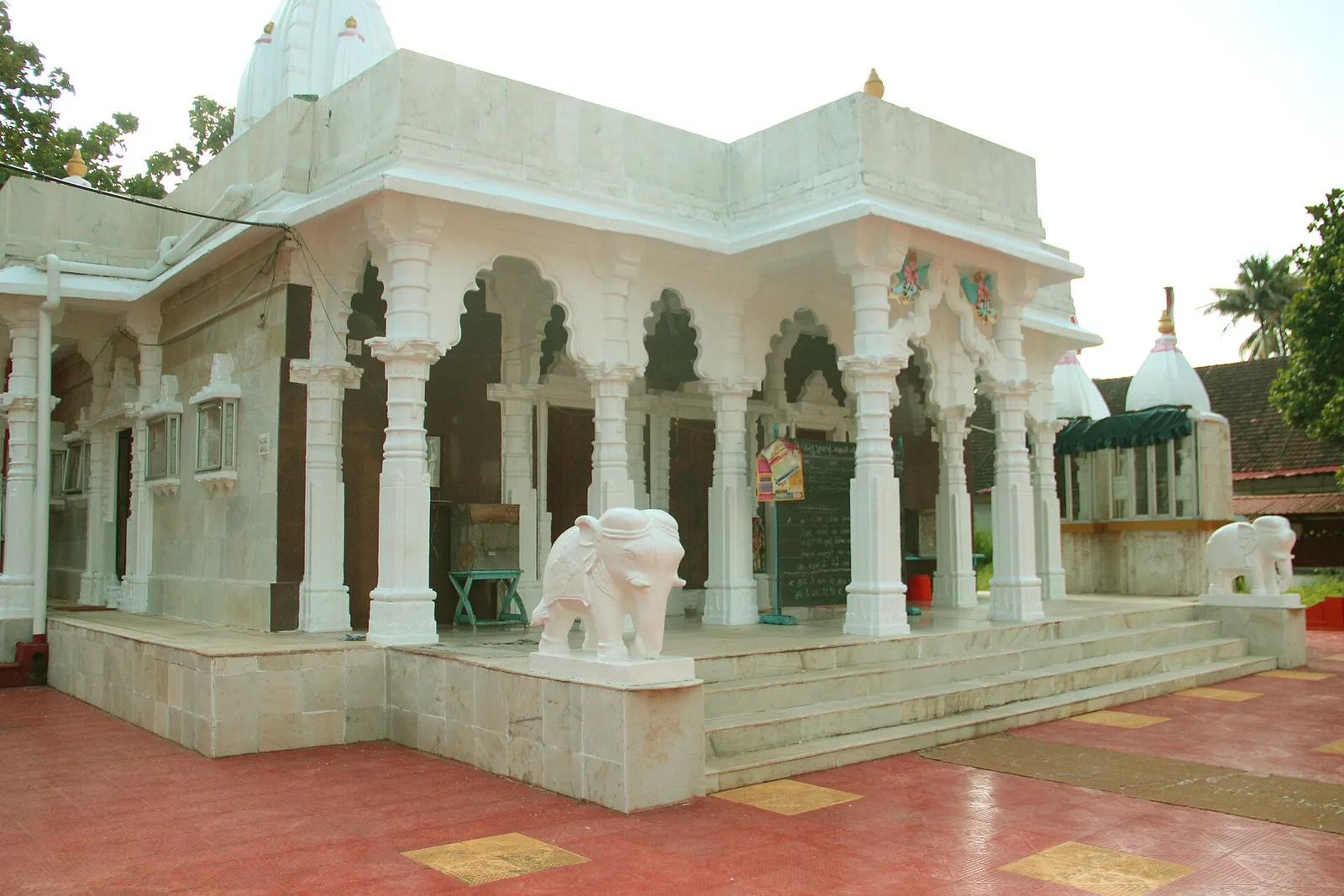
Kerala’s building materials are laterite, timber and tile, and almost everything old in this state is made of them. Then you turn into Gujarati Street in Alappuzha and there is a temple of white marble with carved marble elephants at the steps, which belongs to a stone tradition that stops about two thousand kilometres north of here. It is the most visible surviving evidence of how this town was actually created.
A town that recruited its own population
Alappuzha was not a place that grew. It was laid out, from 1762, by Raja Kesavadas, Dewan of Travancore, as a port to export coir matting and yarn — roads, canals, warehouses and a market, built deliberately. A port needs merchants, and there were not enough here, so Kesavadas went and got some: trading families were offered land and terms to move in, and among those who came were Jain families from Kutch in Gujarat.
The number given is forty-two families. They came for business, they stayed, and the street they settled is still called Gujarati Street. The temple they eventually built is dedicated to Vasupujya Swami and belongs to the Swetamber tradition.
The dates need care and the sources do not agree. You will read that the families arrived about 250 years ago, which fits Kesavadas — he was born in 1745 and the port opened in 1762 — and you will also read that the temple is a little over a century old. Both can be true at once, because a merchant community does not usually build its permanent shrine in its first generation. We would not merge them into a single figure.
How it was built
The construction is the interesting part. It is Rajasthani stone and white marble, and it was put up without a dome and without iron supports — a stone-on-stone technique, in a climate that is about as unlike Rajasthan as India gets. Bringing that material and that method to a wet coastal town was a considerable statement of intent, and of money.
It is worth reading the building as the community’s answer to a question every migrant merchant group faces: are we here, or are we passing through? Timber and tile would have been cheaper, faster and locally serviceable. Marble from the north is a declaration that this is now home.
The temple is managed today by a trust drawn from the families that remain, which is a smaller number than forty-two. That is the ordinary arc of a port community after the port stops working, and it is the same arc the town’s coir warehouses and merchant godowns are on.
Not the same story as Kochi’s
It is tempting to file this alongside Mattancherry, which also has a Gujarati Street, a Jain presence and a merchant quarter. This site’s own Alappuzha page is careful about the distinction and it is worth repeating in one line: Kochi’s quarter grew up around the pepper trade over centuries and contracted when that trade globalised; Alappuzha’s was recruited in a single administrative act in the 1760s and stopped when the port lost its traffic to Cochin. Same-looking street, entirely different mechanism.
- Gujarati Street is on the western side of the town centre, walkable from the canals and from Mullakkal.
- It is a working shrine with its own observances. Ask before entering, remove leather items, and do not photograph worship.
- Two heritage mosques and the Mullakkal temple are all within the same compact centre, which makes a short and unusually varied walk.
- The temple is the most striking single building in the town centre and takes ten minutes. The point is the street around it.