Heritage Fort Kochi is gentle on the wallet: most of its sights charge tiny entry fees, the ferry costs a few rupees, and you only spend real money on where you sleep and how often you eat in cafés versus local joints. Treat the figures below as indicative 2026 ranges, not fixed prices.
Sample daily budgets
Indicative cost per person, per day (₹)
| Style | Per day | What it covers |
|---|---|---|
| Backpacker | ₹1,500–2,500 | Dorm or budget homestay, local meals & street food, ferry/auto, a sight or two |
| Mid-range | ₹3,500–6,000 | Boutique homestay or 3-star, café + restaurant meals, the odd cab, an activity |
| Comfort | ₹8,000+ | Heritage hotel, fine dining, private car, guided experiences |
Typical prices
A chai is ₹10–20 and a filling local veg meal or thali ₹80–150; a main at a tourist-facing restaurant runs ₹200–400, a café coffee ₹120–220 and a beer ₹150–250. Heritage-site entry is usually ₹5–50 (the Dutch Palace is around ₹10), and a Kathakali performance is roughly ₹300–500. Stays span ₹600–1,200 for a budget homestay bed up to ₹6,000–12,000 for a heritage hotel room.
Money, cards and UPI
India runs on UPI, but it generally needs an Indian bank account, so most foreign visitors lean on cards and cash. Hotels, heritage cafés and bigger restaurants take cards; autos, the ferry, street food and small shops want cash, so keep small notes. ATMs are easy to find in Ernakulam and adequate in Fort Kochi. Tipping is not obligatory — rounding up or 5–10% at a sit-down restaurant is appreciated.
How to keep costs down
Eat where locals eat for lunch (a thali is a bargain), take the ferry instead of cabs across to Ernakulam, walk the heritage loop rather than hiring autos for every hop, and visit in shoulder season when room rates soften. The single biggest lever on your budget is the room — drop a tier on accommodation and everything else is already cheap.
How much of Fort Kochi is actually free
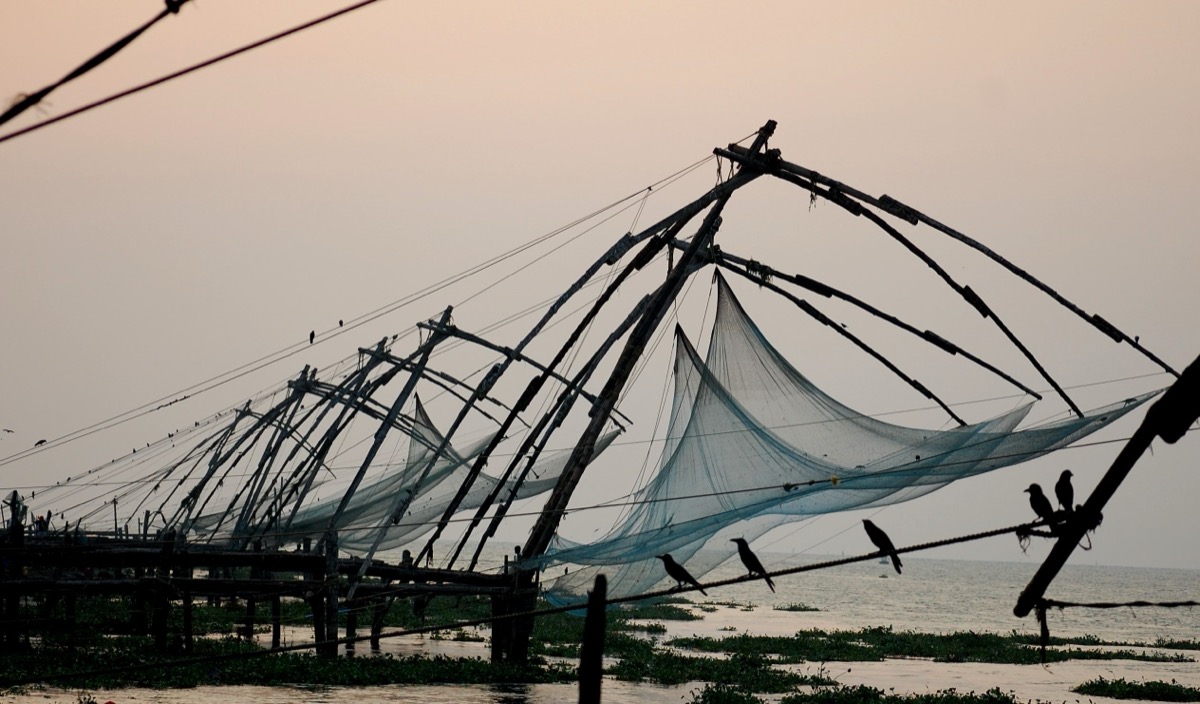
More than most visitors expect, and it changes how you should budget. The Chinese fishing nets, the beach and the seafront promenade cost nothing. St Francis Church and Santa Cruz Basilica are working churches, open to visitors, with a donation box rather than a ticket. The Dutch Cemetery is viewed from the gate more often than not. The Dhobi Khana has no ticket counter — the custom is a small tip to whoever actually shows you round, given to that person. Walking the heritage lanes and the street art is free by definition. The charged sights are a short list: the palace and museum interiors, and a Kathakali or Kalaripayattu performance in the evening.
Two prices: what foreign visitors pay
Government-run monuments and museums in India commonly charge foreign visitors more than Indian residents, often by a wide multiple, and the rupee figures quoted on this site are the Indian adult rate unless stated otherwise. It is a published policy rather than a scam, and the gap is largest at nationally protected monuments. Where we hold a verified foreign rate we show both; where we do not, assume the quoted figure is the Indian rate and check at the counter.
What the season does to your budget
Rooms are the one cost here that swings hard, and it swings on the calendar rather than on bargaining. December to February is dry, cool and the most expensive, and the days around New Year — when the Cochin Carnival fills the quarter — are the tightest of the year for availability. March to May is hot and considerably cheaper. June to September, the south-west monsoon, is cheapest of all: the peninsula is green and quiet and the rain comes in bursts rather than all day. Food, transport and entry fees barely move across the year; only the room does. Dropping a season is a bigger lever on your total than dropping a meal tier.
The commission problem
The most reliable way to overpay in Fort Kochi is not a taxi fare — it is being taken somewhere. An auto driver offering a cheap hourly rate, a "government emporium", a spice warehouse or a shop you did not ask for is usually earning a commission on whatever you buy, and that commission is built into the price you are quoted inside. The same applies to "your sight is closed today, let me show you something better". Neither is dangerous; both are expensive. Say no, pay the honest fare, and buy spices where the locals buy them. Roampedia takes no commission on anything listed here, which is why every listing carries the business's own number rather than a booking funnel.
Frequently asked questions
Is Fort Kochi expensive?
No, it’s affordable by international standards. Entry fees are tiny (₹5–50), the ferry and street food cost pocket change, and the main variable is your room. A comfortable mid-range day is around ₹3,500–6,000 per person.
How much does a day in Fort Kochi cost?
Roughly ₹1,500–2,500 for a backpacker, ₹3,500–6,000 mid-range, and ₹8,000+ for comfort, per person per day — covering stay, food, local transport and a sight or activity.
Can I use cards or UPI in Fort Kochi?
Hotels, bigger restaurants and heritage cafés take cards. UPI usually needs an Indian bank account, so most foreign visitors carry cash for autos, the ferry, street food and small shops. ATMs are easy to find.
Do I need to tip in Fort Kochi?
Tipping isn’t obligatory. Rounding up or leaving 5–10% at a sit-down restaurant is appreciated, and a small tip for helpful homestay staff or a driver is a kind gesture, not an expectation.