Kerala is younger than a great many of the people living in it. It was created on 1 November 1956, and before that date there was no such political unit — only Malabar and the Kasaragod taluk under direct British rule from Madras, and the princely states of Cochin and Travancore governed separately under their own maharajas. Four administrations, one language, no common government. The campaign to change that ran for something over thirty years and is known as Aikya Kerala — literally, United Kerala.
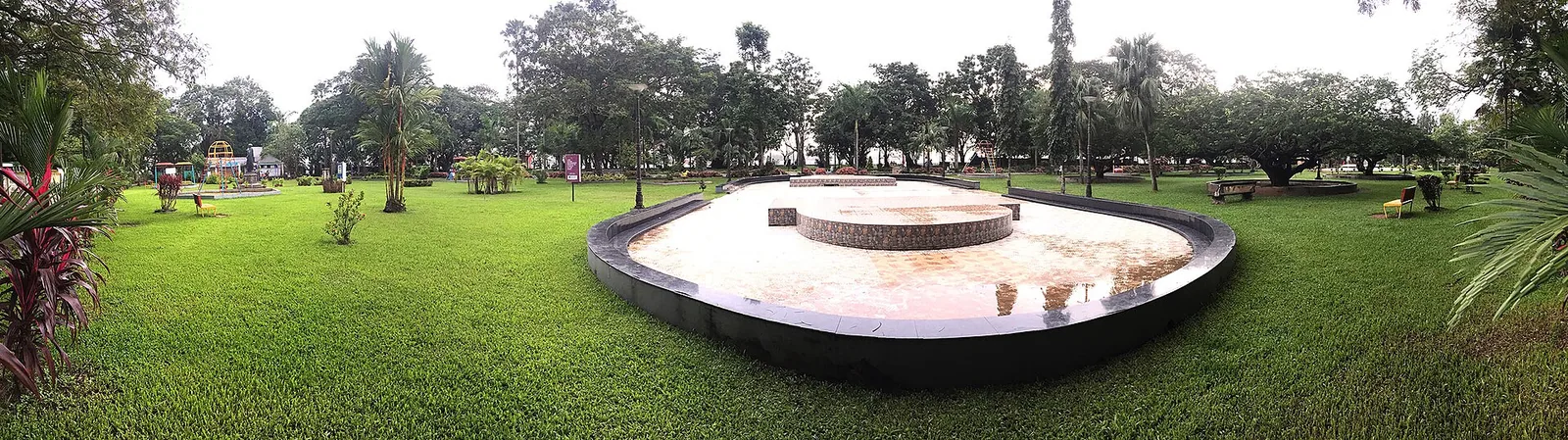
One of the places it was argued out is now an ordinary city park. Subhash Park, on the Ernakulam waterfront beside the boat jetty, is remembered locally as a launching ground for the campaign to merge Cochin and Travancore, and in 1930 students from Maharaja’s College directly opposite demonstrated here against their own Kochi government and were violently put down. Nothing on the ground tells you either thing.
Four Keralas
The situation the movement set out to fix was genuinely strange. A Malayalam speaker in Kasaragod was a British subject administered from Madras. One in Thrissur was a subject of the Maharaja of Cochin. One in Kollam was a subject of the Maharaja of Travancore. They read the same literature, but they held different passports in every sense that mattered: different courts, different revenue systems, different police, different politics. The argument for union was that a shared language and literary culture already constituted a nation, and that the administrative map was an accident of conquest and treaty.
The early advocate usually named is Ramakrishna Pillai, editor of Swadeshabhimani, who argued for combining Travancore, Kochi and Malabar into one entity well before it was a mass movement. What turned the idea into organised politics was a decision taken far away: at its 1920 Nagpur session the Indian National Congress reorganised its own provincial units along linguistic rather than administrative lines. By 1921 the regional body had been renamed the Kerala Pradesh Congress Committee — a Kerala that existed as a party structure thirty-five years before it existed as a state.
The conferences
The First All Kerala Political Conference met at Ottapalam in April 1921, inaugurated by the All India Congress Committee president Tanguturi Prakasam. It created an Aikya Kerala Committee and demanded a unified state taking in Malabar, Travancore, Cochin and the neighbouring Malayalam-speaking tracts. Seven years later a conference at Ernakulam — presided over by Jawaharlal Nehru — formally resolved on a united Kerala. That 1928 Ernakulam resolution is the point at which the demand stops being a proposal and becomes a programme.
- Subhash Park is described locally as where the movement to unite Kochi and Travancore was launched, and the 1928 Aikya Kerala conference did take place in Ernakulam under Nehru.
- We have not found a source that puts that conference, or any other named Aikya Kerala gathering, physically inside the park. The park was Irwin Park at the time.
- So: strong local memory, and a documented 1928 conference in the same town. We are not able to join the two with a citation, and we would rather say so.
The Cochin side produced the movement’s most unusual figure. Maharaja Kerala Varma of Cochin — a ruling prince arguing for the dissolution of his own state — wrote in July 1946 that a plan should be devised to establish a common government, and that Kerala’s cultural survival depended on unified administration. He is remembered as Aikya Keralam Thampuran, the unification maharaja. In April 1947 he inaugurated a convention at Thrissur that reaffirmed the goal.
The moment it nearly failed
Two things almost stopped it, and both are usually skipped. On 2 June 1947, weeks before Indian independence, Sir C. P. Ramaswami Iyer, Diwan of Travancore, announced with the royal family’s backing that Travancore would become an independent state. Had that held, the southern half of the future Kerala would have been a separate country rather than a component of one.
The second obstacle came from the other end. Some Malabar Congress leaders preferred to attach Travancore–Cochin to Madras province rather than build a new state, and a Congress conference at Palakkad in April 1953 formally backed a southern-state proposal before opinion swung back. Aikya Kerala is often narrated as an inevitability. It was contested from both directions and won on argument.
Merger, in two steps
The first step was the smaller one. On 1 July 1949 Travancore and Cochin merged into a single Part B State, Travancore–Cochin. This is the merger the Ernakulam park is associated with, and it created the territorial core of what followed — but it left Malabar and Kasaragod outside, still administered from Madras, so it satisfied nobody who had been arguing for a Malayalam-speaking whole.
The Communist Party pushed hard through the years that followed. E. M. S. Namboodiripad wrote Keralam Malayalikalude Mathrubhumi — Kerala, the Homeland of Malayalis — and the party plenum at Thrissur in April 1952 called for mass agitation for a united Kerala, producing conventions in cities across India, including one in Bombay that October reported at over fifteen thousand people. The demand was no longer regional; it followed Malayalis wherever they had gone to work.
The State Reorganisation Commission under Syed Fazal Ali recommended merging Travancore–Cochin with Malabar District and the Kasaragod taluk of South Canara, while leaving out the Laccadive and Minicoy islands. Under the States Reorganisation Act, Kerala came into existence on 1 November 1956. Its first elected ministry, formed the following year, was headed by Namboodiripad of the Communist Party of India — among the earliest elected communist governments anywhere.
The road to 1 November 1956
| Date | What happened |
|---|---|
| 1920 | Congress reorganises its provincial units on linguistic lines at Nagpur |
| 1921 | The regional body is renamed the Kerala Pradesh Congress Committee |
| April 1921 | First All Kerala Political Conference at Ottapalam; the Aikya Kerala Committee is formed |
| 1928 | A conference at Ernakulam, presided over by Nehru, resolves on a united Kerala |
| July 1946 | Maharaja Kerala Varma of Cochin argues in writing for a common government |
| 2 June 1947 | Travancore’s Diwan announces independence; the plan does not survive |
| 1 July 1949 | Travancore and Cochin merge into Travancore–Cochin |
| April 1952 | CPI plenum at Thrissur calls for mass agitation for a united Kerala |
| April 1953 | A Congress conference at Palakkad backs a rival southern-state proposal |
| 1 November 1956 | Kerala is created under the States Reorganisation Act |
Where to stand in Kochi and think about it
The mainland side of the city carries this history better than the heritage quarter does. Subhash Park is the obvious place to start — a park named for a viceroy and renamed for Subhash Chandra Bose, with a statue of Rama Varma XV of Cochin standing in it and Maharaja’s College across the road. A few minutes north, Marine Drive is entirely reclaimed land, a physical record of what the new state did with its waterfront.
Ten minutes inland, Broadway is the commercial city the princely state built and the new state inherited. And at Durbar Hall Art Centre the two eras are stacked in one compound: the hall where the Maharaja of Cochin held court, on the ground where the Cochin administrative reforms of January 1938 and the state’s new constitution of June 1938 were proclaimed — the princely state reforming itself, eleven years before it voted itself out of existence.
Frequently asked questions
What was the Aikya Kerala movement?
A largely peaceful campaign, running from the 1920s to the 1950s, to merge the Malayalam-speaking territories of Malabar, Cochin and Travancore into a single state. Its central argument was that a shared language and literary culture already made one people, and that the divided administrative map was an accident of conquest and treaty.
When was Kerala formed, and from what?
On 1 November 1956, under the States Reorganisation Act. It merged Travancore–Cochin with the Malabar District and the Kasaragod taluk of South Canara, both then part of Madras State. The Laccadive and Minicoy islands were kept out.
Why is Kerala Piravi on 1 November?
Kerala Piravi means the birth of Kerala, and it marks the date the state came into being in 1956. It is the anniversary of the States Reorganisation Act taking effect, not of any older cultural event.
Did any ruler support merging away his own kingdom?
Yes. Maharaja Kerala Varma of Cochin argued in writing in July 1946 for a common Kerala government and inaugurated the Thrissur convention of April 1947. He is remembered as Aikya Keralam Thampuran. It is a genuinely unusual position for a ruling prince to have taken.
Did Travancore nearly become an independent country?
It was announced. On 2 June 1947 Sir C. P. Ramaswami Iyer, Diwan of Travancore, declared with the royal family’s backing that Travancore would be independent. The plan did not survive the months that followed, and Travancore acceded to India.
Was the merger universally wanted?
No. Besides the Travancore independence attempt, some Malabar Congress leaders preferred joining Travancore–Cochin to Madras province, and a Congress conference at Palakkad in April 1953 formally supported a southern-state proposal before opinion shifted back towards a united Kerala.
Where in Kochi can I see this history?
Subhash Park on the Ernakulam waterfront is the site most closely associated with the Kochi–Travancore merger campaign and with a suppressed student demonstration in 1930. Durbar Hall Ground is where the Cochin administrative reforms and constitution were proclaimed in 1938. Neither is signposted as such, so you need to know before you go.