Begin with the offering
Ambalappuzha palpayasam is a sweet preparation of rice and milk offered at the Sree Krishna temple. Kerala Tourism identifies it as the shrine’s principal offering, and the Travancore Devaswom Board places it within the temple’s devotional life. Its association with this particular shrine matters as much as its ingredients.
For a visitor arriving through Alappuzha, it is tempting to treat the name as one more local dish to seek out. At the temple, however, the preparation belongs first to worship. The arrangements for obtaining prasadam follow temple practice rather than the flexible service of a restaurant.
The Guruvayurappan connection
The Devaswom Board records the belief that Guruvayurappan comes to Ambalappuzha each day at the time of Palpayasa Nedyam. This is a sacred tradition about the offering, not a literal event a visitor can expect to observe. It expresses a relationship between two important centres of Krishna devotion.
The same official account records a separate connection in 1789, when the Guruvayur image was brought here for safekeeping during Tipu Sultan’s raids. The historical episode and the daily devotional belief should retain their distinct meanings. Neither needs an embellished anecdote to explain why devotees connect the two shrines.
Fit the offering into the temple’s day
Plan around the temple visit and the current arrangements for prasadam. Admission to an open temple does not itself reserve a serving. Ask the temple counter about that day’s ordering and collection procedure before assuming the offering will be available at the end of a longer outing.
Keep worship, collection and onward travel in a sensible order. A family that arrives with a fixed train or road departure should leave room for the actual counter arrangement instead of making the temple queue absorb a rushed schedule. Avoid sending different members of the group into conflicting queues without agreeing where to meet.
The distinction also matters for a visitor staying elsewhere in Alappuzha. A hotel meal bearing the same dish name is a dining arrangement; prasadam obtained through the temple belongs to the shrine’s offering. Describe the experience according to which one you actually have.
The setting gives the taste its context
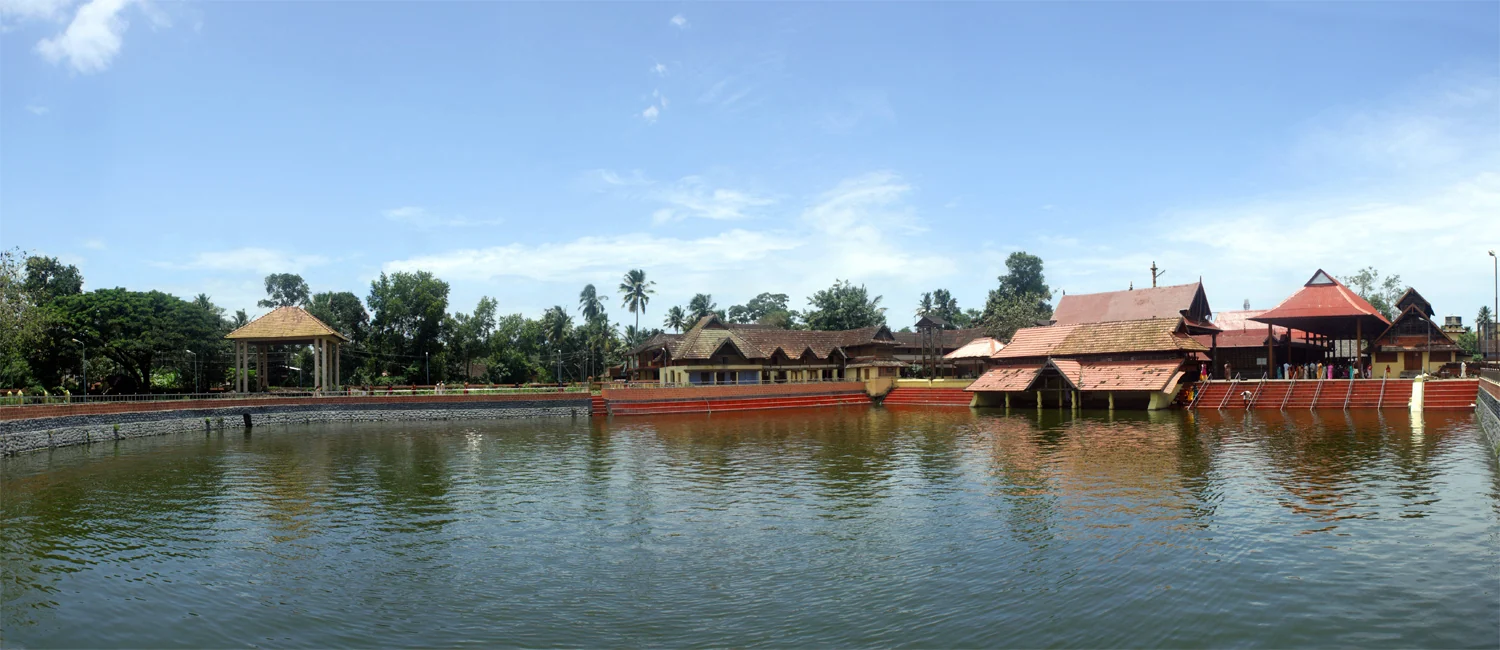
The tank, tiled roofs and painted enclosure form the physical setting around the palpayasam tradition. Allow time to notice that environment rather than reducing the visit to a collection counter. The reflection in the tank and the roofline above it show how the complex extends beyond one entrance photograph.
Ambalappuzha’s food identity is strongest when these parts remain connected: rice and milk, the offering to Krishna, the belief linking Guruvayurappan, and the temple community that maintains the practice. The result is a specifically Ambalappuzha experience, shaped by the shrine’s own devotional day.
Sources: Travancore Devaswom Board, Kerala Tourism: Ambalappuzha temple and DTPC Alappuzha.
Plan the visit: Ambalappuzha Sree Krishna Temple.