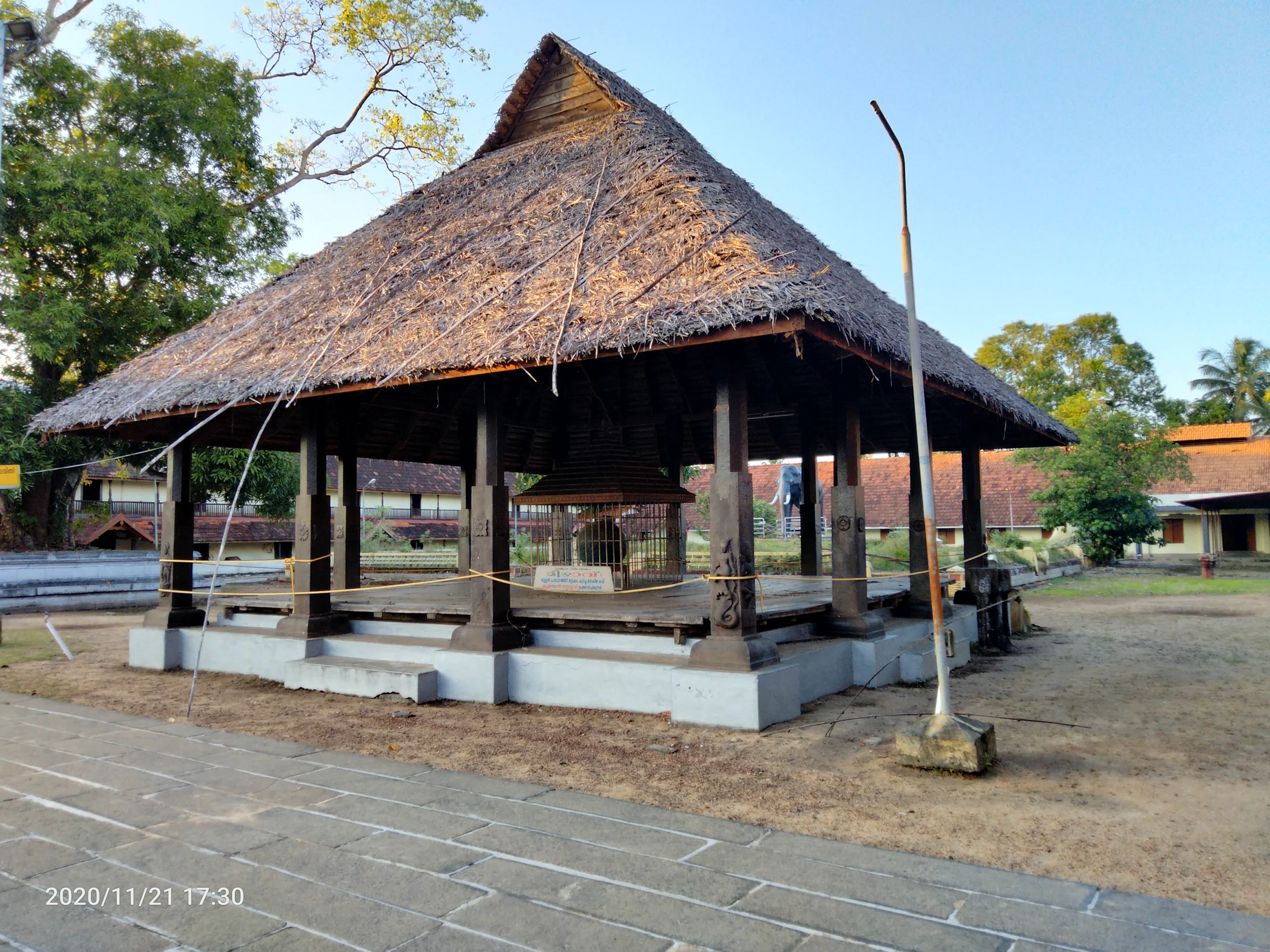
A performance tradition belongs to this temple story
Ambalappuzha is associated with the first performance of Thullal, the Malayalam art form attributed to the eighteenth-century poet Kunchan Nambiar. DTPC includes that association in its account of the temple. It gives a cultural dimension to a visit otherwise dominated by Krishna worship, the tank and palpayasam.
Kerala Tourism describes Thullal as a solo performance combining recitation, acting and movement. The performer addresses the audience in Malayalam, drawing listeners into the narrative through expression and a lively relationship with the people watching. Language and delivery are central to its appeal.
The origin story is a tradition
The familiar account begins with Nambiar accompanying a Chakyar Koothu performance on the mizhavu. He is said to have fallen asleep and received public ridicule from the performer. In response, the story goes, he devised a performance that could hold an audience through accessible Malayalam and a different kind of wit.
Kerala Tourism presents this as the origin legend of Thullal. It is a valuable account of how the art understands its own beginnings, but it should remain a legend rather than a verbatim record of an eighteenth-century exchange. The enduring point is the emphasis on communication with ordinary listeners.
The mizhavu in that account belongs to the accompanying performance tradition. A temple pavilion or an instrument display should not be assigned a more specific role simply because it appears near the place associated with the story. Follow the actual labels and any local interpretation when looking around the complex.
What to listen for in Thullal
The performer carries much of the narrative through the relationship between words, gesture and rhythm. For a visitor unfamiliar with Malayalam, the changing facial expression and the way the performer acknowledges the audience can still be revealing. A short introduction to the story being performed helps more than trying to follow every individual word.
Thullal is often associated with humour and social observation. Its significance here is therefore not only that a poet worked in a temple setting, but that the remembered response to humiliation became an art addressed outward to an audience. The origin tradition makes communication itself part of the story.
Visit without expecting an unscheduled show
Ambalappuzha remains a working temple. Its connection with Nambiar does not mean a Thullal performance accompanies every visit. If a performance is the purpose of the journey, use an announced programme with a date and venue; otherwise, let the cultural association deepen the ordinary temple visit.
The useful link is between place and practice: Ambalappuzha’s remembered performance setting, Nambiar’s eighteenth-century contribution, and the continuing Malayalam art form. That connection is substantial without turning every pavilion into a stage or every temple day into a festival.
Sources: Travancore Devaswom Board, Kerala Tourism: Ambalappuzha temple and DTPC Alappuzha. Kerala Tourism: Thullal.
Plan the visit: Ambalappuzha Sree Krishna Temple.