The charioteer is the key to the shrine
At Ambalappuzha, Krishna is worshipped in the form of Parthasarathy, the charioteer of Arjuna in the Mahabharata. Kerala Tourism describes the presiding deity through this identity; the Travancore Devaswom Board specifies a whip in the right hand and a sacred conch in the left. These attributes distinguish this shrine’s account of Krishna from a general image of the child with butter or the musician with a flute.
The whip belongs to the charioteer’s role. Knowing that association gives the visitor a useful starting point before entering a functioning place of worship. The sacred image is not simply an architectural exhibit, and a visit must follow the temple’s admission, dress and photography directions.
Chembakassery is the local historical setting
The official accounts associate the foundation with Pooradam Thirunal Devanarayanan Thampuran, a ruler of Chembakassery. They present a broad fifteenth-to-seventeenth-century period as a belief about the foundation, rather than giving a securely established construction year. That distinction leaves room for the temple’s remembered past without turning a traditional date into a precise chronology.
Chembakassery places the shrine within the history of this part of Alappuzha. It is a more useful connection than importing the foundation narrative of a different Krishna temple. The present temple’s identity combines this local patronage with the wider devotional world of Krishna worship.
Read the enclosure as well as the roof
Kerala Tourism singles out the chuttambalam, the building around the sanctum, and its wall paintings. DTPC also identifies paintings of Vishnu’s ten avatars. The visitor’s attention can therefore move from the large roof forms towards the enclosure and its painted surfaces, wherever access allows.
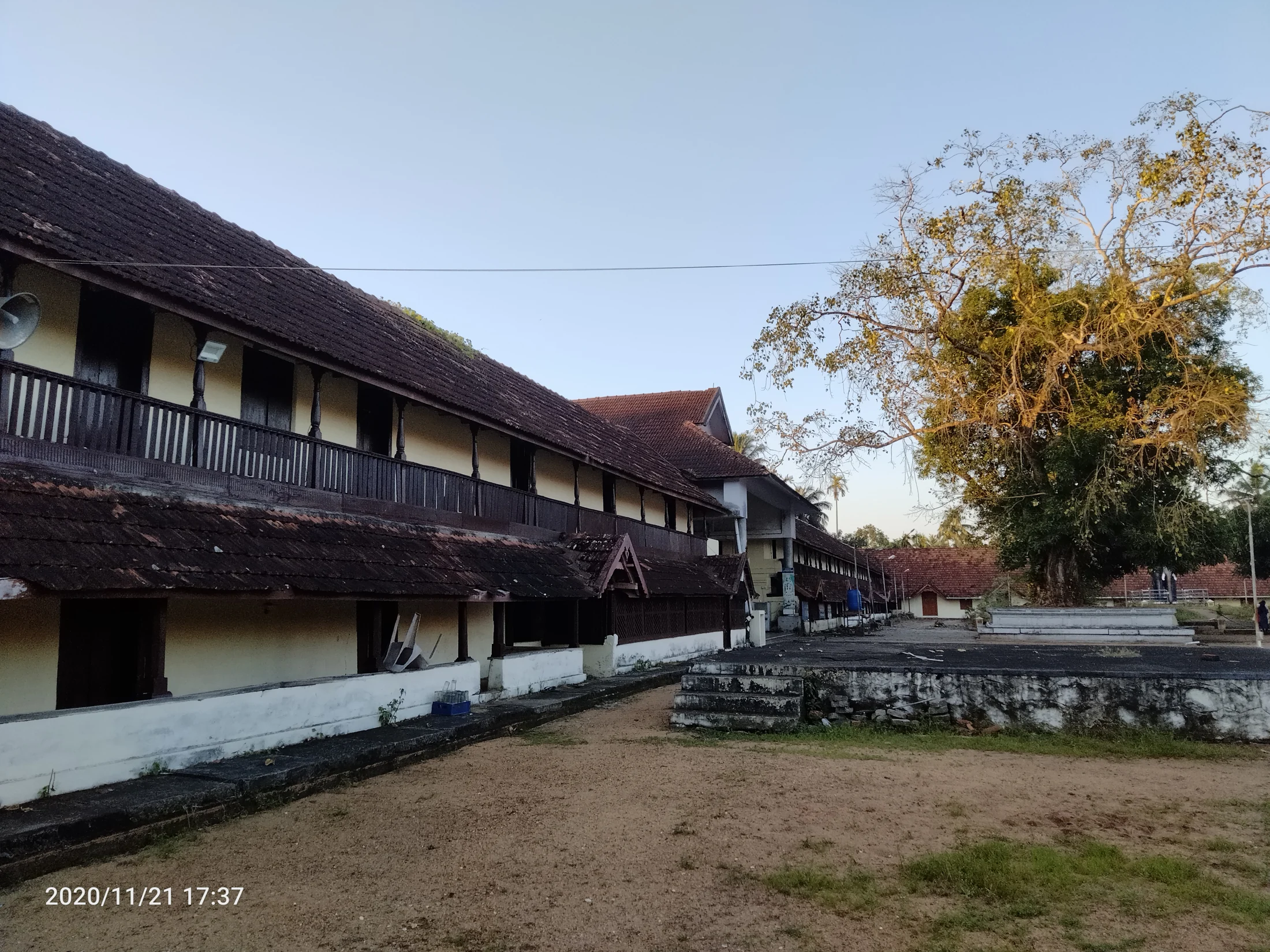
The photograph accompanying this story shows a timber balcony beneath layered tiled roofs. Its projecting members and repeated roof edges reveal details that can disappear in a distant gateway photograph. They are part of the visible building, while the paintings and sacred interior call for their own permitted viewing conditions.
A patient circuit through the accessible areas gives these elements separate space: the approach, the enclosure, the timber work and the devotional focus. Keep moving when worshippers need the passage and leave photography out of areas where it is prohibited.
A connected Krishna tradition
The Devaswom Board records that the Guruvayur image was brought to Ambalappuzha for safekeeping during Tipu Sultan’s raids in 1789. This is a particular historical connection between two temples, alongside the continuing belief that Guruvayurappan attends Ambalappuzha’s palpayasam offering.
The two connections belong to different registers: a recorded episode of safekeeping and a living devotional belief. Together they explain why Ambalappuzha’s story reaches beyond its local royal setting while retaining a distinct Parthasarathy identity.
Sources: Travancore Devaswom Board, Kerala Tourism: Ambalappuzha temple and DTPC Alappuzha.
Plan the visit: Ambalappuzha Sree Krishna Temple.