Three names can describe different parts of an Anayirankal outing: the dam, the reservoir and Elephant Abode Boating Centre. They are connected geographically, but their names do not promise the same visitor experience. Establishing which part is available is the first useful step in planning the stop.
The structure in the photograph
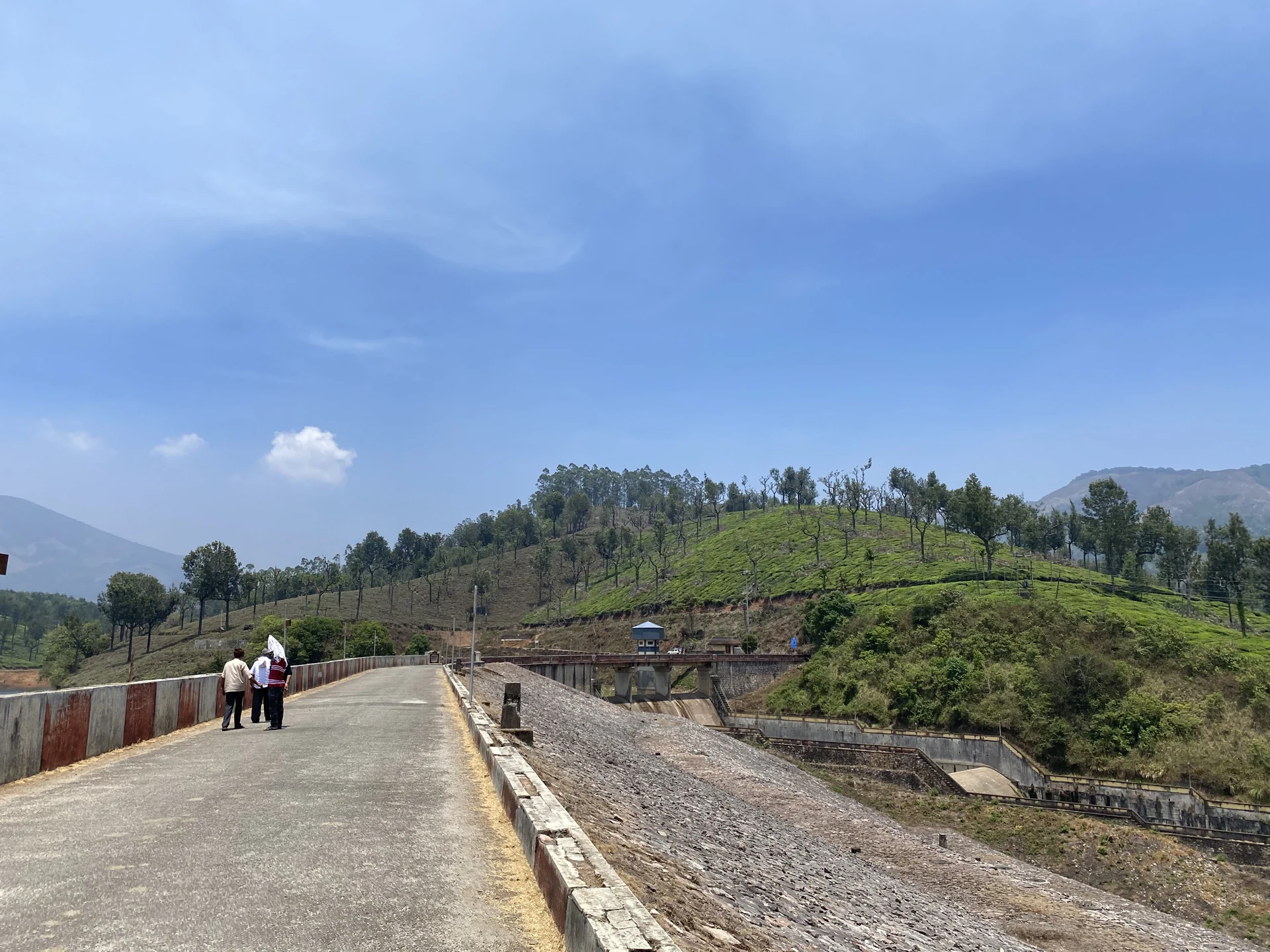
The dam photograph shows a paved crest beside a red-and-white parapet, a sloping stone-covered embankment and a channel below a tea hill. Visitors visible on the road belong to the date of that photograph. The frame records the structure clearly, but it is not a standing permission to walk across operational infrastructure.
KSEB is the relevant authority for the dam asset. Its engineering responsibilities continue whether or not a tourism activity is running beside the reservoir. Maintenance or visitor restrictions can affect a day’s access without changing the dam’s role in the hydel system.
That is why a driver’s offer to take you to Anayirankal should include a specific stopping place. A roadside outlook, the tourism centre and the dam crest are different destinations within the same broad landscape.
The tourism centre
Kerala Hydel Tourism Centre lists the Anayirangal Elephant Abode Boating Centre as its attraction. This is the name to use when checking a tourism programme, rather than assuming any photograph of a boat establishes a current service.
The centre’s current listing marks its facilities as temporarily unavailable. That status belongs in the practical visit information, where it can be checked before travel. Historic descriptions and pictures can explain what the centre has offered, but they cannot substitute for a current operating confirmation.
A reserved boat slot, when offered by the operator, also remains separate from entering restricted parts of the dam. The activity’s own reporting point, staff instructions and permitted area define the visit.
Keep the journey flexible
Anayirankal may be one stop within a longer high-range drive. In that case, distinguish the value of the landscape from a paid activity that needs to be running. Someone interested in engineering will want a permitted view of the structure; someone planning a lake outing may depend on the tourism centre’s programme.
If the planned activity is unavailable, revise the itinerary before making a special journey for it. Do not treat an unofficial offer at the water’s edge as an automatic replacement for the named operator. The point is to know which service is being booked and where responsibility for it sits.
Use the main place page for the current status and official links. With the three parts of Anayirankal kept clear, the visit can be planned around something concrete: an authorised reservoir outlook, a confirmed tourism programme or a permitted view of the dam itself.
Plan the visit: Anayirankal Dam.