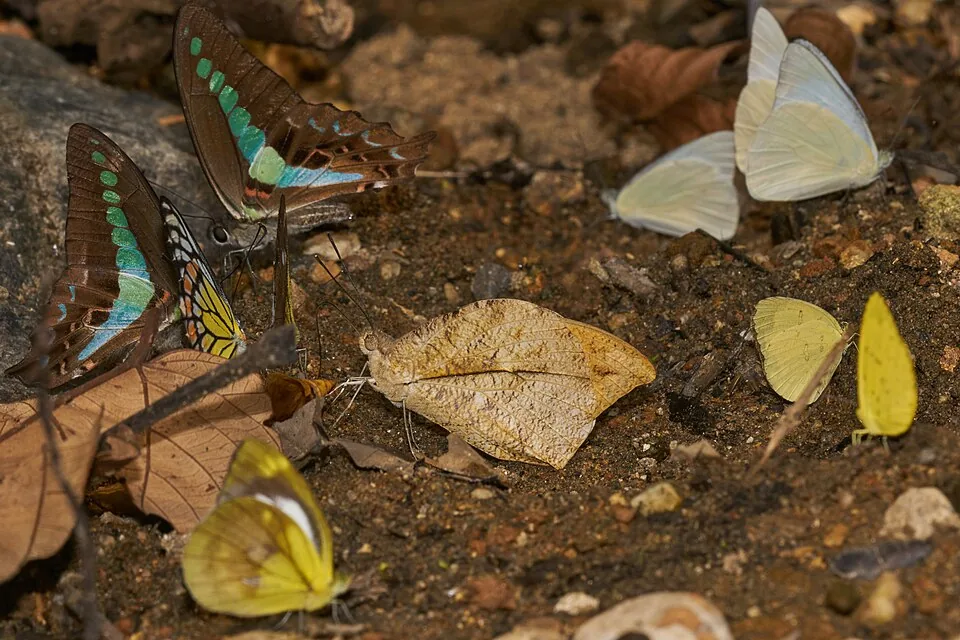
India protects a great many forests, and it protects them for tigers, for elephants, for lions and for birds. Until the middle of 2025 it had never set one aside primarily for insects. Aralam, fifty-five square kilometres of hill forest in eastern Kannur that most travellers have never heard of, is where that changed.
The date almost everyone gets wrong
The decision was taken by the Kerala State Wildlife Board on 18 June 2025. It reached the national press in the first days of July, and because that is when most people read about it, July is the month that has stuck — the English Wikipedia article dates the renaming to July 2025 on the strength of a news report published on the third of that month. If you see June and July given for the same event, that is why. The board acted in June; the country found out in July.
What changed was the name and the emphasis, not the rules. Aralam had been a wildlife sanctuary since 15 October 1984 and it remains one. The gate is in the same place, the guides are the same people, and the trekking and off-road programmes run exactly as they did. The Forest Department’s own booking system still lists the centre under the older name, which is worth knowing if you are searching for a ticket rather than for a headline.
Two hundred and sixty-six out of three hundred and twenty-seven
The case for the renaming was arithmetic. Kerala has 327 recorded butterfly species. 266 of them — more than eight in every ten — have been found inside this one sanctuary. That concentration is a consequence of the ground: Aralam climbs from lowland plantation to a high point at Katti Betta, so tropical, semi-evergreen and montane habitats are stacked within a few hours’ walk of each other, and species that would elsewhere be separated by a day’s drive overlap here.
The counting was not done in a season. The State Forest Department has run annual butterfly surveys with the Malabar Natural History Society for more than twenty years, and the designation is generally described as resting on about twenty-five years of accumulated work. The sanctuary’s own wildlife warden, G Pradeep, made the point that matters most about that record when the renaming was announced: new species are still being found in the forest. The list is not closed.
The migration, and the numbers that are hard to believe
What lifts Aralam beyond a long species list is that its butterflies move. Between December and February, Common Albatross and various Danaine butterflies travel down through the hills in numbers that survey teams have struggled to convey. One count logged close to twelve thousand Common Albatross passing in five minutes. On 11 January 2025, teams reported something over eight lakh — eight hundred thousand — moving through in a single day.
Those are field counts made by people standing in a forest with clickers, not laboratory measurements, and they should be read as the scale of a thing rather than as a census. But the scale is the point. A river of insects on that order passing through one valley is the kind of event that justifies a designation, and it is the reason the migration months are the ones serious visitors aim for.
- The migration runs roughly December to February; the Forest Department’s general season for the sanctuary is November to May.
- The Butterfly Migration Study is held in January or February each year — ask at the counter what is on around your dates.
- Mud-puddling, the behaviour in the photograph above, happens on damp ground near streams and rewards standing still far more than walking on.
- Nothing about the butterflies changes the access rules: the forest is entered with a departmental guide, and the programme will not run for fewer than five people.
What a name is worth
A renaming does not by itself protect anything. What it does is change what the place is for in the eyes of the people who fund it, and Aralam was, before this, a modest sanctuary in a district better known for its beaches and its Theyyam. It is now the only address in India where butterflies are the stated reason the forest is there. Whether that translates into money and staff is a question the next few years will answer; the twenty-five years of counting that produced it have already happened.