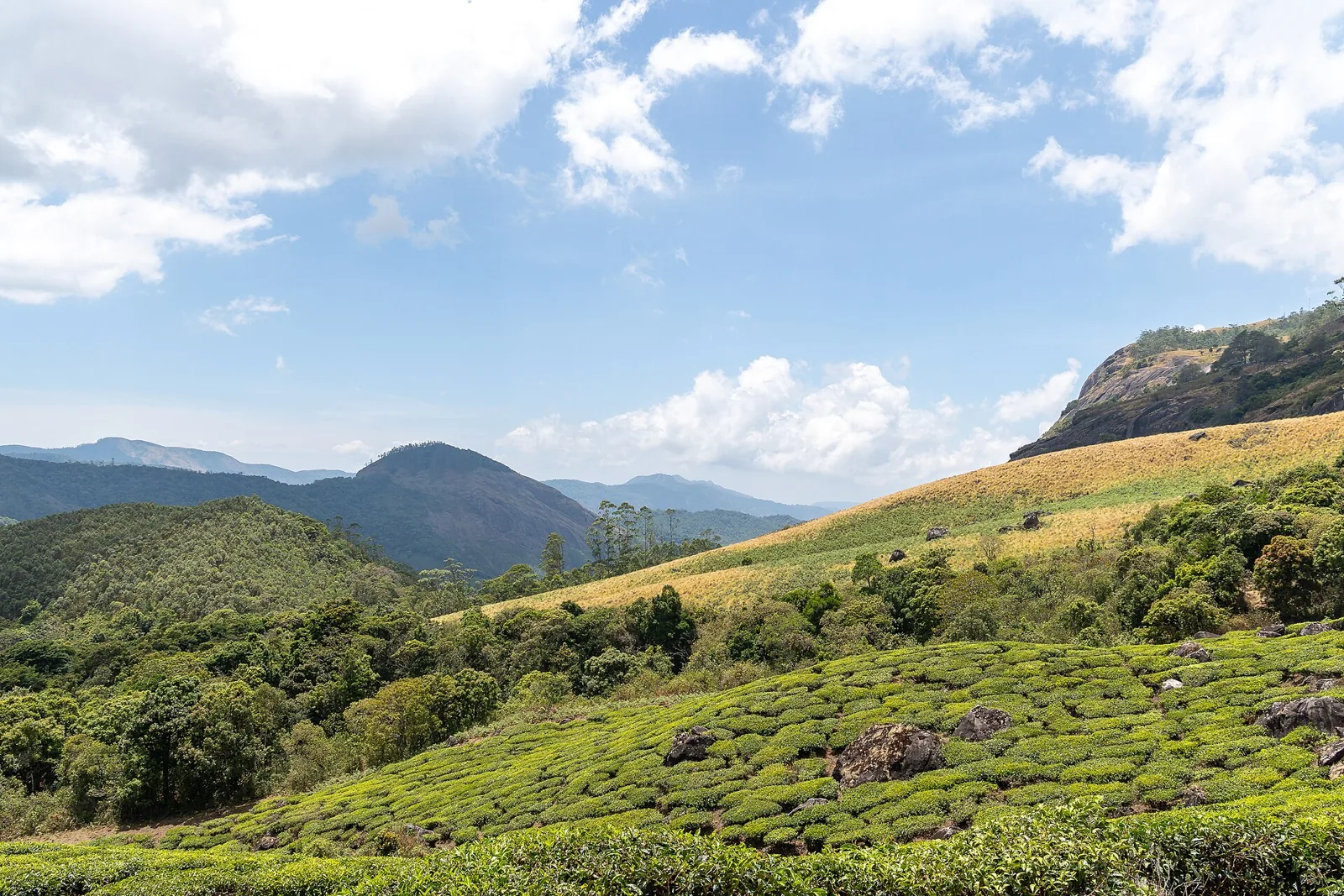
Munnar sits at around 1,600 m, so it stays cool all year — but the experience changes completely with the season. The short version: September to March is the sweet spot for clear views and comfortable weather, the monsoon is lush but misty, and the hot months push wildlife toward water.
Munnar season by season
| Season | Months | What to expect |
|---|---|---|
| Post-monsoon | Sep–Nov | Greenest hills, clear air, best all-round |
| Winter | Dec–Feb | Cool and dry, crisp views, peak crowds |
| Hot season | Mar–May | Warmer days, good for wildlife near water |
| Monsoon | Jun–Aug | Lush and misty, waterfalls full, cloudy views |
The best window: September to March
For most visitors, the months just after the south-west monsoon into winter are ideal — the tea slopes are at their greenest, the air is clear, and the high viewpoints like Top Station and Kolukkumalai actually deliver their views. It’s also peak season, so book ahead and start sightseeing early before the afternoon cloud builds.
The monsoon and the calving closure
June to August brings heavy rain, full waterfalls and dramatic mist, but also slippery roads and views that vanish into cloud — a beautiful trip if you like atmosphere over panoramas. One thing to plan around whatever the month: Eravikulam National Park closes for roughly February–March each year for the Nilgiri tahr calving season, so check its status before building a day around it.
For the wider state picture and festival timing, see the best time to visit Kerala; to plan the trip itself, use Munnar in 2 days.
Frequently asked questions
What is the overall best month to visit Munnar?
September to March is best, and many regulars pick the post-monsoon weeks of September–November for the greenest hills and clearest air, before the December–February crowds peak. Views are most reliable in the morning in any of these months.
Is Munnar worth visiting in the monsoon?
Yes, if you like lush scenery and full waterfalls and don’t mind mist and rain. Roads are slippery and the big viewpoints are often clouded, so it suits a slow, atmospheric trip more than a sightseeing dash.
When does the Neelakurinji bloom in Munnar?
The mass Neelakurinji bloom recurs only about once every twelve years (last in 2018), so it can’t be planned into a normal trip. Eravikulam’s grasslands are worth visiting in ordinary years regardless.