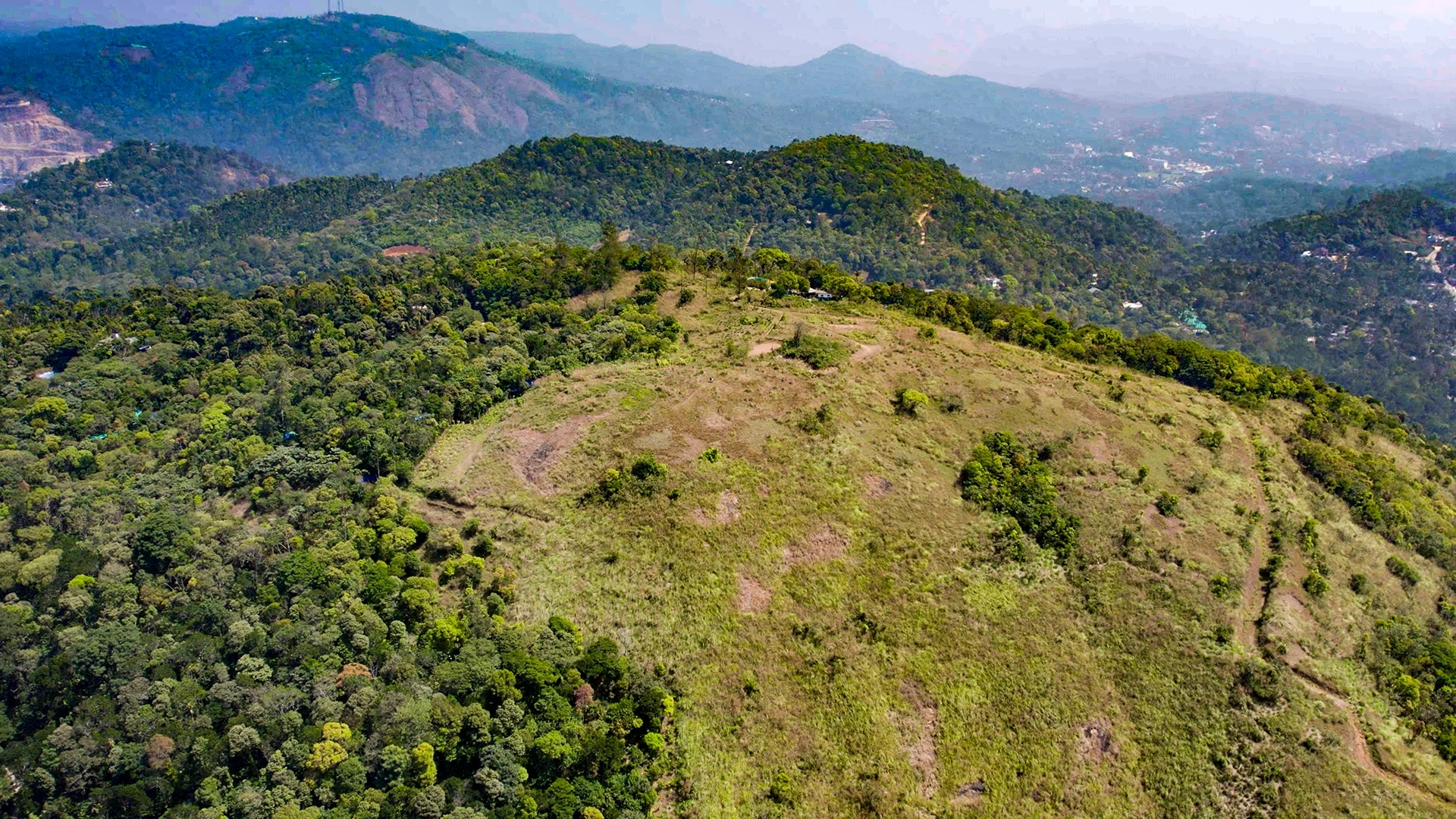
At Chellarkovil the Kerala hills simply stop. The village sits on the Kerala–Tamil Nadu border about 15 km from Kumily, and Kerala Tourism places it at about 1,200 m. Its eastern side falls away towards the coconut groves of Kambam, which most maps call Cumbum, in Tamil Nadu. A visitor stands in the green, misty high ranges and looks straight down at the flat, open plains of another state. That sudden change is the reason people drive out here.
The view does not end at the first village below. From the edge, the Theni plains spread out into the distance. On a clear day the eye also finds Mangaladevi, which Kerala Tourism calls the highest point in the Periyar Tiger Reserve. Mist often rolls over the ridge, but the faraway villages still show through it. That is why a watch tower at the Chellarkovil viewpoint is busiest at sunrise and sunset, when the light crosses the plain.
Water makes the same journey as the eye. The Chellarkovil waterfall starts in Kerala, runs down through forest and falls into Tamil Nadu, so in the monsoon the stream itself marks the border. That is also why the falls look their best from June to August, when the rain feeds them, although Kerala Tourism notes that heavy rain then limits other outdoor plans. Visitors who come in the drier months still find a pool at the base where people swim or sit beside the water.
Because the village is so quiet, the Kerala Forest Department runs an eco-tourism promotion centre here rather than a resort strip. The programme built treetop huts, a herbarium and garden of medicinal plants with huts to rest in, and guided nature walks, and the local community takes part in the work. Home-stays also let visitors spend a night in a high-range village, so the people who stay longest see both the sunrise over the plains and the sunset behind them.
The road back towards Thekkady leads to a very different kind of hill. Murikkady lies only about 5 km from Thekkady and about 6 km from the Kumily bus stand, according to Onmanorama in February 2025. Where Chellarkovil looks outward, Murikkady looks inward, because its slopes are covered in spice gardens rather than open edges.
Those gardens are the whole character of the place. Kerala Tourism lists pepper, cardamom, tea and coffee, with clove, ginger and turmeric growing alongside them, and Onmanorama describes mountains covered in spice plantations. The plantations are privately owned, so visitors walk through them with the owners' permission. Many end up talking with farmers about how each crop is grown. Some buy fresh produce straight from them, which turns a scenic stop into a small lesson in the spice plantations that built Kumily's name.
The roads between those plots shape how people move here. Kerala Tourism's photographs show narrow estate roads and dirt tracks, with tall trees forming a canopy on one side and planted rows on the other. Because these paths link one estate to the next and climb to the slopes and viewpoints, the area suits short rides and walks more than long drives. A motorcycle on the estate road is a common sight.
That gentleness is exactly what Onmanorama praised. It called Murikkady a quiet day-trip spot, with open meadows for picnics, in contrast to the summer crowds of Munnar, Thekkady and Vagamon. It also noted that the village itself offers few organised activities. People who want more head for treks at Pandikuzhi or in the tiger reserve, which need permission and a guide. The cool climate suits this slow pace best from October to February, when Kerala Tourism gives temperatures of about 15 to 30°C.
Seen together, the two villages show both faces of the hills around Thekkady and Kumily. Chellarkovil is the edge, where the land drops away to another state. Murikkady is the working heart, where pepper vines and coffee bushes fill every slope. The same Mangaladevi peak seen from Chellarkovil carries its own legend, and that story continues in Mangala Devi Kannagi Temple.
Frequently asked questions
How far is Chellarkovil from Kumily?
Kerala Tourism puts Chellarkovil about 15 km from Kumily, on the Kerala–Tamil Nadu border.
What can you see from Chellarkovil viewpoint?
The coconut groves of Kambam (Cumbum), the Theni plains and, on clear days, Mangaladevi in the Periyar Tiger Reserve.
What grows at Murikkady?
Pepper, cardamom, tea and coffee, with clove, ginger and turmeric, on privately owned plantations.
When is the best time to visit?
October to February suits Murikkady; the Chellarkovil waterfall is fullest in the June–August monsoon.