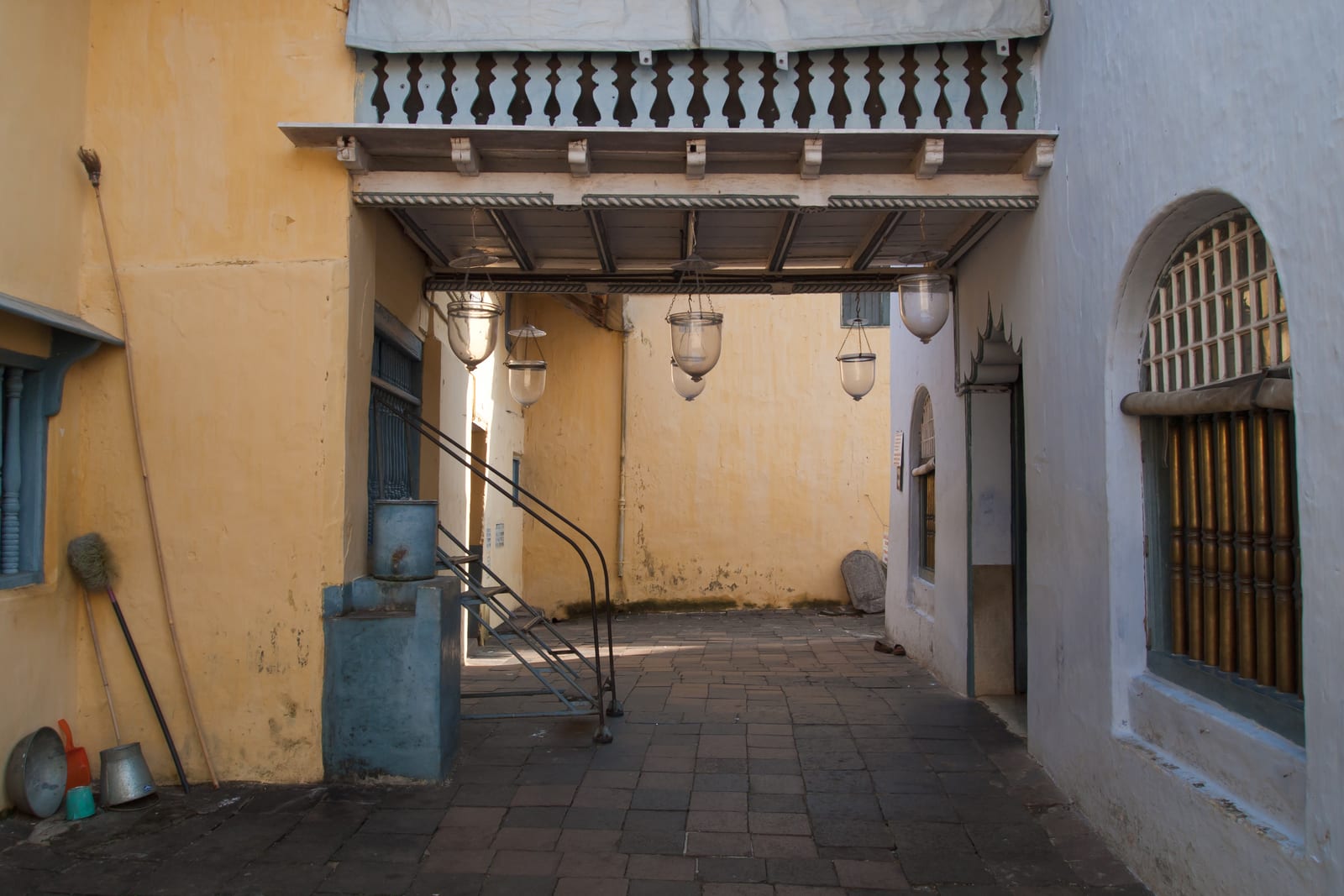
At the end of a narrow lane in Mattancherry Jew Town, past antique shops and the smell of the spice stores, stands a small white building that has been there since 1568. The Paradesi Synagogue looks modest from the lane, but it holds the story of a community that lived on this coast for many centuries. Their time here, Kerala Tourism says, began almost 1,500 years before this building went up.
That story starts with a gift of land, because the king of Cochin gave the plot, right beside his own palace and close to a Hindu temple. The builders were Spanish-speaking Jews who had come from abroad. So the people of the town called them Paradesi, the Malayalam word for "foreign", and the name has stayed with the Paradesi Synagogue ever since. Its first century was not quiet, though. The Portuguese damaged the building in 1662, and two years later the Dutch, who had just taken Kochi, rebuilt it. The palace next door still carries their name as the Dutch Palace. Its own side of the lane is told in our Dutch Palace story.
The rebuilt synagogue grew richer through the 18th century, largely thanks to one merchant, Ezekiel Rahabi. It was Rahabi who brought the floor from Canton, hand-painted blue willow-pattern tiles made in China, each one carrying a different design. Visitors walk in barefoot, so they feel the cool tiles before they look down at them. Anyone who crouches for a minute finds the floor breaking up into hundreds of small, separate pictures.
From the tiles the eye climbs upward, to 19th-century glass chandeliers from Belgium that catch the daylight from the tall windows. Beneath them a pulpit with brass rails stands in the middle of the hall, and above it runs a women's gallery on gilt columns. At the far wall a carved teak ark keeps four Torah scrolls cased in silver and gold. Beside them are two gold crowns, gifts from the kings of Kochi and of Travancore. Those royal gifts share the hall with an oriental rug sent by Haile Selassie, the last Emperor of Ethiopia. There are also copper plates whose old inscription records the privileges a king once granted to the Jewish community.
Rahabi left his mark outside as well, because in 1760 he built the white clock tower that still stands beside the synagogue. Its four faces were made for the three kinds of people who used this lane. The face with Malayalam numerals looks toward the Maharaja's palace, where the court read Malayalam. The face with Hebrew numerals turns to the synagogue and its congregation, and a third face, in Roman numerals, served the European traders. The fourth face is blank. The clock struck every hour until 1930. The tower stands in the open, so anyone walking the lane can still see it without a ticket.
Yet the same building that sheltered a community also drew hard lines inside it. Kerala Tourism names three groups who worshipped here. The Paradesi, or "White" Jews, were the only full members. The Malabari, or "Black" Jews, could pray inside but could never join. The Meshuchrarim, freed slaves and their descendants, could not enter at all, so they sat on the steps outside with no rights in the community. Every visitor who climbs those steps today walks over the place where they had to wait.
Those lines did not last. The man who broke them was Abraham Barak Salem, a Cochin lawyer whose sit-ins inside this hall earned him the name the Jewish Gandhi. By the late 1930s his community had won equal seats and an equal part in worship. His full story is told in A. B. Salem and the fight for equal seats.
Equality came just before the community began to leave, because by the mid-1950s most of the Jews of Cochin had emigrated to Israel. The effect still shows in the prayer hall. A service needs a minyan of ten men, and the Kochi community is now so small that ten are often hard to find. That is why services happen only when enough men can gather. On most days the synagogue opens to visitors instead, from 10 am to noon and from 3 pm to 5 pm, except on Fridays, Saturdays and Jewish holidays.
The Paradesi was never the only synagogue here, though. A short walk away stands an older one that tells the other side of the same story. The Malabari Jews had their own prayer hall, the Kadavumbhagam Synagogue, which Kerala Tourism dates to around 1549. That makes it almost twenty years older than the Paradesi, but its fate was harder. The building fell into neglect and was used as a warehouse, and a storm damaged it badly in 1975. In 1991 its carved teak interior was taken apart and moved to Israel, where it is now on display in the Israel Museum in Jerusalem. Its Torah scrolls went to Israel too. What was left, known locally as Karutha Palli, lost a major part of the building in heavy rain in September 2019. Today people look at the shell from the lane, and it remains a religious site for the community it once served.
Standing between those two buildings, one still cared for and one only a shell, makes the rest of Jew Town easier to read. The shops along the lane have their own history in our story of the Jew Town antique trade. One of the last Jewish residents is remembered in Sarah Cohen's embroidery shop. A few minutes further on, the spice markets and the Dharmanath Jain temple, built by another trading community, carry the walk on. Our Kochi heritage walk joins it all up with Fort Kochi, St Francis Church and the Santa Cruz Basilica. For everything else across the district, the journey continues in our Ernakulam guide.
Frequently asked questions
When was the Paradesi Synagogue built?
In 1568, on land beside the Mattancherry Palace given by the king of Cochin, and it was rebuilt by the Dutch in 1664.
Who brought the tiles on the synagogue floor?
Ezekiel Rahabi, a Jewish merchant, brought the hand-painted willow-pattern tiles from Canton in the 18th century, and each tile has a different design.
What scripts are on the Paradesi Synagogue clock tower?
Malayalam, Hebrew and Roman numerals, one on each of three faces, while the fourth face is blank.
When is the Paradesi Synagogue open?
From 10 am to noon and 3 pm to 5 pm, every day except Fridays, Saturdays and Jewish holidays, and visitors go in barefoot.