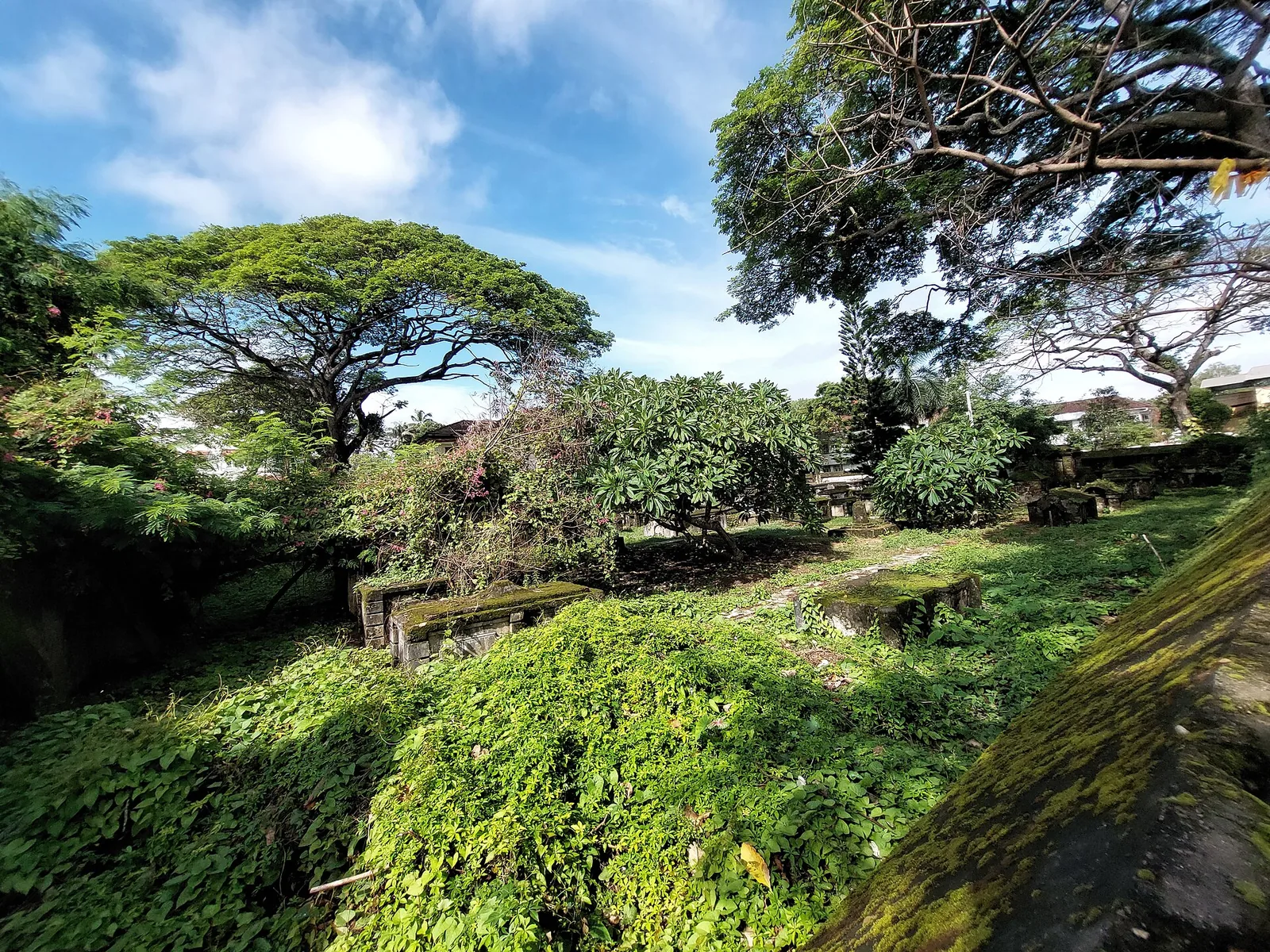
The claim is on the signboard, in the guidebooks, on the tourism pages and in most of what has ever been written about the Dutch Cemetery at Fort Kochi: the oldest European cemetery in India. It is repeated so uniformly that nobody appears to have gone and looked. We did, and it does not hold.
First, narrow the claim
Before it can even be tested it has to be made precise, because in its broad form it is obviously false. Europeans had been dying in Kochi since the Portuguese arrived in the first decade of the 1500s — two centuries before this ground was consecrated. They were buried inside their churches, under the floor of the nave, as close to the altar as rank and money allowed. That is what St Francis Church a few minutes away still holds, and Europeans went on being buried in it after 1724 as well.
So the defensible version is narrower: the oldest surviving purpose-built European cemetery in India — a walled plot of ground set aside for burial, outside a church. That is a real and interesting category, because moving the dead out from under the church floor was itself a Protestant break from Catholic practice. It is the claim worth testing.
Pulicat, 1657
On the Coromandel coast, north of Chennai, the Dutch cemetery at Pulicat was established in 1657 — sixty-seven years before Kochi’s gate was dated. It holds 77 graves, of which 62 are still identifiable, and they run from 1646 to 1777.
It is also a startling place in its own right. Skeletal figures are carved into the pillars either side of the gateway and a skull sits above the arch; the slabs carry flowers, birds, human faces and worked borders, and some of the tombs rise into domes and obelisks. It is neglected — cracked stone, fading carving, a locked gate — but it is unmistakably a purpose-built European burial ground, and it is older.
Surat, around 1650
The Dutch cemetery at Surat is usually dated to about 1650–51. Its centrepiece is the mausoleum of Hendrik Adriaan van Reede, a director of the Dutch East India Company who died in December 1691 — a domed, columned, galleried structure built on a scale intended to eclipse the tombs of his English rivals, the Oxendens, next door.
A Dutch admiral who visited in 1775 recorded that it exceeded every other tomb there in size, elegance of architecture, magnificence of ornament and richness of material. Whatever else that is, it is a purpose-built European cemetery, and it too predates 1724 by seventy years.
- Surat (Dutch): established c. 1650–51. Van Reede’s domed mausoleum, 1691.
- Pulicat (Dutch): established 1657. 77 graves, dated 1646–1777. Skulls and skeletons on the gate.
- Fort Kochi (Dutch): consecrated 1724. About 104 tombs and epitaphs. Almost no ornament at all.
- All three are walled, purpose-built, Dutch. Kochi is the youngest of them by roughly seventy years.
What Kochi actually has
Losing the superlative costs this place nothing, because its real distinction was never chronological. Set Kochi beside the other two and what stands out is the severity. Pulicat has skulls and birds and flowers. Surat has a monument built out of rivalry. Kochi has flat, heavy, unornamented slabs — granite hauled from inland Kerala and rust-red laterite from the coast — and a great many of them carry no cross at all.
That is not neglect and it is not poverty. It is Dutch Reformed conviction, executed in local rock: no saints, no imagery, no hierarchy of position around an altar. Roughly 104 tombs and epitaphs survive, in an older Dutch weathered close to illegibility, recording officials, garrison officers, merchants and their families. The last burial is generally given as Captain Joseph Ethelbert Winckler in 1913, long after the Dutch themselves had gone.
The number that gives the stones their weight
Between 1602 and 1795, roughly a million men sailed east from the Netherlands in the Company’s service. About 340,000 came home. The remainder died — of scurvy and dysentery on the ships, in wrecks, in fights with rivals and pirates, and above all of fever in the tropical stations they were sent to hold.
A hundred graves in a small walled rectangle is a very legible sample of that arithmetic. Read the ages when you can make them out. This was a posting people did not come back from, and the Company knew it, priced it, and kept sending ships.
Why we published the correction
It would have been easier to repeat the signboard. But a place that has to be sold on a superlative it does not hold is being undersold, and the visitor who later finds out has good reason to distrust everything else they were told at the same time.
One practical note, since it decides most visits: the gate is usually locked. The Archaeological Survey of India protects the ground and the Church of South India manages it and keeps the registers, and neither runs it as an attraction. Access is arranged case by case, in advance, through St Francis CSI Church. Plan on seeing the wall and the 1724 gate pillar, and treat getting in as a bonus.
Frequently asked questions
Is the Dutch Cemetery in Kochi the oldest European cemetery in India?
On the evidence we can find, no. The Dutch cemetery at Pulicat was established in 1657 and holds graves dated from 1646 to 1777; the Dutch cemetery at Surat is usually dated to around 1650–51. Both are purpose-built, walled European burial grounds and both predate Kochi’s 1724 consecration by about seventy years.
Where are the earliest European burials in India, then?
Inside churches, not in cemeteries. European practice of the period was interment under the church floor, and the Portuguese had been burying their dead in Kochi since the early 1500s — St Francis Church holds exactly those graves. Purpose-built cemeteries outside the church came later, and are a largely Protestant development.
What makes the Kochi cemetery distinctive if not its age?
Its plainness. Where Pulicat carries skulls, skeletons, birds and flowers, and Surat has van Reede’s domed mausoleum, Kochi has flat unornamented slabs of granite and laterite, many without a cross. That austerity is Dutch Reformed doctrine expressed in stone, and it is unusually complete here.
How many people are buried there?
Around 104 tombs and epitaphs survive — Dutch colonial officials, garrison officers, merchants and their families. The last burial is generally recorded as Captain Joseph Ethelbert Winckler in 1913, long after Dutch rule in Kochi had ended.
How many VOC men died in the East?
Roughly a million men sailed east in the Company’s service between 1602 and 1795, and about 340,000 returned. Shipboard disease, scurvy and dysentery, wrecks, and fighting all took a share, but tropical fever in the Asian stations did the most. The Kochi stones are a small local sample of that.
Can I get inside?
Often not. The cemetery is walled and normally locked, protected by the Archaeological Survey of India and managed by the Church of South India, neither of which operates it as a visitor site. Entry is granted case by case and is arranged in advance through St Francis CSI Church. Most visitors see the exterior wall and the dated 1724 gate pillar.