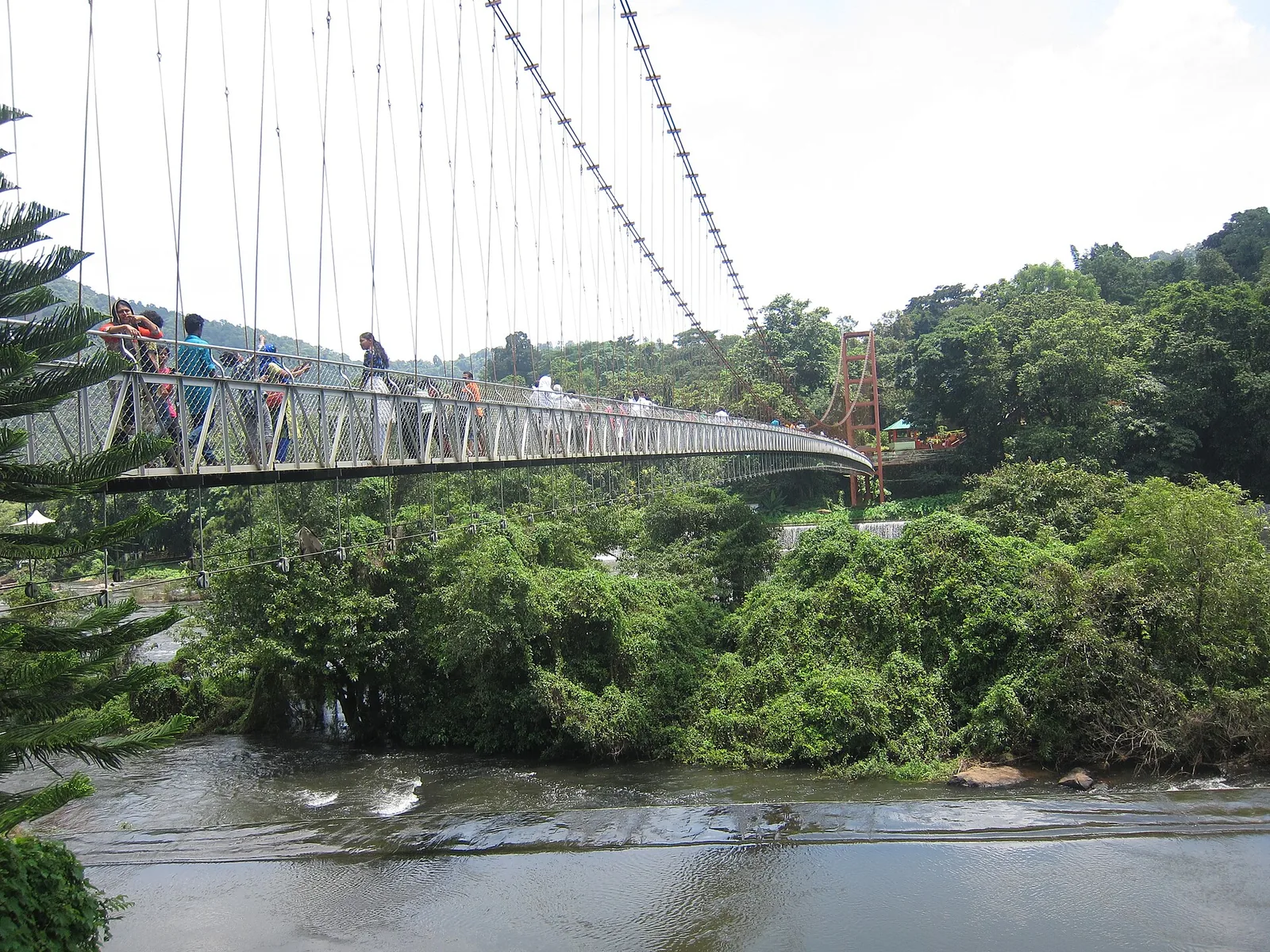
Here is a correction to this site as much as to anybody else’s. We have written about Ezhattumugham as one place with a bridge in it — a nature village on the Chalakudy with a butterfly garden, a herb garden, a tribal museum, a children’s park and a swaying suspension footbridge across the river.
That is not the shape of it. Ezhattumugham is two separate projects, in two different districts, joined by that footbridge. And the single most photographed thing about a day here — the butterfly garden — is not in Ezhattumugham at all.
Which bank you are standing on
The Chalakudy is the district boundary along this reach. On the Ernakulam bank is Ezhattumugham Prakriti Gramam, the nature village. On the Thrissur bank is Thumboormuzhi, with the check-dam across the river and the butterfly garden beside it. Kerala Tourism files the garden under Thumboormuzhi, in Thrissur, and describes it as the largest butterfly garden in the state.
So the bridge people queue for is not an attraction inside a park. It is the crossing between two of them, and walking it takes you out of one district and into another. It is one of very few footbridges in Kerala that anybody crosses recreationally rather than because they have to be on the other side.
What is actually on each side
The Ernakulam side is the quieter half and the reason the place got its reputation. This is the braided reach where the Chalakudy loses its single thread and splits around islets and rounded boulders — the river that gives the village its name. Between roughly September and February the water runs low and clear over sun-warmed granite, and people wade, swim in rock pools and picnic on the flat stones. It rewards doing very little.
The Thrissur side is the busier, more managed half: the check-dam and its spillway, the children’s park, and the butterfly garden. Species counts for the garden are quoted at more than 140 in most places and at about 184 in others, which is what happens to a number that gets copied rather than recounted. The butterflies people actually name are consistent — the southern birdwing, which is India’s largest butterfly, along with the common rose, the lemon butterfly and the light and dark blue tigers — drawn in by planted host and nectar species including pagoda flower, Mexican heather, rattlepods and flame lily.
Why it matters on the day
Practically, because it changes how you plan. If you arrive on the Ernakulam side expecting the butterflies to be there, you have to cross to get them, and the crossing is the bottleneck at busy times. If you arrive at Thumboormuzhi expecting the braided river and the wading, that is on the other bank. Two tickets, two managements and two sets of timings can apply, and the sensible move is to do both banks in one visit and to allow for the walk.
And because it explains the odd feeling visitors report about this place — that it is somehow both a wild riverside and a municipal park, and that the two halves do not quite match. They do not match because they were not built together. One is a river reach that people have always used. The other is an irrigation structure with a garden attached.
The name, while we are correcting things
Ezhu attu mugham reads as the seven faces, or seven mouths, of the river, and the braiding it describes is entirely real. The seven is not. Nobody on that bank is counting seven of anything, and the number of channels changes with the water — more in February, fewer after rain, and in full monsoon one continuous sheet with nothing to count at all. It is a name, not a measurement, and it is a good one.
Go in the dry months, cross the bridge slowly, and treat the day as two places rather than one. The braid is best in the low light of early morning or late afternoon; the butterflies want the sun higher. Doing both in the right order is most of the skill of visiting here.
Frequently asked questions
Is the butterfly garden part of Ezhattumugham?
No. The Chalakudy is the district boundary here. The butterfly garden sits on the Thumboormuzhi side, in Thrissur, alongside the check-dam; Ezhattumugham Prakriti Gramam is the Ernakulam bank. Kerala Tourism lists the Thumboormuzhi garden as the largest butterfly garden in the state.
What does the hanging bridge connect?
Thumboormuzhi in Thrissur with Ezhattumugham nature village in Ernakulam. Reported figures put it at roughly 250 metres long and about 10 metres above the water, though those come from tourism listings rather than an engineering source. It sways under moving weight, which is what a suspension span does and most of why people cross it.
Which side should I spend more time on?
The Ernakulam side if you want the river — the braided channels, the rock pools and the wading, best from about September to February. The Thrissur side if you want the managed attractions: the dam and spillway, the children’s park and the butterfly garden. Doing both is the point of the bridge.
How many butterfly species are there?
Sources say more than 140 and also about 184; neither is recounted often enough to settle it. The regularly named species are the southern birdwing (India’s largest butterfly), the common rose, the lemon butterfly and the light and dark blue tigers, attracted by planted pagoda flower, Mexican heather, rattlepods and flame lily.
Does Ezhattumugham really have seven channels?
Not as a fixed number. The braiding is real — the river genuinely splits around islets and boulders here — but the count changes with the water level, from many in February to a single sheet in the monsoon. Read the name as a description rather than a measurement.
When is the best time to visit?
Roughly September to February, when the Chalakudy runs low and clear and the bed is exposed. Early morning or late afternoon gives the best light on the braided reach; the butterflies are more active later in the morning with the sun higher.