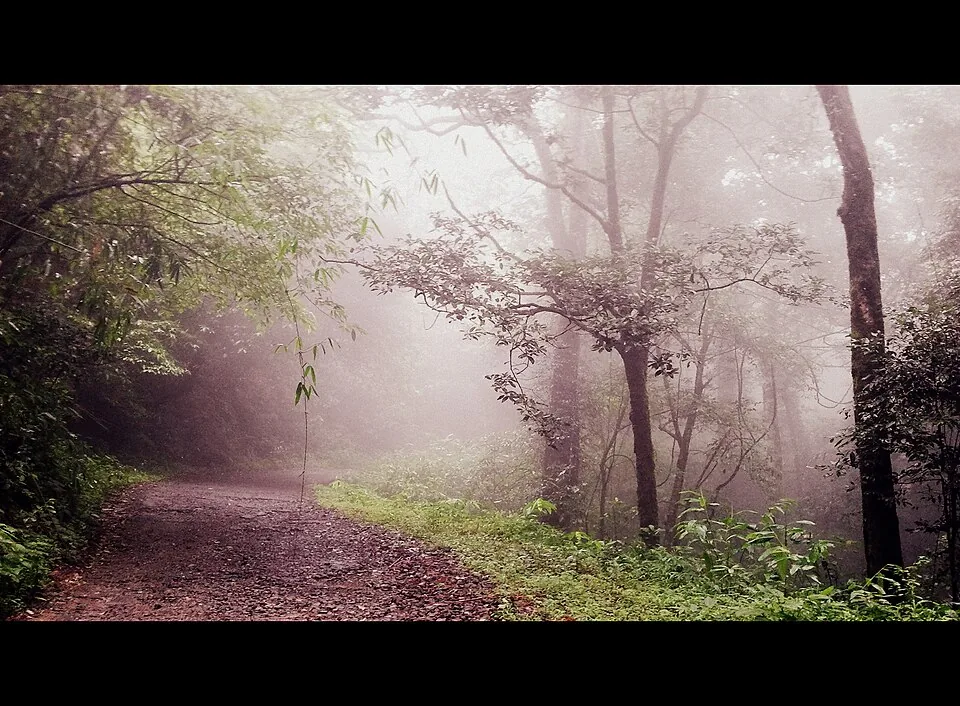
Gavi is the forest ecotourism destination that put Pathanamthitta’s wild side on the map — a remote patch of the Western Ghats on the edge of the Periyar Tiger Reserve, at around a thousand metres, where evergreen forest, grasslands, cardamom plantations and quiet lakes come together. It is run as a managed ecotourism area by the Kerala Forest Development Corporation, so a visit is structured around permits and guided programmes rather than free wandering.
What to do
The draw is the forest itself. Programmes typically include guided treks and nature walks, jeep safaris, birdwatching (Gavi is known for its birdlife, including the great hornbill), boating on the Gavi and Kochupampa lakes, and visits to a cardamom plantation. Wildlife you might see includes elephants, sambar, the Nilgiri tahr and, with luck, the lion-tailed macaque; it is genuinely wild country. Overnight forest stays and camping are offered through the corporation.
Access and permits
Although Gavi lies within Pathanamthitta district, it is usually reached by road from the Idukki side, via Vandiperiyar near Kumily (Thekkady) — a slow, scenic forest drive. Entry is regulated: day-visit and package programmes, and any stay, should be booked in advance through the Kerala Forest Development Corporation’s ecotourism channels, as numbers are capped and casual walk-in access is limited.
When to go
The cooler, drier months of roughly October to March are the most comfortable for treks and safaris and the best for wildlife-watching. The monsoon deepens the forest’s green but makes trails wet and travel harder. Mornings are best for birds and animals.
Choose the programme, not just the destination
The most useful distinction at Gavi is between arriving in the landscape and booking a named experience. Kerala Tourism publishes a full-day trekking package that begins in the morning and links a guided walk through cardamom shade with meals, boating, two viewpoints and a small wildlife museum. Green Mansion, Swiss Cottage Tents and Jungle Camping are different overnight products with their own accommodation, activity mix and suitability rules. A room booking is not automatically the day trek, and a day ticket is not an invitation to wander after the group.
That structure explains why two visitors can truthfully describe very different Gavi trips. One may spend a long managed day moving between plantation, lake and viewpoints; another may sleep in a lodge and take a shorter morning walk or vehicle safari. Ask for the programme by its published name, then read what is included. “Gavi booking” on its own is too vague for a remote reserve where food, transport inside the complex and reporting time have to work as one sequence.
What the full day reveals
The plantation walk is not a decorative prelude to the “real” forest. Cardamom grows under retained shade trees, so the route shows a working boundary between cultivation and protected habitat: spice plants occupy the lower layer while trunks and canopy continue above. A trained guide can identify where the managed ground ends, interpret animal signs and keep the group on the authorised line. That reading of the edge is more specific to Gavi than treating the visit as a generic jungle hike.
After the walk and meal break, water changes the scale of the day. Gavi and nearby Kochu Pamba sit in a reservoir-and-weir landscape connected with the Sabarigiri hydroelectric system. From a boat the forested folds look almost continuous, but concrete works, changing shorelines and drowned contours reveal the engineered layer beneath the scenery. The published trek combines boating with walking; separate boating or accommodation products should not be assumed to follow the same order.
The Sabarimala viewpoint is also easy to misread. It is a distant outlook towards the pilgrimage hills, not an entrance to the shrine or a shortcut into the pilgrim route. Valley View has a different purpose: it makes the depth of the ravine and the folded forest legible. Mist can close either view quickly, and a guide may alter or shorten a stop when visibility, elephants or road conditions make the planned halt unwise.
Wildlife without a checklist
Gavi’s mix of evergreen forest, grassland, open water and plantation shade creates several listening and watching zones in one day. Great hornbills are among the birds associated with the area, while elephants, gaur, sambar and primates use the wider reserve landscape. None belongs to a timetable. The dependable experience is noticing the habitat change: kingfishers working the water margin, mixed flocks moving through shade, or a large forest bird heard before it crosses an opening.
Treat a mammal sighting as an encounter, not a target to close distance on. Forest roads and grassy edges are animal ground as well as visitor routes. Stay with the guide, remain in the vehicle when instructed and never turn a roadside elephant into an improvised walking stop. The museum near the end of the published day can be useful precisely when no headline animal appears: skeletal displays make scale and anatomy readable without pretending the forest owes every group a sighting.
Two roads into one remote place
Most tourism itineraries approach from Vandiperiyar, about 28 km away on Kerala Tourism’s published distance, because it is the practical gateway from Kumily and Thekkady. The road then leaves ordinary settled country for a controlled forest approach where check-post time, surface conditions and animal movement matter more than the kilometre count. Carry the booking confirmation and identification requested by the operator, and do not plan a casual late arrival.
Gavi also has a Pathanamthitta-side connection through Angamoozhy, Moozhiyar, Kakki and Kochu Pamba. Scheduled buses and organised forest journeys demonstrate that the destination is geographically part of Pathanamthitta even though the usual visitor approach comes from Idukki. That road is not permission to improvise a self-drive traverse. Confirm the authorised reporting route for the booking in hand, and solve the return journey before entering the forest because evening public transport is sparse.
Why the managed format matters
Kerala Tourism describes local people working within the ecotourism operation as guides, gardeners and cooks, with traditional forest knowledge contributing to the visitor experience. The guide, included food and controlled movement are therefore not add-ons wrapped around a trail; they are the operating model that lets visitors enter a sensitive reserve landscape while work and conservation continue around them.
Seen this way, Gavi’s strongest story is not remoteness by itself. It is the compression of cultivated spice ground, managed water, pilgrimage-facing ridges, grassland and rainforest into one carefully ordered day. Book the right product, allow the guide to change the sequence when the forest requires it, and the place becomes much more intelligible than a list of promised animals or activities.
- Book ahead through the Kerala Forest Development Corporation — access is by permit and package, not walk-in.
- Gavi is most often reached from the Idukki side, via Vandiperiyar or Kumily — but it is also reachable from lowland Pathanamthitta. KSRTC runs scheduled buses from Pathanamthitta town through Angamoozhy, Moozhiyar and Kochu Pamba to Gavi and on to Kumily — about six hours, departing 5.30 am and 6.30 am, with a second daily service added in September 2022 because the single existing bus was carrying around a hundred passengers a day. Our own keralaEcotourism.ts also publishes an Adavi-to-Gavi forest bus tour run by the Divisional Forest Office, Konni, from the Pathanamthitta side. Plan the drive, but know both approaches exist.
- This is a real forest reserve — go with the official guides, carry out your waste and keep noise down.
- Come October–March, and go out early for the best wildlife and birdwatching.
Frequently asked questions
What is Gavi known for?
It’s a forest ecotourism area on the edge of the Periyar Tiger Reserve in Pathanamthitta, known for guided treks, jeep safaris, birdwatching, lake boating and cardamom plantations amid grasslands and evergreen forest, run under permit by the Kerala Forest Development Corporation.
How do you get to Gavi and do you need a permit?
Gavi is usually reached by road from the Idukki side via Vandiperiyar near Kumily. Access is regulated, so day-visits, packages and stays should be booked in advance through the Kerala Forest Development Corporation’s ecotourism channels.
What is the best time to visit Gavi?
Roughly October to March, when the weather is cool and dry and wildlife-watching is best. Go out early in the morning for the best chance of birds and animals.