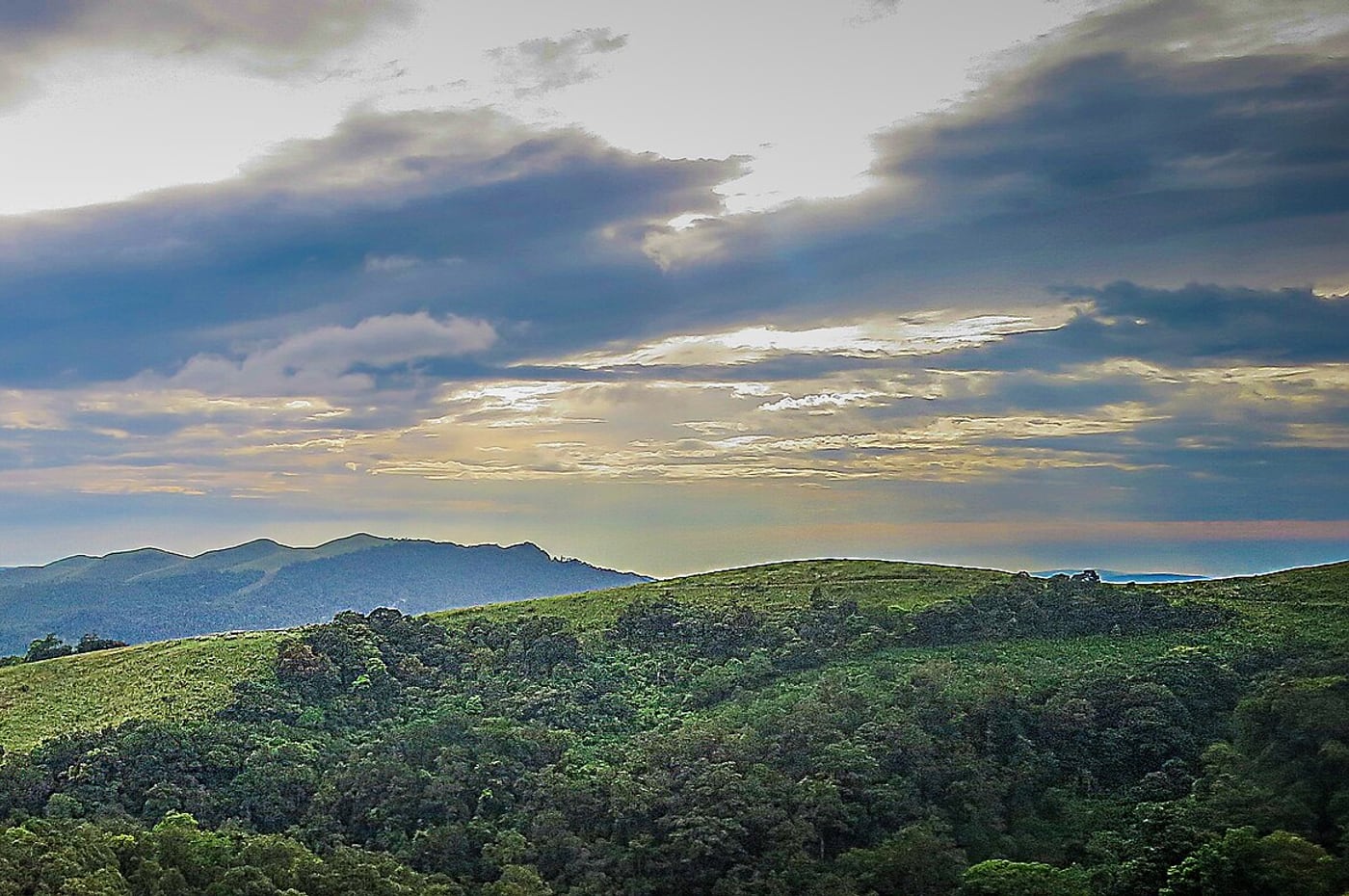
Gavi is often introduced as a wilderness found at the end of a forest road. The administrative record tells a more interesting story. The Kerala Forest Development Corporation entered ecotourism in 2001, and Gavi was where it began. The organisation was already managing plantations and forest produce; here it added guided visits and accommodation to a landscape in which production, protection and settlement already met.
A corporation changes direction
KFDC was created to raise plantations and manage forest produce on a sustained basis, not as a tour company. Its own annual report records thousands of plantation jobs and the rehabilitation of Sri Lankan repatriates among its responsibilities. The decision to start ecotourism at Gavi therefore did not place a resort on untouched ground. It asked whether an existing forest corporation could earn from standing landscape and guided access as well as from what plantations produced.
That date matters. In 2001, ecotourism in Kerala was still an experiment rather than a familiar menu of trekking, boating and tents. Gavi became KFDC’s test case. The corporation later carried the model to Meesapulimala, Munnar, Nelliyampathy, Arippa and Wayanad, but its own report continues to identify this place as the beginning.
The plantation is part of the view
Cardamom at Gavi grows beneath taller shade trees. To an untrained eye the result can look like continuous forest, yet the lower storey has been arranged for a crop and worked over generations. A guided walk makes that seam readable: plantation paths, retained canopy, workers’ ground and protected habitat sit close enough to be mistaken for one another, while remaining ecologically and administratively different.
This is why “deep jungle” is an incomplete description of a Gavi day. Open grass, spice garden, reservoir edge and evergreen cover alternate within a short distance. The experience is not diminished by that human layer. It becomes more truthful when the visitor sees how much of the apparently wild panorama has a history of work.
Why the guide belongs in the story
Periyar Tiger Reserve describes participatory conservation programmes designed to give tribal and other forest-dependent communities employment while reducing pressure on the reserve. Guiding, food, maintenance and interpretation are not decorative services attached to a trail. They connect a visitor economy to people living at the forest edge, and put someone with local knowledge between a group and animal ground.
Controlled movement also changes what can be sold. A fixed programme can join a plantation walk, a lake crossing and viewpoints without opening every connecting path to independent traffic. It can be shortened when elephants use a road or when rain makes a section unsafe. The same restrictions that frustrate a spontaneous arrival are part of the mechanism that made the project possible.
The legacy of the first experiment
Gavi’s success helped make “ecotourism” an ordinary word in Kerala travel. That familiarity can hide the original bargain: visitors are admitted to a working, inhabited reserve landscape through named products, and local employment and protection are meant to share the return. Whether every visit fulfils that promise is a question worth asking; the managed format itself is not an accident.
- Look for the difference between cardamom shade, open grass and evergreen forest rather than calling every green slope jungle.
- Treat the guide and fixed route as part of Gavi’s community-and-conservation model.
- KFDC’s own annual report dates its first ecotourism initiative here to 2001.
Frequently asked questions
When did organised ecotourism begin at Gavi?
The Kerala Forest Development Corporation’s annual report says it entered ecotourism in 2001, starting at Gavi.
Was Gavi untouched forest before tourism?
No. The wider landscape already included KFDC plantations, cardamom cultivation, forest work and settlements beside protected habitat. That layered history is central to the place.
Why are Gavi visits managed and guided?
The format controls movement in a sensitive reserve, allows routes to change with wildlife and weather, and links visitor activity with local and forest-dependent employment.