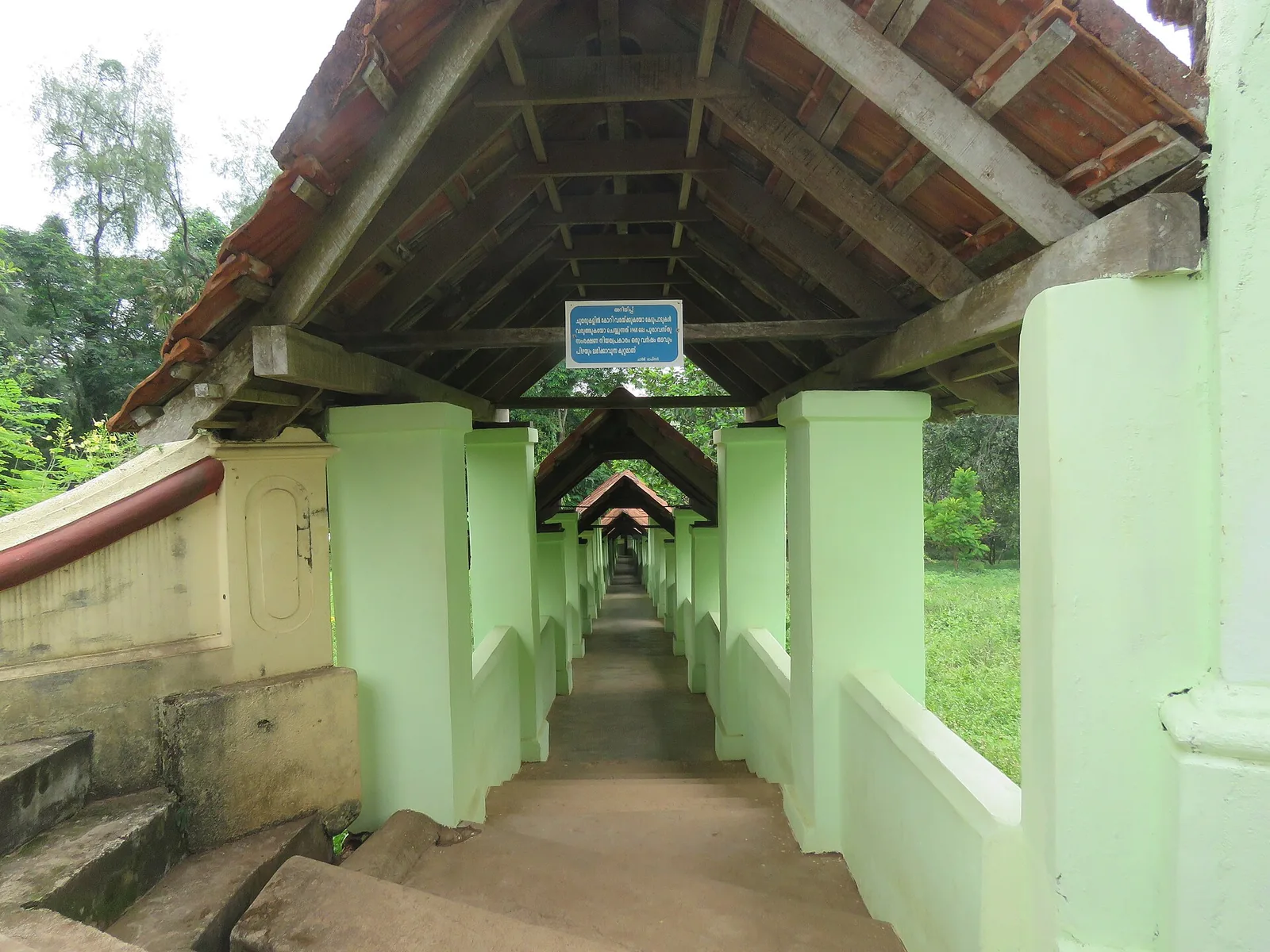
Hill Palace is not a building. It is around forty-nine separate buildings scattered over roughly fifty-two acres of terraced hillside at Tripunithura — audience halls, residential blocks, service quarters, courtyards — the whole working establishment of the Maharaja of Cochin, now knitted together as a museum campus and run by the Kerala Department of Archaeology.
That scale is the first thing to plan around. People arrive expecting a palace and an hour, and find a township and a hillside.
The crown
The most photographed object is the ceremonial crown of the Cochin Rajas — gold, studded with precious stones, reported at around 1.75 kilogrammes — displayed with the royal throne, ornaments, ceremonial swords and the personal regalia of the dynasty.
Around it, room after room of what a South Indian royal house actually accumulated: palace furniture, ceremonial beds, chariots and palanquins, oil portraits of successive rajas, and cabinets of ivory, porcelain and Chinese pottery gathered through centuries of Malabar-coast trade. That last category is worth pausing on. A Cochin raja’s china cupboard is a trade map.
The part nobody expects: the Iron Age
The museum reaches much further back than the dynasty. Galleries display Kerala’s megalithic funerary remains — the kudakkallu, the umbrella stones, and the thoppikkallu, the hat stones — which are among the most distinctive Iron Age monuments anywhere in India and which most visitors to Kerala never see at all.
There are also stone and metal sculptures, terracotta, models of Indus Valley and early South Indian culture, and cases of ancient coins, copper-plate grants and stone inscriptions for anyone who likes epigraphy. A separate heritage museum inside a traditional ettukettu — an eight-block Kerala mansion — recreates aristocratic domestic life.
- Around 49 buildings across roughly 52 acres. Allow a morning, not an hour.
- Closed Mondays. Run by the Kerala Department of Archaeology, so signage is museum-plain and interiors can be dim.
- Grounds include a deer park, a pre-historic park with life-size models, a children’s park and a medicinal plant garden.
- The crown is reported at about 1.75 kg. The megalith gallery is the sleeper hit.
- Weekdays are calm and uncrowded; it is as much a park visit as a museum visit.
The corridors you already know
Hill Palace has a second life on screen. Its shaded façades, wooden staircases and dim interiors have made it one of Malayalam cinema’s favourite locations, most famously as the haunted-mansion setting of the 1993 classic Manichitrathazhu. Countless other films, serials and songs have been shot along its verandas.
The effect is that many visitors arrive half-recognising a courtyard, and a great many Malayali visitors arrive with a much stronger and stranger association than that. See the myth section on the place page for what that has done to the building’s reputation — briefly: no, nothing in the film happened here, and the story it dramatises is not attached to this house.
Doing it well
Come on a weekday morning with time to wander. Move between the air-conditioned galleries and the terraces deliberately rather than trying to do the interiors in one push — the grounds are half the pleasure, and the elevated setting gives long breezy views over the Tripunithura countryside.
Watch the Monday closure. And treat it as a combined heritage-and-garden outing rather than a quick photo stop, which is the mistake almost everyone makes.
Frequently asked questions
How big is Hill Palace?
Around forty-nine separate buildings across roughly fifty-two acres of terraced hillside at Tripunithura — the whole establishment of the Maharaja of Cochin rather than a single palace. Allow a morning rather than an hour.
What is the most famous exhibit?
The ceremonial crown of the Cochin Rajas — gold, studded with precious stones and reported at about 1.75 kilogrammes — shown with the royal throne, ornaments, ceremonial swords and the dynasty’s personal regalia.
What are the umbrella stones and hat stones?
Kudakkallu and thoppikkallu — Kerala’s distinctive megalithic funerary monuments from the Iron Age, displayed in the museum’s archaeology galleries. They are among the most unusual prehistoric monuments in India and most visitors to Kerala never see them.
Was Manichitrathazhu filmed at Hill Palace?
Yes — the 1993 film used Hill Palace as its haunted-mansion setting, and the complex has been a favourite Malayalam film location ever since. Nothing in the film’s story is attached to this building in any tradition, however; the association runs from the film to the house, not the other way round.
What else is in the grounds?
A deer park, a pre-historic park with life-size models, a children’s park and a medicinal plant garden, spread over the terraced hillside. Families often come as much for the greenery and the deer as for the collections.
When is it open?
It is closed on Mondays and run by the Kerala Department of Archaeology rather than as a commercial attraction. Weekday mornings are calm; read the department or ticket-counter notice for that day’s session and tariff.