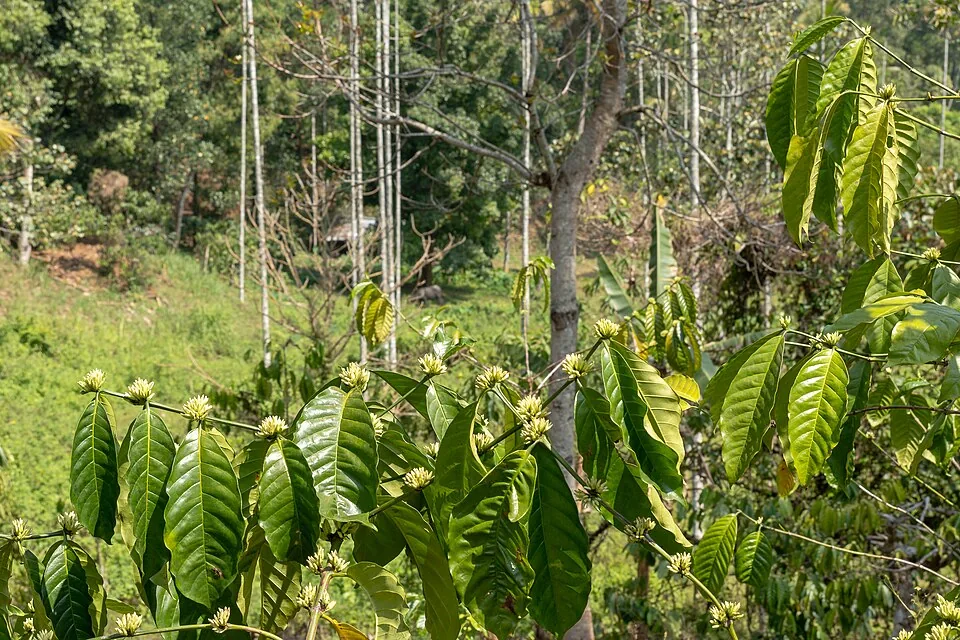
The first surprise on a hosted coffee walk around Kalpetta is that the plantation may not look like a plantation. Coffee occupies the lower storey beneath a broken canopy, mixed with pepper, fruit trees, areca and other crops. Read it from the ground upward and the apparent tangle becomes a deliberate working system.
Find the coffee layer first
Coffee shrubs are kept low enough to prune and pick. Look for opposite pairs of glossy leaves and for buds, flowers or cherries clustered where leaf meets branch. Wayanad is chiefly Robusta country according to the Coffee Board, although the exact plant and cultivar belong to the host to identify.
Flowers are a moment, not a season ticket
White, scented flowers can open quickly after rain and fade within days. A website cannot guarantee them months ahead. Green cherries are easier to encounter; colour then changes as fruit ripens, but timing differs from plot to plot.
Now look above the crop
Shade trunks interrupt direct sun and can carry pepper vines. Jackfruit, areca, coconut and banana may share the holding. Kerala Tourism describes this as a coffee-based farming system, a better phrase than monoculture: coffee is the organising crop but not the only life or income in the frame.
The ground is part of the explanation
Leaf litter, roots, drainage cuts, pruning and patches of sun reveal how the farm handles rain and access. Stay on the route your host chooses. The track is an aisle of work, not an invitation to roam into neighbouring plots.
- Which coffee type and cultivar grows here?
- What stage is the crop in today?
- Which trees provide shade or another harvest?
- Which processing steps happen on this farm?
Frequently asked questions
Is all Wayanad coffee Robusta?
Robusta is the region’s main type, but a guide should identify the plants on the particular holding rather than generalise.
Will I see red cherries?
Only when that plot is ripening; ask the host what is visible on your date.