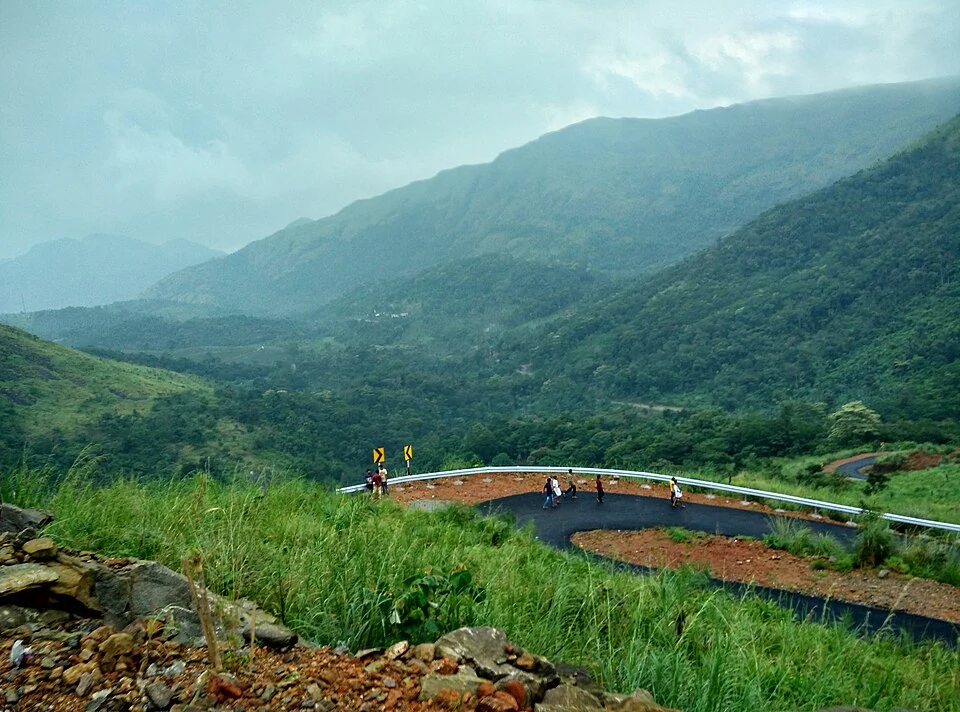
A tight paved bend cuts across the green hillside beneath Illikkal Kallu. A metal guardrail follows the outside of the curve, and visitors are visible on the road. The photograph explains a part of the destination that pinnacle portraits often leave out: the approach is itself a shaped transport route through steep terrain.
The walk follows an approach, not a climbing line
DTPC Kottayam describes a short jeep journey from the base and the option of hiking along that path. The public walking experience is therefore best understood as an approach to the viewing area. It should not be confused with climbing the vertical rock that dominates the final view.
At the entrance, ask how pedestrians are currently directed and whether any section is closed. The road arrangement can affect where people walk and pause. A photograph of earlier visitors standing on a bend does not establish that the same position is suitable during a busy operating period.
Keep passing and turning space clear. The inside of a curve can hide an approaching vehicle, while the outside may have little room beyond the carriageway. If a view is worth a pause, use a position staff consider suitable rather than stopping simply where the panorama first appears.
Decide what a jeep would change
A transfer can reduce the walking effort, but it does not make the upper viewing ground level or remove every uneven step. Someone who has difficulty with slopes should ask about the actual drop-off and remaining access before choosing the service.
Agree whether the journey is one-way or return, and where collection takes place. The ticket for the attraction and the arrangement for a jeep are different transactions. Knowing that distinction avoids reaching the upper area with an uncertain descent plan.
Walking both legs gives more time to observe the changing angle of the hills. It also asks more of the group’s endurance and balance. Choose the extent through the needs of the slowest participant rather than the speed of the person most eager to reach the viewpoint.
Keep the return visible in the plan
The descent can feel different from the climb. On a slope, tired legs and wet surfaces may demand a slower pace even when the route is familiar. Leave time for that stage instead of allocating the whole visitor window to the upper view.
The wider Erattupetta itinerary should accommodate the hill outing rather than force it into a narrow gap between distant bookings. A comfortable return to the visitor entrance is part of a successful trek, not an administrative detail after the scenery.
Read the DTPC Illikkal Kallu guide for the recognised walking and jeep choices. Then turn that general description into the day’s actual route with the entrance staff. The road’s bends become easier to enjoy when the group knows how both the ascent and return will work.
Plan the visit: Illikkal Kallu trek.