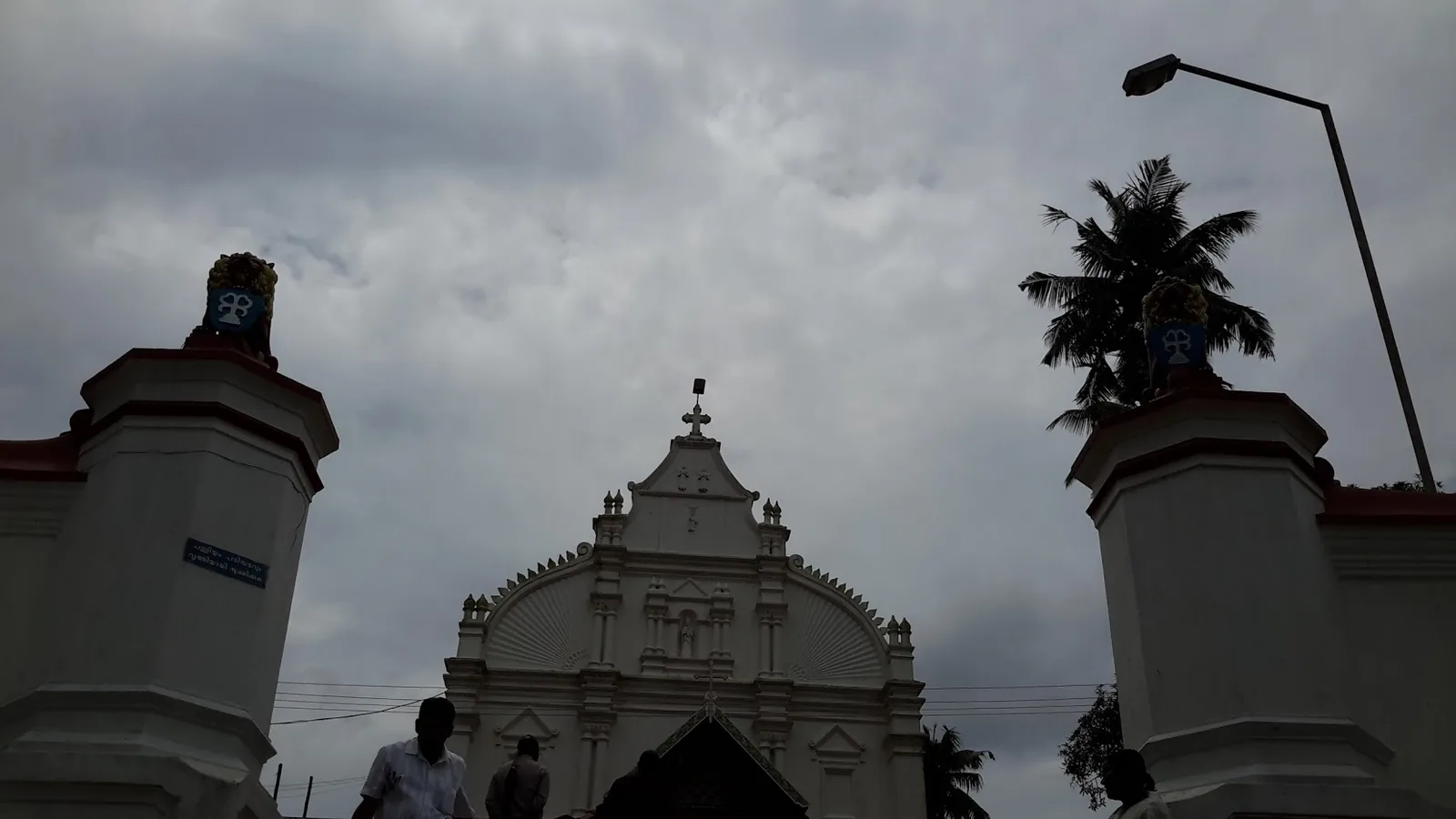
Kerala has produced a great many holy men. It has produced exactly one Christian priest that people still tell ghost stories about, and his church is at Kadamattom.
Poulose
The legend begins with a poor boy named Poulose — Kochu Poulose to the village — born at Kadamattom and orphaned young. He was taken in by Mar Abo, also called Mar Sabor, a Persian priest and bishop who had established a presence among the Saint Thomas Christians of Kerala, and he was trained in Syriac and in the liturgy of the Mass. In due course he was ordained deacon, and people called him deacon Poulose.
Then, in the popular telling, he vanished.
The tradition holds that he was carried off into the hills and lived a long time among forest people, and that what he learned there was not liturgy. He came back knowing mantravadam — the ritual craft of binding, banishing and commanding spirits — and Mar Abo, on the return of his spiritual son, ordained him priest and entrusted him with the church.
That is the hinge of the whole cycle. A Christian priest with a second education. Everything else follows from the fact that he is licensed by one tradition and powerful through another.
Kalliyankattu Neeli
The most famous episode sets him against Kalliyankattu Neeli, and to understand why it matters you need to know what a yakshi is in Kerala folklore. Not a generic ghost: a female spirit, beautiful and deadly, who was very often a woman wronged in life and who now waits on lonely roads and forest paths for men to follow her. Neeli is the most feared of them.
The Kathanar meets her, and — in the tellings — he does not destroy her. He subdues her, by a mixture of wit, Christian prayer and the esoteric knowledge he brought back from the hills, and binds her into service. Versions differ on where she ended up: sealed into a palm-leaf book of spells, chained in a hidden chamber beneath the church, or nailed to a tree.
The rest of the cycle runs the same way. He binds spirits, he deploys powers a Christian priest is not supposed to have, and he does it for the protection of ordinary villagers rather than for himself. He is a folk hero with an irregular licence.
- The Kathanar is not a saint of the church. He is a folk figure attached to a real parish.
- The standard source is the Aithihyamala, Kottarathil Sankunni’s nineteenth-century collection of Kerala legends — presented, then and now, as legend.
- The tradition places him in the ninth century, in the milieu of Mar Abo / Mar Sabor and the Saint Thomas Christians.
- There is no certain proof he existed. What is not denied is that a real priest lived in this area in the ninth century.
- Kadamattom Church is an active parish. Visit it as one.
What history can actually carry
Be clear about the load-bearing walls here. The reference works are blunt: there is no certain proof that the Kathanar really existed, while the fact that a real priest lived in that area in the ninth century is not denied. The legends themselves come down through oral tradition and through the Aithihyamala, a collection compiled in the nineteenth century and openly presented as a gathering of legends with magic and sorcery in them.
So the honest position is a layered one. A ninth-century parish, real. A named priest at it, plausible. A priest who bound a yakshi into a palm-leaf book, legend — and a legend that has outlived every document that might have settled the question.
Why go
Because the building means something different once you have the cycle in your head. It is a working Syrian Christian church, not a heritage attraction and not a shrine to a magician, and the ordinariness of it against the strangeness of the stories is the whole experience. Go quietly, respect that it is a parish, and do not expect exhibits.
Kerala keeps its best stories in unremarkable buildings. This is the clearest example in the district.
Frequently asked questions
Who was Kadamattathu Kathanar?
In legend, a Syrian Christian priest of Kadamattom — born Poulose, orphaned young and raised by the Persian bishop Mar Abo, also called Mar Sabor — who is said to have disappeared into the hills, learned mantravadam among forest people, returned, been ordained priest, and used those powers to bind spirits for the protection of villagers.
Who was Kalliyankattu Neeli?
The most feared yakshi in Kerala folklore — a female spirit, beautiful and deadly, understood in the tradition as a woman wronged in life who now waits on lonely paths for travellers. The Kathanar’s most famous episode is his subduing and binding of her rather than destroying her.
What happened to Neeli in the story?
Versions differ. She is variously said to have been sealed into a palm-leaf book of spells, chained in a hidden chamber beneath Kadamattom Church, or nailed to a tree. The disagreement is normal for an oral cycle and none of the versions is authoritative.
Did the Kathanar really exist?
Unproven. Reference sources put it plainly: there is no certain proof he existed, but it cannot be denied that a real priest lived in that area in the ninth century. The legends come down through oral tradition and the Aithihyamala, a nineteenth-century collection openly presented as legend.
What is the Aithihyamala?
Kottarathil Sankunni’s nineteenth-century compilation of Kerala legends, and the standard source for the Kathanar cycle. It presents its material as legend, with elements of magic and sorcery, rather than as history.
Is the Kathanar a saint?
No. He is not a saint of the church and the stories are not doctrine — he is a folk figure who happens to be attached to a real parish. Kadamattom Church is an active place of worship and should be visited as one.