Kakkayam combines a forest visitor area with hydel tourism around a working reservoir. That creates a common planning mistake: news about one activity is read as permission for every nearby stop. A lake boat service, a forest path and access to a stream pool need separate answers.
Begin with the named activity
The current Forest Department portal lists a Kakkayam sightseeing package whose name includes Urakkuzhi waterfall and the dam. It publishes entry categories and a local contact. The short description does not set out the complete path or identify every admitted viewpoint, so the package name is only the beginning of the practical check.
Ask about the actual Urakkuzhi viewing position, any accompaniment and the route’s return arrangements. These questions give the staff a specific plan to confirm. Asking only whether “Kakkayam is open” can leave uncertainty about which part of the visitor landscape is meant.
Reopening has not always happened together
Reporting in May 2024 described the forest centre reopening after closures connected with gaur attacks. It also described a different sequence for hydel-tourism operation. The historical example shows why the two activities should not be treated as a single gate decision, without turning an old reopening date into today’s access status.
The distinction remained relevant in 2026. April reporting described restrictions at the upper Shankaranpuzha water and Urakkuzhi viewpoint. July reporting concerned reservoir boating restarting after low water had interrupted it. These reports concern different spaces and different reasons for interruption.
The water itself gives a misleading shortcut
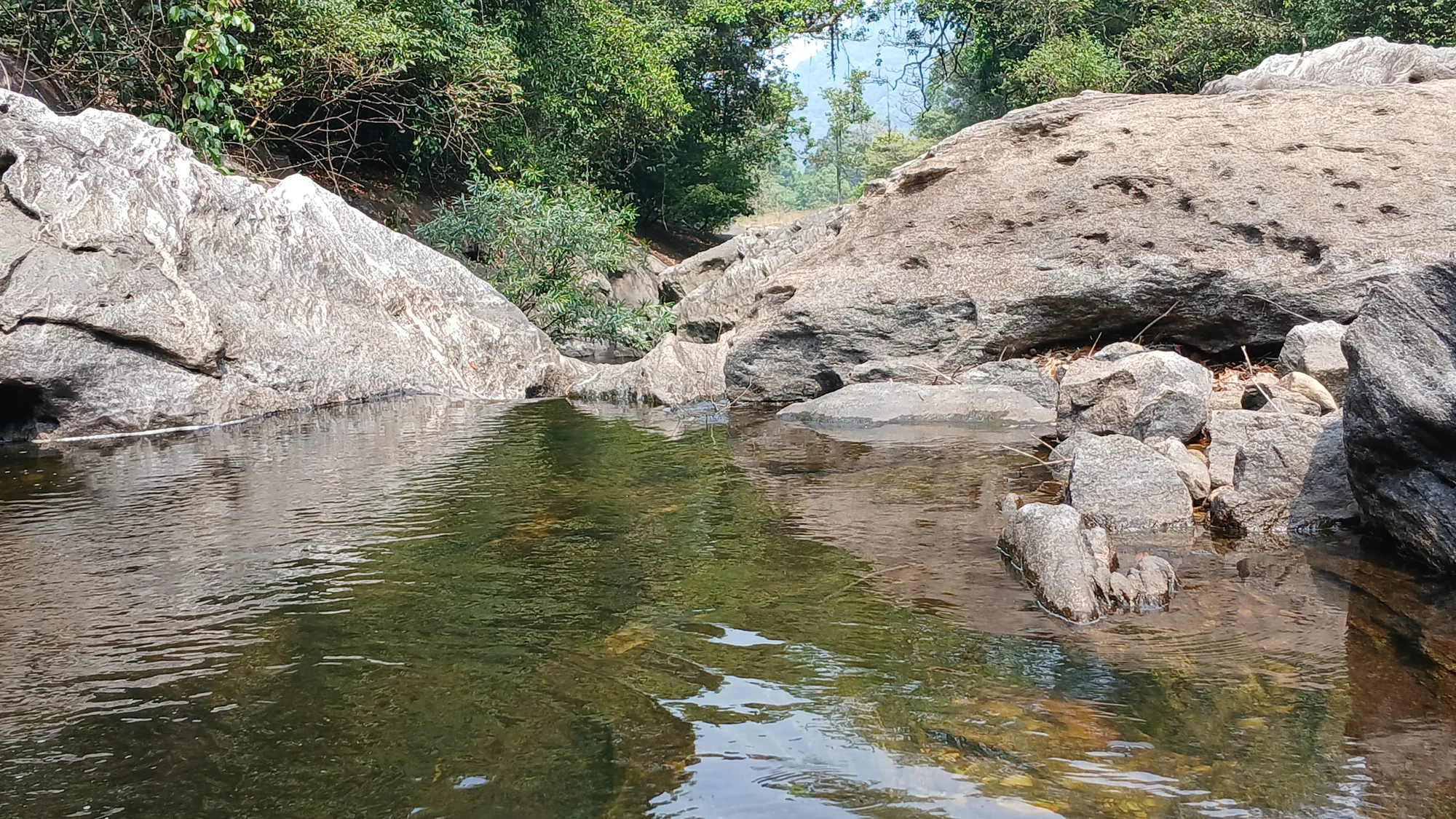
The photograph shows a green pool between smooth pale rocks, enclosed by trees. Its still appearance can suggest a comfortable place to enter. But the image gives no measurement of depth, current or the downstream drop, and it does not show the current visitor barrier.
Treat it as a view of the stream landscape. A pool above a waterfall is not an invitation to bathe, and a visible rock shelf is not necessarily part of an admitted walk. At Kakkayam, the distinction is reinforced by the recent reporting of restrictions at the water itself.
The same care applies to wildlife. The forest route is habitat, and staff may change access when animals are using an area. Staying with the authorised group and allowing wildlife space are practical parts of the outing. An animal sighting should not become a reason to stop beside it or leave the agreed route.
Build flexibility into the day at the lower Kakkayam reporting point. If the intended forest view is unavailable, decide whether a separately confirmed boat outing still suits the group before continuing up the road. That decision gives the visit a clear purpose and avoids reaching the upper area with an expectation that no current operator has actually confirmed.
Current programme: Kerala Forest Ecotourism. Context: April 2026 access report and July boating report.
Plan the visit: Kakkayam trek.