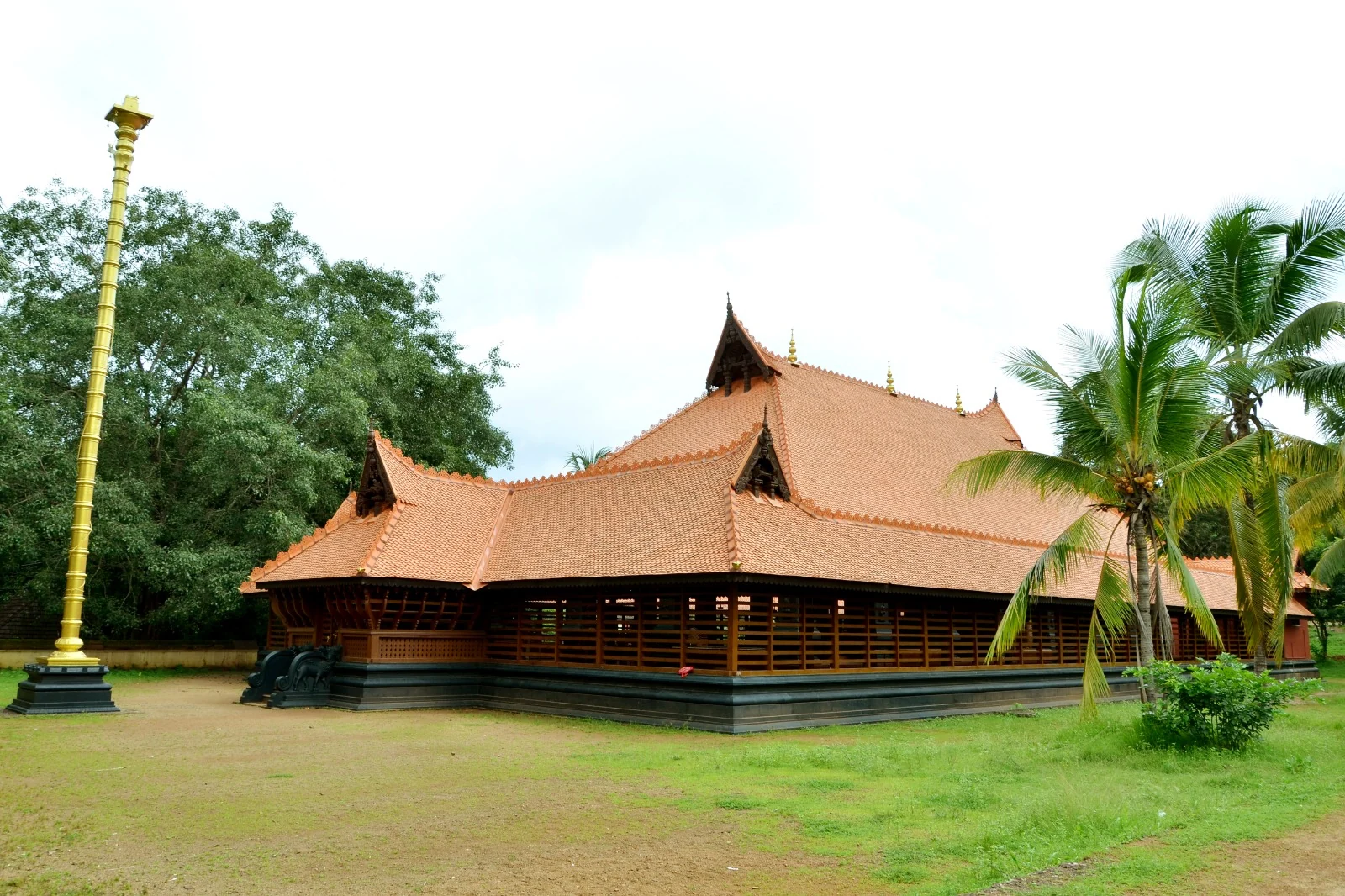
Layered tiled roofs, timber sides and a dark raised base give Kerala Kalamandalam’s Koothambalam a recognisable architectural presence. A tall golden flagstaff stands beside it in the institution’s photograph. The building is more than a picturesque backdrop to a campus visit: it was conceived as a place for performance, drawing on Kerala’s theatre tradition.
Begin with the whole building
Kalamandalam dates the Koothambalam to 1977 and names D. Appukuttan Nair as its architect and Elavally Narayanan Achari as the craftsman associated with its construction. These names connect the building with a deliberate modern project rather than an anonymous structure inherited intact from an unspecified ancient period.
From outside, notice how the roof layers establish the building’s outline before individual decorative elements become clear. The eaves, timber enclosure and raised base work together visually. Walk only where the visitor route permits and allow a little distance to understand those proportions rather than beginning with a close-up of a single carving.
The form belongs to a performance setting. It should not be described simply as a temple because it uses architectural language associated with Kerala’s sacred theatre spaces. Within Kalamandalam, it serves the institution’s artistic life.
The body appears in the building
The institution identifies 108 karanas in black-granite sculpture among the Koothambalam’s features. Karanas are movement units associated with the classical dance tradition. Their presence gives the architecture a direct relationship with the performing body rather than using decoration that is unrelated to the space’s purpose.
Look at posture and the arrangement of limbs before trying to memorise a name for each figure. A sculpted movement and a live movement are different things: one fixes an instant in material, while the other unfolds through time. A guide can help connect the visual detail with the tradition without expecting a first-time visitor to arrive with specialist vocabulary.
Kalamandalam also identifies a Pashupatha mural in the theatre. Treat that as another distinct work to ask about during the authorised visit. Its subject and placement deserve their own explanation rather than being folded into a vague claim that every surface tells the same story.
A theatre may be working when you arrive
An institutional visit does not guarantee access to every part of a performance space at every moment. Rehearsal, teaching or an event may shape what can be seen. Follow the guide’s directions about where to stand and when to remain quiet.
If a performance is taking place, let the activity determine attention. Architectural observation can wait for an appropriate moment; moving around for roof photographs during a live passage would miss the building’s main purpose.
Read Kalamandalam’s Koothambalam account and guided-tour description before visiting. It provides a small set of precise things to recognise: the 1977 project, its makers, the karana sculptures and the mural. Those details make the theatre legible without reducing it to a checklist of ornaments.
Plan the visit: Kerala Kalamandalam.