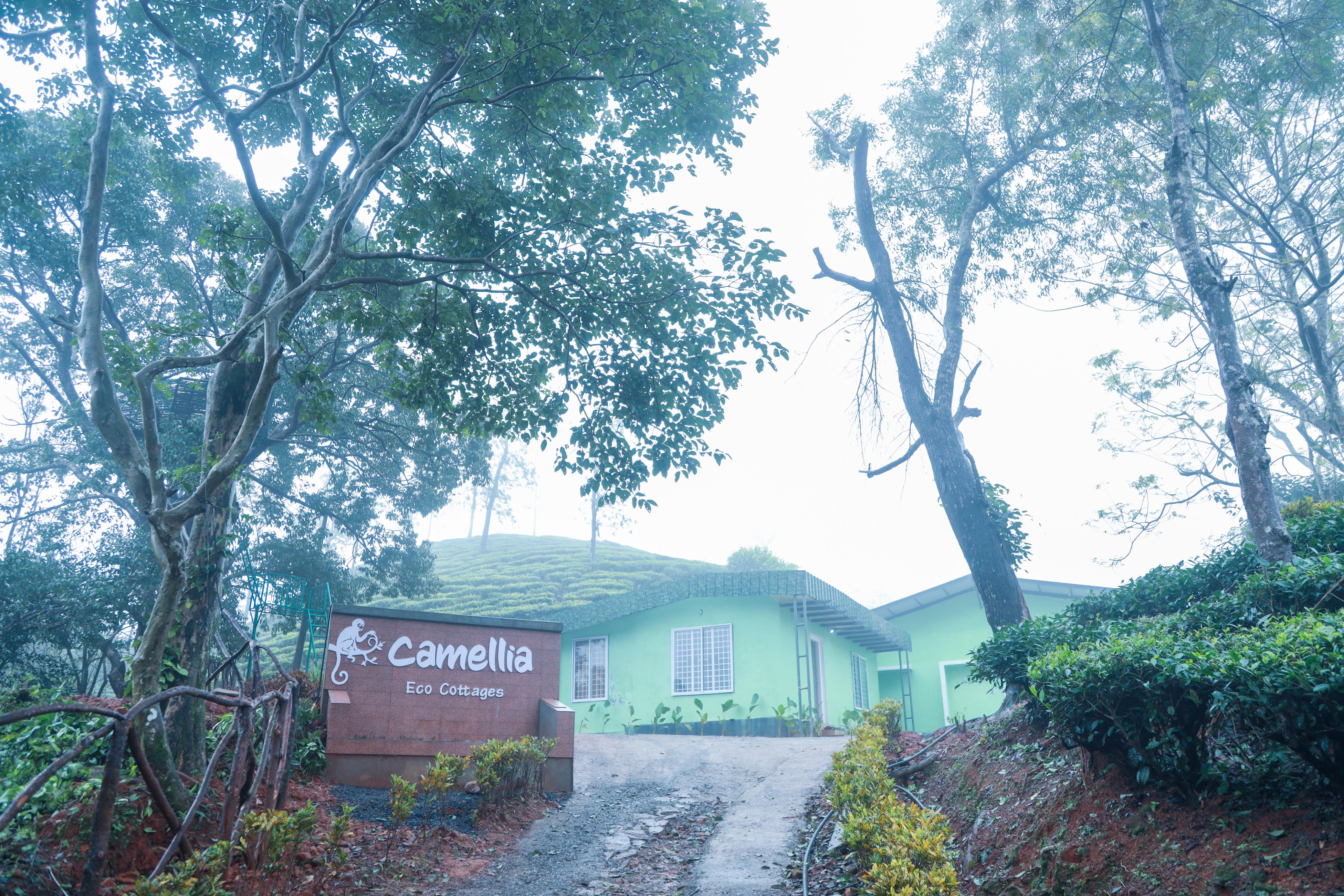
Kambamala belongs to Kerala Forest Development Corporation, established in 1975 for production forestry. Its current Wayanad programme places cottages, guided walks and visitor viewpoints within a tea estate. Tourism is therefore a newer use of managed land, not proof that the slopes are untouched forest.
Read what is planted
Tea appears as clipped, repeating bands; tall trees break the pattern; forest closes the skyline. Tracks and worker paths belong to cultivation before they belong to leisure. Staying here gives time to see that daily rhythm rather than treating the crop as a green backdrop.
KFDC’s description includes guided nature and tea-trail walks. A guide can distinguish estate operations from visitor space and explain why some tracks are unavailable during work or bad weather.
An eco-stay with a precise claim
The strongest claim is modest: accommodation concentrates visitors in existing estate buildings and adds interpretation to a working landscape. It does not erase production history or make every surrounding slope public. Follow the booked programme and treat workers’ routes as workplaces.