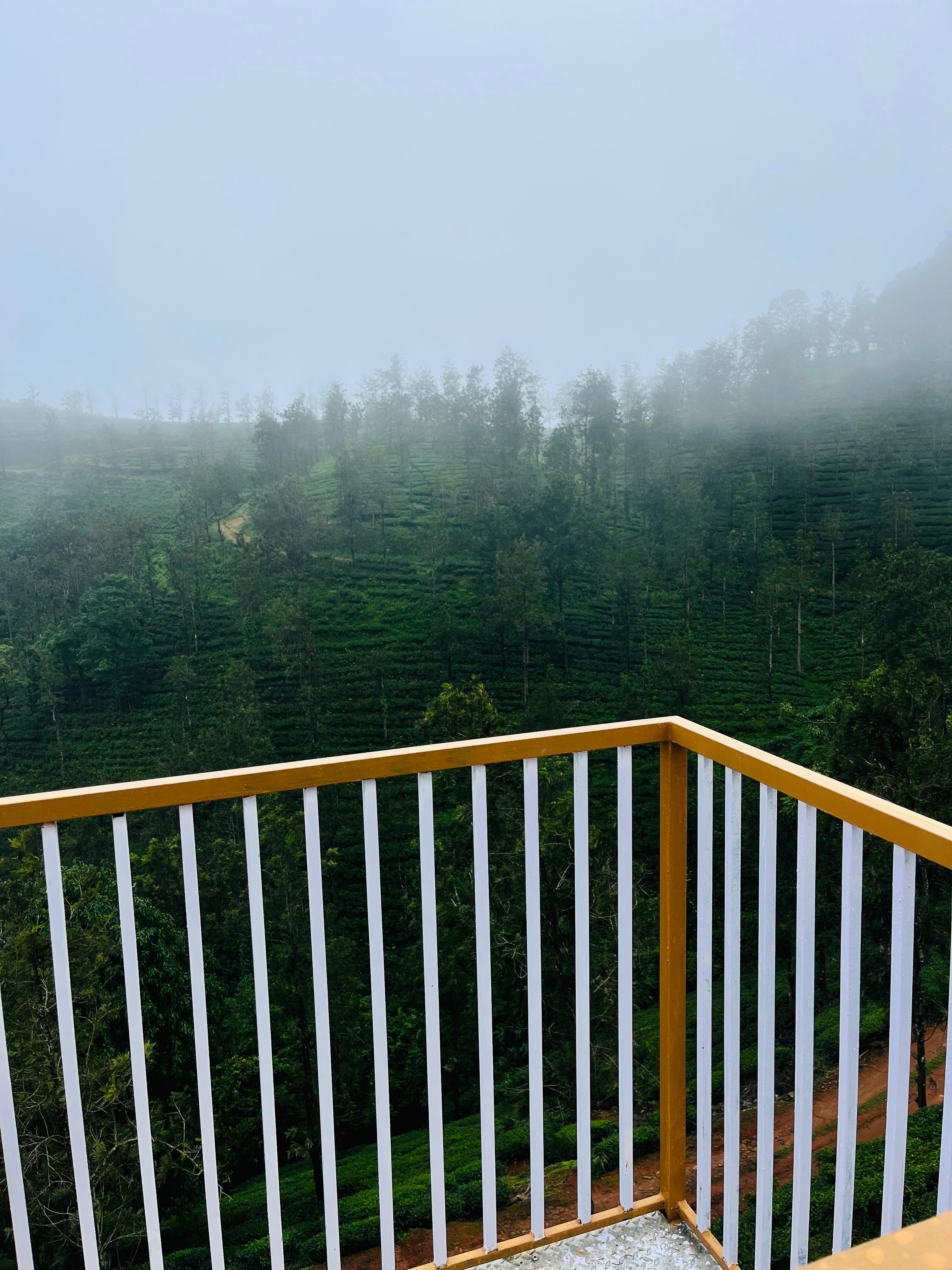
Kambamala’s photographs contain two kinds of green. Tea is low, clipped and repeated along the contour. The forest edge is taller, denser and irregular. Learning to see that boundary is more informative than calling the whole view jungle.
An edge is active habitat
Birds and other wildlife move across plantation boundaries, but an official claim of rich biodiversity is not a sighting guarantee. Early light, rain and the estate’s work cycle all affect what is visible. Stay on the guided route rather than following movement into cover.
The boundary also explains the name production forest in practical terms. KFDC manages planted resources while retaining and working beside other vegetation. Ecotourism interprets that meeting; it does not make the distinction disappear.
Use the shelter as a reading point
From the open viewpoint shelter, follow tea rows until their geometry breaks against taller growth. In mist the far edge vanishes first, leaving only the nearest planted folds. That is still a complete Kambamala view—weather revealing how little of the landscape a single glance contains.
- Low repeated rows: cultivated tea.
- Tall irregular canopy: forest or mixed edge vegetation.
- A wildlife possibility is not a promised encounter.
- Guided access protects both work and habitat.