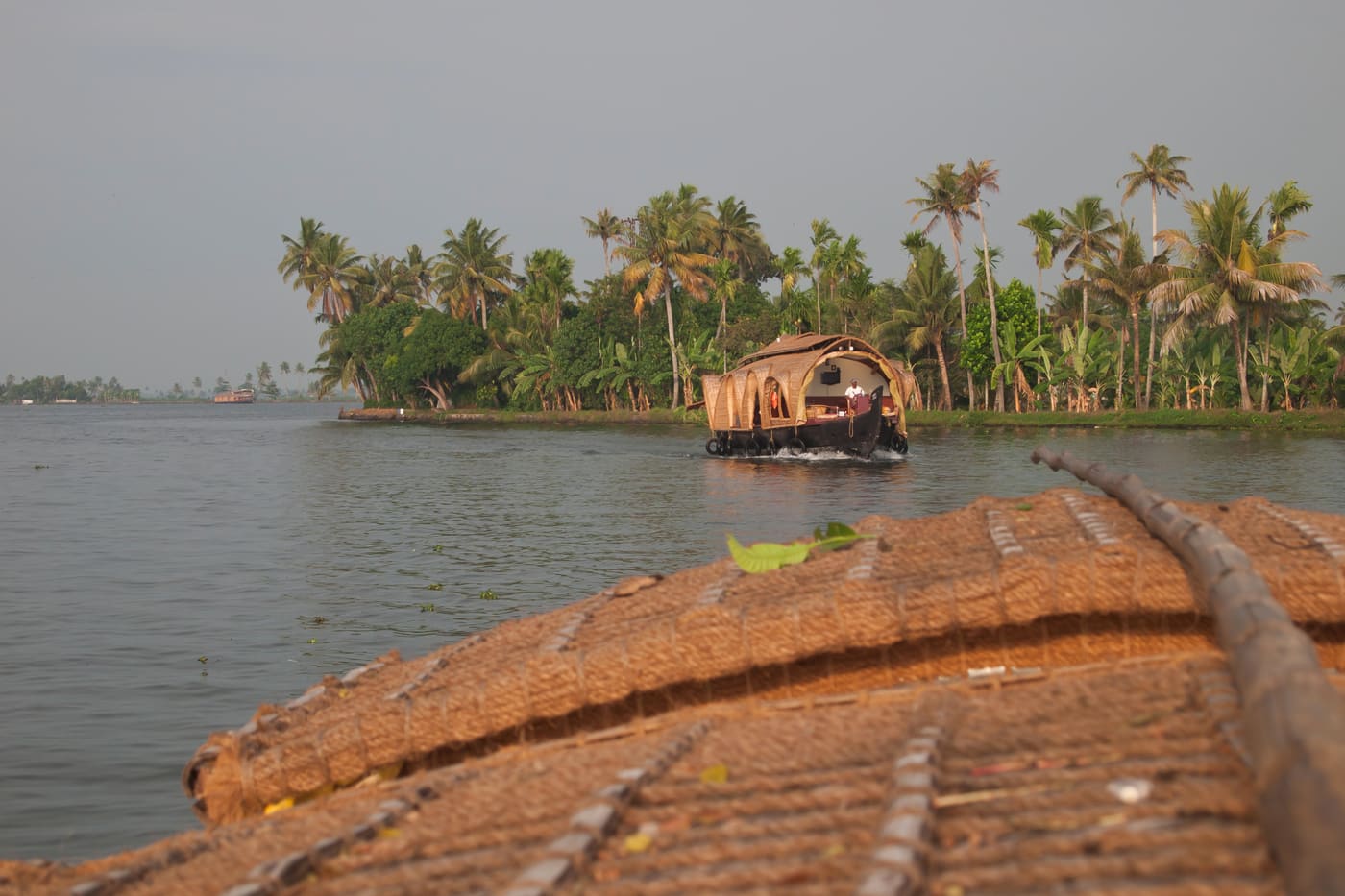
A Kerala backwaters trip can mean sleeping aboard a houseboat, staying on a lake shore or spending a few hours in a canoe. Alleppey, Kumarakom and Kollam offer different starting points for those plans. Choose the experience before choosing a room: the route and boarding jetty matter as much as the destination name.
Choose your backwater base by the outing
| Base | Consider it for | Confirm before reserving |
|---|---|---|
| Alleppey / Alappuzha | A houseboat booking or a canal outing within an Alappuzha stay | Exact vessel, boarding point, overnight mooring and included meals. |
| Kumarakom | A stay beside Vembanad Lake, with a separate boat or bird-sanctuary outing | Actual lake frontage, room position and where the boat departs. |
| Kollam / Ashtamudi | A lake outing or a trip to Munroe Island’s smaller canals | Lake route versus island canal route, and the transfer between your hotel and jetty. |
Alleppey: choose the vessel and its route
Kerala Tourism describes Alappuzha’s canals and houseboat cruises and maintains a houseboat provider directory. Use it to identify an operator, then request the specific boat’s name and recent photos. A fleet photograph does not identify your cabin. Decide whether you want an overnight mooring or only time on the water; the one-night Alleppey houseboat guide explains the questions for a night aboard.
Write down the boarding jetty, route, return time and whether the quote buys the whole boat or a shared cabin. Add meal choices, air-conditioning hours, taxes and cancellation terms. Give the jetty to your driver rather than only the hotel address. A stay in Alappuzha town and a boat’s departure point can require a separate transfer.
Kumarakom: decide how you will use the lake shore
Kumarakom lies beside Vembanad Lake in Kottayam district. Kerala Tourism identifies its bird sanctuary as a distinct attraction. Choose this base when the accommodation itself is part of the trip: breakfast by the water, time at the property and an outing arranged around those hours. Check whether your room faces the lake, a canal or the garden; the same property may sell several settings.
Arrange a boat separately unless the written stay package includes it. Ask whether it boards at the property or another jetty and whether it returns to the same point. Give a sanctuary visit its own time and access check rather than treating a lake-view room as admission or a guarantee of birds.
Kollam: distinguish Ashtamudi from Munroe Island
Ashtamudi offers a lake setting around Kollam. Munroe Island, at the Kallada–Ashtamudi meeting, has smaller canals described by Kerala Tourism for canoe outings. Choose a lake route for broader water views, or an island canal trip for narrower waterways. Ask which route is being sold and where it starts. The Ashtamudi and Munroe Island comparison makes that choice more specific.
Build the trip around the confirmed departure
A local ride and an intercity tourist boat require different travel plans. Confirm any Alappuzha–Kollam service directly with the State Water Transport Department for the date and direction you need; this guide publishes no guaranteed daily departure. For your chosen boat, settle boarding assistance, life jackets, group size and the weather cancellation arrangement before paying. Keep a land-based alternative if conditions prevent the outing.