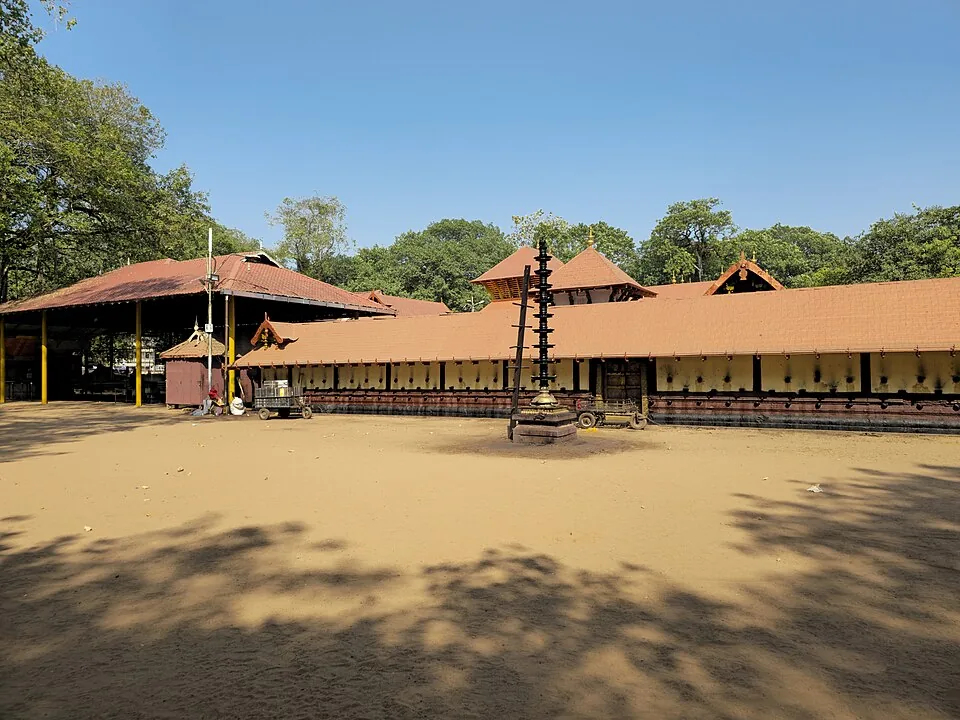
At Kodungallur, on the old Muziris coast north of Kochi, stands the Sree Kurumba Bhagavathy temple — one of the oldest functioning goddess shrines in Kerala, dedicated to Bhadrakali, a fierce form of the mother goddess. It is a place where two of South India’s deepest traditions meet: an ancient Tamil epic, and a festival that has kept its raw, untamed character across the centuries.
Kannaki and the Cilappatikaram
By tradition, the goddess here is bound to Kannaki, the tragic heroine of the Cilappatikaram — the great Tamil epic attributed to the poet-prince Ilango Adigal. In the tale, Kannaki’s husband Kovalan is wrongly accused of theft and executed at Madurai; in her grief and rage she is said to have burned the city, and then to have come north to Kodungallur, where she merged with the Bhagavathy. Whether history or parable, the story ties this shrine to a woman remembered across Tamil and Malayalam culture as an emblem of wronged virtue and terrible power.
The Bharani — a festival like no other
The temple’s great festival, the Kodungallur Bharani, falls on the Bharani asterism in the Malayalam months of Kumbham and Meenam — roughly February to April; confirm the exact year’s dates locally, as they move with the lunar-solar calendar. It is famously unlike the stately temple festivals of central Kerala. Its heart is the Kaavutheendal, when velichappadu (oracles) in red, some drawing blood on their own foreheads with ritual swords, storm the temple in a trance — said to be among the largest gatherings of oracles anywhere. Devotees sing the Bharanippattu, ribald and transgressive songs offered to the goddess, and light the Revathi vilakku. Older, controversial elements such as animal offerings have been officially discouraged over the years. It is intense and not for every visitor — but it is one of the most striking living rituals in Kerala.
- The temple is at Kodungallur in Thrissur district, on the historic Muziris coast — pair it with the Cheraman Juma Masjid and other Muziris heritage sites nearby.
- The Bharani (around February–April) is powerful but raw; go with realistic expectations and respect the intensity of the rituals.
- It is an active place of worship — dress modestly, follow temple customs, and check current darshan timings.
Frequently asked questions
What is the legend of Kodungallur Bhagavathy temple?
By tradition the goddess is linked to Kannaki, heroine of the Tamil epic Cilappatikaram, who — after her husband was wrongly executed at Madurai — is said to have burned the city and come to Kodungallur, merging with the Bhagavathy. The temple is dedicated to Bhadrakali and is one of Kerala’s oldest goddess shrines.
When is the Kodungallur Bharani festival?
The Bharani is held on the Bharani asterism in the Malayalam months of Kumbham and Meenam, which usually falls between February and April. The exact dates shift each year with the lunar-solar calendar, so confirm locally before planning a visit.
What is the Kaavutheendal?
Kaavutheendal is the climactic Bharani ritual in which oracles (velichappadu) in red rush the temple in a trance — one of the largest gatherings of oracles in Kerala. It is intense and can be confronting for first-time visitors.