There is a particular kind of light in this corner of Palakkad in the dry months — a low gold that lies over the harvested paddy and picks out the ranked crowns of palmyra along the field bunds. Behind it all rises the dark, forested step of the Nelliampathy hills. Kollengode sits right in that meeting of plain and mountain, and for a few weeks each winter the quiet is broken by the biggest sound the countryside makes: the massed drums of a temple festival, and the slow procession of caparisoned elephants.
The rice bowl of Palakkad
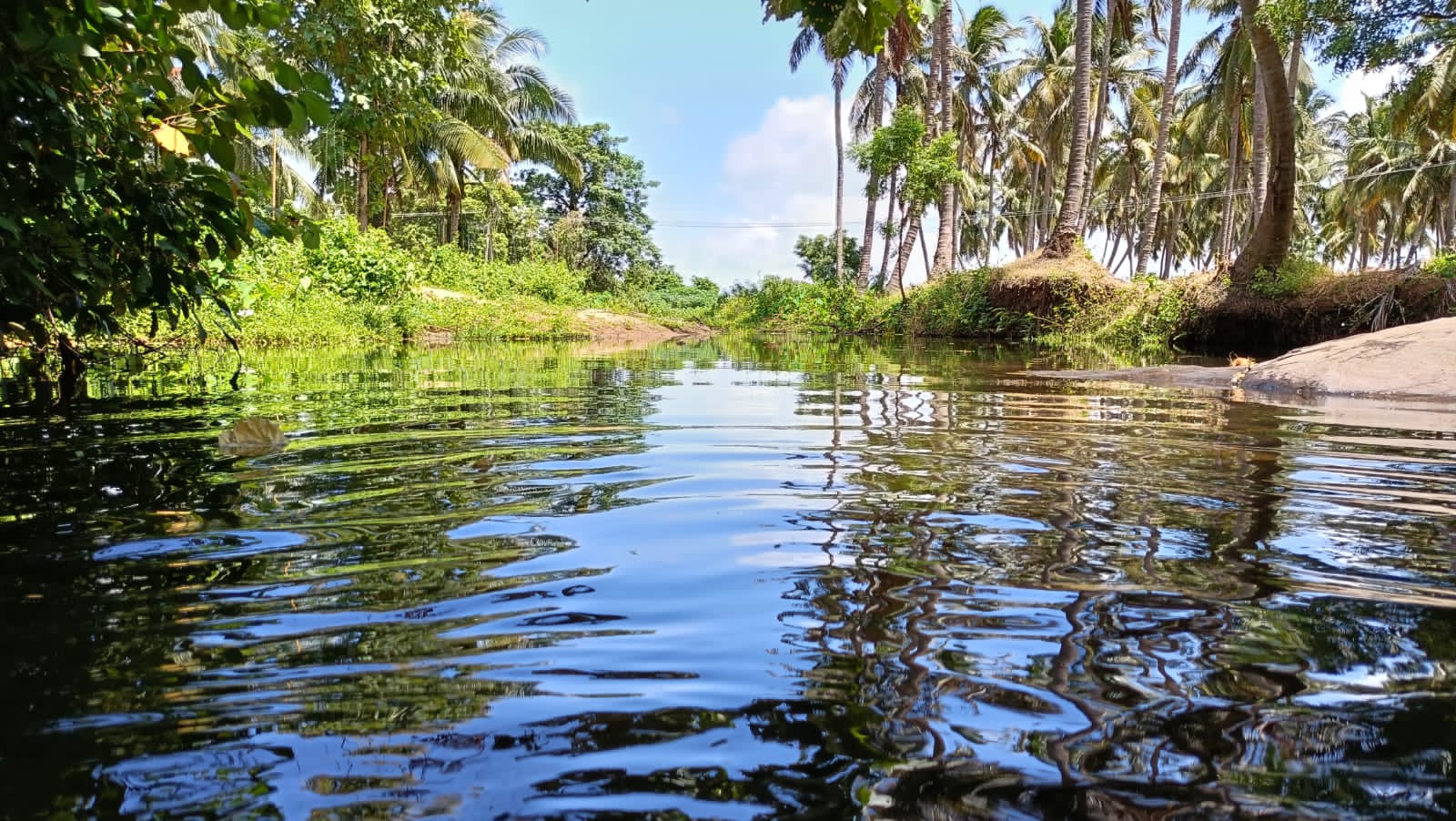
Palakkad is Kerala’s granary, and Kollengode sits near its heart. The land here is famously called the rice bowl of Palakkad — wide, well-watered plains where the Gayathripuzha, a tributary of the Bharathappuzha, threads past the town. Between the paddy stand coconut groves and the tall, unmistakable palmyra palms that give the eastern Palakkad landscape its dry, almost Tamil character, a reminder that the Coimbatore plains lie just over the state line.
This is agrarian country first and a tourist stop second, which is precisely its charm. In 2023 the industrialist Anand Mahindra put Kollengode on many more radars when he shared images of the village and said its beauty had left him speechless — but the appeal is exactly the ordinary one: field paths, temple tanks, old tiled houses and a rhythm still set by planting and harvest rather than by traffic.
Elephants, drums and the festival season
Like most of Palakkad, Kollengode marks its calendar by temple festivals in the vela and pooram tradition — celebrations that typically follow the harvest and centre on caparisoned tuskers, ceremonial parasols and thundering percussion. The best-documented of the town’s own festivals is the arattu at the Pulikode Ayyappankavu temple, dedicated to Ayyappa, where the deity’s thidambu is carried atop a caparisoned elephant to the accompaniment of pandi melam and panchari melam.
That festival is generally held in the Malayalam month of Dhanu, around Dhanu 21, which falls in early January. If your timing is flexible, the wider district rewards it: the celebrated Nenmara Vallangi Vela, one of Palakkad’s grandest post-harvest festivals of elephants and fireworks, takes place nearby, so a winter visit to Kollengode can be built around more than one pageant.
- Festival dates follow the Malayalam calendar and change each year — the Pulikode Ayyampankavu arattu falls around Dhanu 21 (early January); always confirm the current-year date locally before travelling.
- The dry season, roughly December to February, gives the clearest light over the paddy and the most comfortable weather for the Nelliampathy road.
- Nearest railhead: Kollengode station (at Oottara); nearest airport: Coimbatore, about 70 km away.
- Treat elephants and processions with distance and care — never crowd a temple tusker.
Where the plain meets the hills
Kollengode’s other quiet pull is that it is a threshold. The village sits at the very foot of the Nelliampathy hills, and the ancient Kachamkurissi temple — counted among the traditional Divya Desams and dedicated to Vishnu, with its sreekovil walls painted in Ramayana scenes — stands on this edge of plain and forest at Payyalur, on the township’s rim. From here the road begins its climb, switchbacking up towards the Seetharkundu viewpoint, where the plains you have just crossed fall away in a single dizzying sweep.
That combination — a granary town, an old chiefly heritage, temple festivals with elephants, and a mountain road starting almost from the last paddy field — is what makes Kollengode a genuine slow-travel stop rather than a tick-box sight. It asks for an unhurried half-day: a walk between the bunds, a look at a temple, perhaps a coffee, and then the drive up into the green cool of Nelliampathy.
Frequently asked questions
What is Kollengode known for?
For being a heart of Palakkad’s rice country — the so-called rice bowl of Palakkad — for its Vengunad royal heritage, for temple festivals with caparisoned elephants and melam, and for sitting at the foot of the Nelliampathy hills at the start of the hill road.
When is the Kollengode temple festival?
The best-documented town festival, the arattu at the Pulikode Ayyappankavu temple, is generally held in the Malayalam month of Dhanu around Dhanu 21, corresponding to early January. Dates shift each year with the Malayalam calendar, so confirm locally before travelling.
Is Kollengode close to Nelliampathy?
Yes. Kollengode lies at the foot of the Nelliampathy hills, and the road up to viewpoints such as Seetharkundu begins near the town, making it a natural pause on the way into the hills.
What is the best time to visit Kollengode?
The dry season from about December to February is ideal — clear light over the harvested paddy, comfortable weather for the hill road, and the winter temple-festival season, including the region’s vela and pooram celebrations (confirm exact festival dates locally).