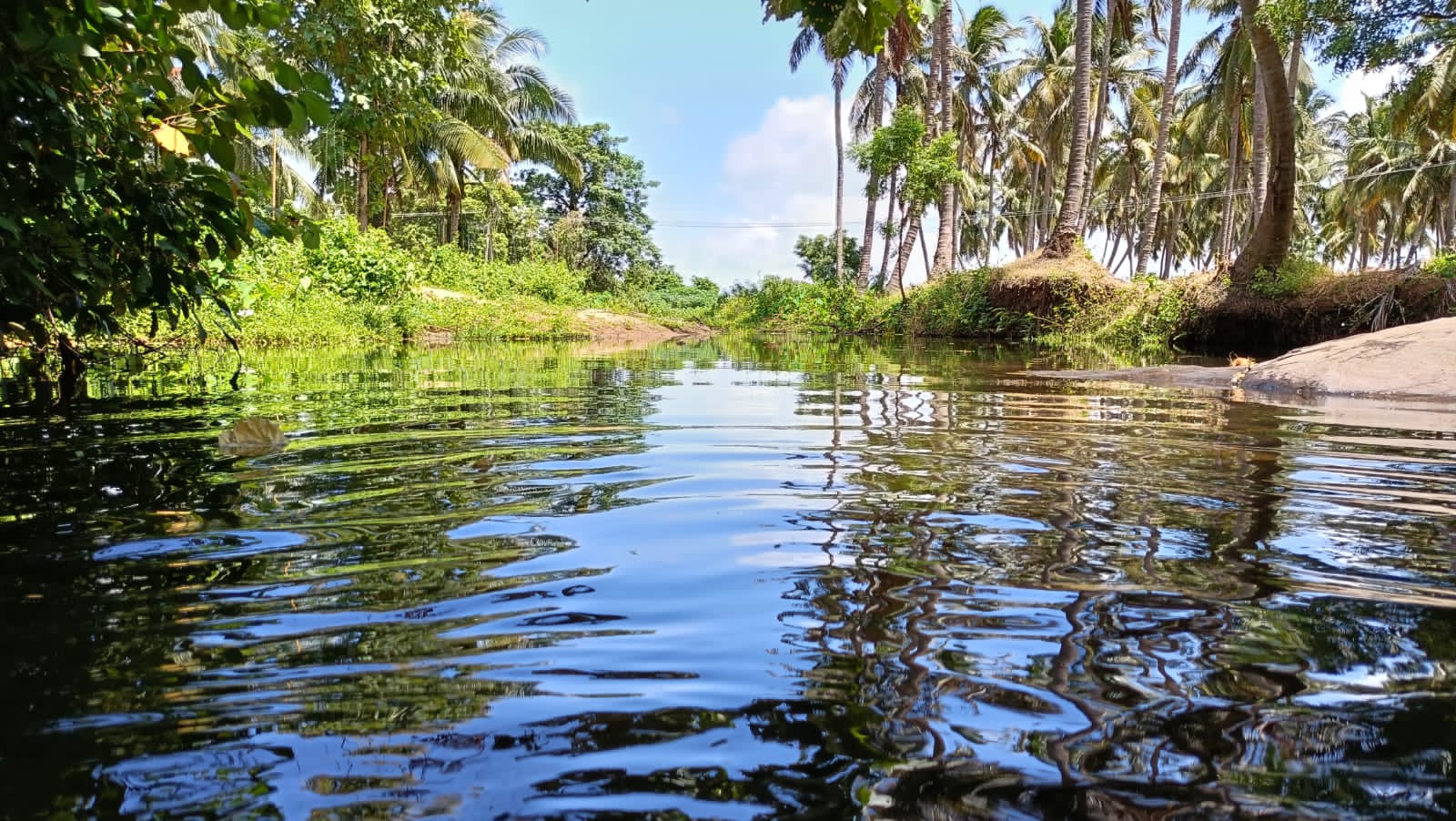
Drive east from Palakkad town, past bunded paddy that runs flat to the horizon, and the land begins to lift towards the blue wall of the Nelliampathy hills. Somewhere in that seam between plain and forest sits Kollengode — a small, unhurried place that once carried an outsized share of the region’s aristocratic story. For centuries this was the seat of the Vengunad chieftains, a family that kept elephants, endowed temples and, for one remarkable January, hosted the most celebrated painter India had yet produced.
From Vengunad Nambidis to Rajas
The rulers of eastern Palakkad were known as the Vengunad Nambidis, and the name itself is a piece of geography: Vengunad is often read as the land of the venga tree, a hardwood that grew thick along these foothills of the Anamalai range. Historical accounts describe the family as feudatories of the Zamorin of Calicut, holding sway over a cluster of desams around Kollengode.
Their title of Raja is comparatively recent. Documented histories and Kerala Tourism’s own account agree that it was the Mysore ruler Hyder Ali, during his campaigns in Malabar in the later eighteenth century, who conferred the style of Raja on the Kollengode line — before which they were addressed as Nambidis. Under the British the title endured as the family shifted to a pensionary, landholding role rather than an independent one.
The Kovilakam at the foot of the hills
The old family seat at Kollengode, the Kalari Kovilakom, is a nineteenth-century palace built in the classic Kerala nalukettu idiom — courtyard house, teak beams, tiled roofs — set among grounds that once ran to venga groves. Contemporary descriptions of the estate speak of covered passages linking an older women’s wing, a formal reception palace and a guest house, with trained elephants kept for ceremonial display. It was, by any measure, a working chiefly household rather than a museum-piece.
Confusingly, there is a second, better-photographed “Kollengode Palace” — a 1904 mansion built by Vasudeva Raja and today re-erected as the District Heritage Museum in Thrissur, well away from Kollengode itself. The house you can actually visit in the village is the old Kovilakam, which since around 2000 has been run by CGH Earth as the Kalari Kovilakom Ayurveda retreat, its historic core preserved even as its purpose changed entirely.
- The old Kovilakam now operates as a residential Ayurveda retreat, so it is not a walk-in monument — access is generally for guests, and casual visits should be arranged in advance (confirm locally).
- The 1904 Kollengode Palace that appears in most photographs is in Thrissur, roughly 60 km away, now the District Heritage Museum — a separate building from the village Kovilakam.
- Pair a Kollengode stop with the nearby Kachamkurissi temple and the Seetharkundu viewpoint on the Nelliampathy road.
A house that loved art
The Kollengode Rajas were notable patrons of Kerala’s performing arts, remembered among the households that helped sustain Kathakali, and the estate hosted tayampaka percussion, folk song and kalaripayattu displays for distinguished guests — the visiting Raja and Rani of Baroda were entertained here in 1915.
The connection people most want to hear about, though, is with Raja Ravi Varma. Here the documented record is genuinely good, so it is worth stating plainly what it does and does not say. Accounts drawn from the painter’s own travel notes place him at Kollengode in January 1903, where he painted a portrait of Rani Dhatri — the mother of Vasudeva Raja — and remarked that the new palace had just been completed. The same accounts describe the Varma brothers as regular visitors to Vasudeva Raja’s house, and note that the Raja’s younger kinsman was keen to learn painting. The Dhatri portrait is reported to survive on the property to this day.
What the record does not support is any claim that Ravi Varma was born here, or that Kollengode was his home — he belonged to Kilimanoor in southern Kerala. The honest and more interesting truth is that Kollengode was a place the great painter chose to come to: an enlightened, art-loving household on the edge of the hills, comfortable enough with its own culture to sit for the man then defining how modern India would picture its gods and its royalty.
Frequently asked questions
Was Raja Ravi Varma from Kollengode?
No. Ravi Varma was born at Kilimanoor in southern Kerala. His documented link to Kollengode is as a visitor: travel accounts record him painting a portrait of Rani Dhatri here in January 1903, and describe the Varma brothers as regular guests of the Kollengode Raja.
Can I visit the Kollengode Kovilakam?
The original village Kovilakam (Kalari Kovilakom) now runs as a residential Ayurveda retreat under CGH Earth, so it is not a public monument — access is chiefly for guests and should be arranged ahead. The much-photographed 1904 Kollengode Palace is a separate building, now the District Heritage Museum in Thrissur.
Who were the Vengunad Rajas?
They were the Vengunad Nambidis, chieftains of eastern Palakkad and once feudatories of the Zamorin of Calicut. Documented histories say the Mysore ruler Hyder Ali granted them the title of Raja in the later eighteenth century.
Why does Kollengode have two palaces?
The old nineteenth-century family seat, the Kalari Kovilakom, stands in Kollengode village itself. A separate 1904 mansion built by Vasudeva Raja was later reconstructed as the District Heritage Museum in Thrissur — both are called “Kollengode Palace,” which causes frequent confusion.