Konni is an old forest town on the edge of the Western Ghats, long associated with the timber trade and, above all, with elephants. Today it is the ecotourism hub of Pathanamthitta, pairing a historic elephant camp with the nearby Adavi river-forest area — an easy, family-friendly taste of the district’s wild side, close to the lowland towns.
The Konni elephant camp
Konni’s elephant kraal (aana koodu) is a forest-department structure built to hold wild elephants caught in pits and to break them to work — that is what it was for. Describing it as a place “historically used for holding and caring for elephants”, as many listings do, is a euphemism. Capture ended with the change in wildlife law. Public entry was stopped after a fatal falling-pillar accident in April 2025, and we have found no dated official confirmation that it reopened; check with the Divisional Forest Office rather than building a day around the kraal.
Adavi and the Kallar
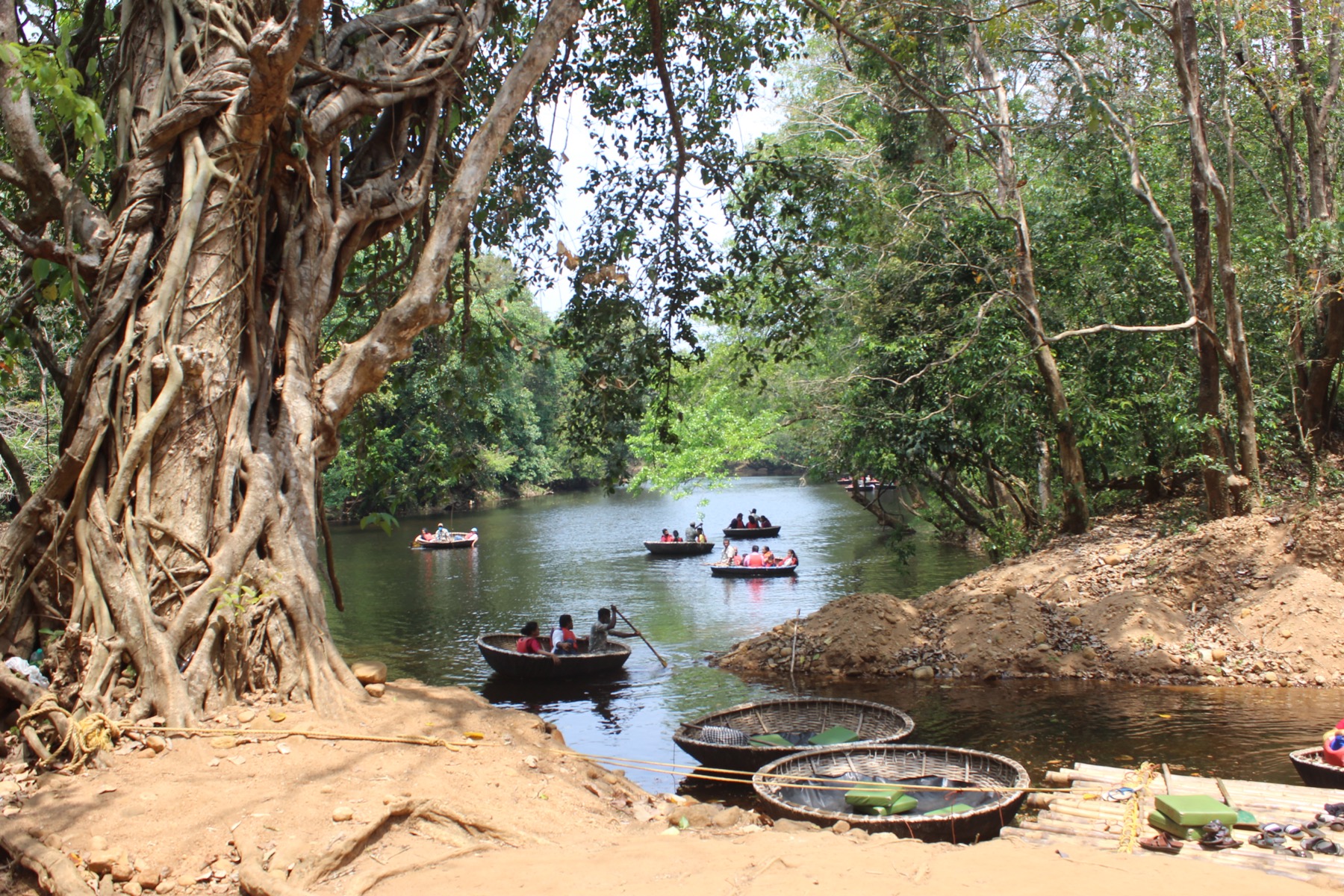
A short way from Konni, the Adavi ecotourism project sits on the Kallar river amid quiet forest. Its official signature is staff-run bowl-boat or coracle riding on a broadened five-kilometre reach. Kerala Tourism publishes short and long ride products; it does not publish an independent forest walk or viewpoint itinerary, so arrive for the river rather than an imagined trail.
Reading the coracle ride
The circular woven craft has no fixed bow. Passengers sit low while the operator paddles and turns it through reflections and overhanging branches. That shape gives Adavi its human scale: the forest is seen from water level, without an engine and without a summit as the reward. Boarding is the awkward part, down an earthy bank among roots, so follow the operator, keep equipment secured and remain seated.
The official page recommends monsoon because the river is fuller and the banks intensely green, but it also warns that packages change with climate and other conditions. A lush day can therefore be a cancelled day. Confirm before leaving Konni, accept the staff decision at the water and never treat a published season as permission to launch.
Three products that share one name
Adavi also has a separately priced overnight tree-top bamboo-hut programme with food. The long Adavi-to-Gavi bus tour is different again: a full-day road circuit past Moozhiyar, Kakki and Anathodu towards Kochu Pamba, with lunch arranged at Gavi. Neither is bundled into the coracle ride. Ask for the product by name so a short river visit, a forest night and a thirteen-hour bus day do not become interchangeable.
The Konni forest office is the published contact for all of them. Its confirmation matters because it fixes the operating programme, reporting point and conditions on the day. The named Adavi map pin marks the visitor base on the Konni–Thannithodu road; it does not convert the riverbanks beyond the landing into public walking ground.
When to go
The cool, dry season of roughly October to March is the most comfortable for the river and forest. The monsoon swells the Kallar and deepens the greenery, but raft rides and walks are more weather-dependent then.
- Adavi’s staff-run coracle rides are the highlight — confirm the short or long product directly with the forest office.
- Treat Konni elephant-camp access as unconfirmed; public entry was stopped after the April 2025 fatal accident.
- Konni sits inland from the Pathanamthitta lowland towns — easy to reach by road with your own transport.
- Combine it with the Aranmula–Parumala river day for a full district trip.
- Kerala Tourism: Konni and Adavi ecotourism
- Published products, prices and access can change; confirm the current programme with the Konni forest office.
Frequently asked questions
What is Konni known for?
Its history as a forest and timber town and its elephant camp, and — next door — the Adavi ecotourism area on the Kallar river, making it the ecotourism hub of Pathanamthitta district.
What can you do at Adavi ecotourism near Konni?
The official signature experience is a staff-run short or long coracle ride on a broadened Kallar reach. Tree-hut stays and the Gavi bus are separate products.
When is the best time to visit Konni?
Roughly October to March, when the weather is cool and dry and the river and forest are at their most pleasant for rafting and walking.