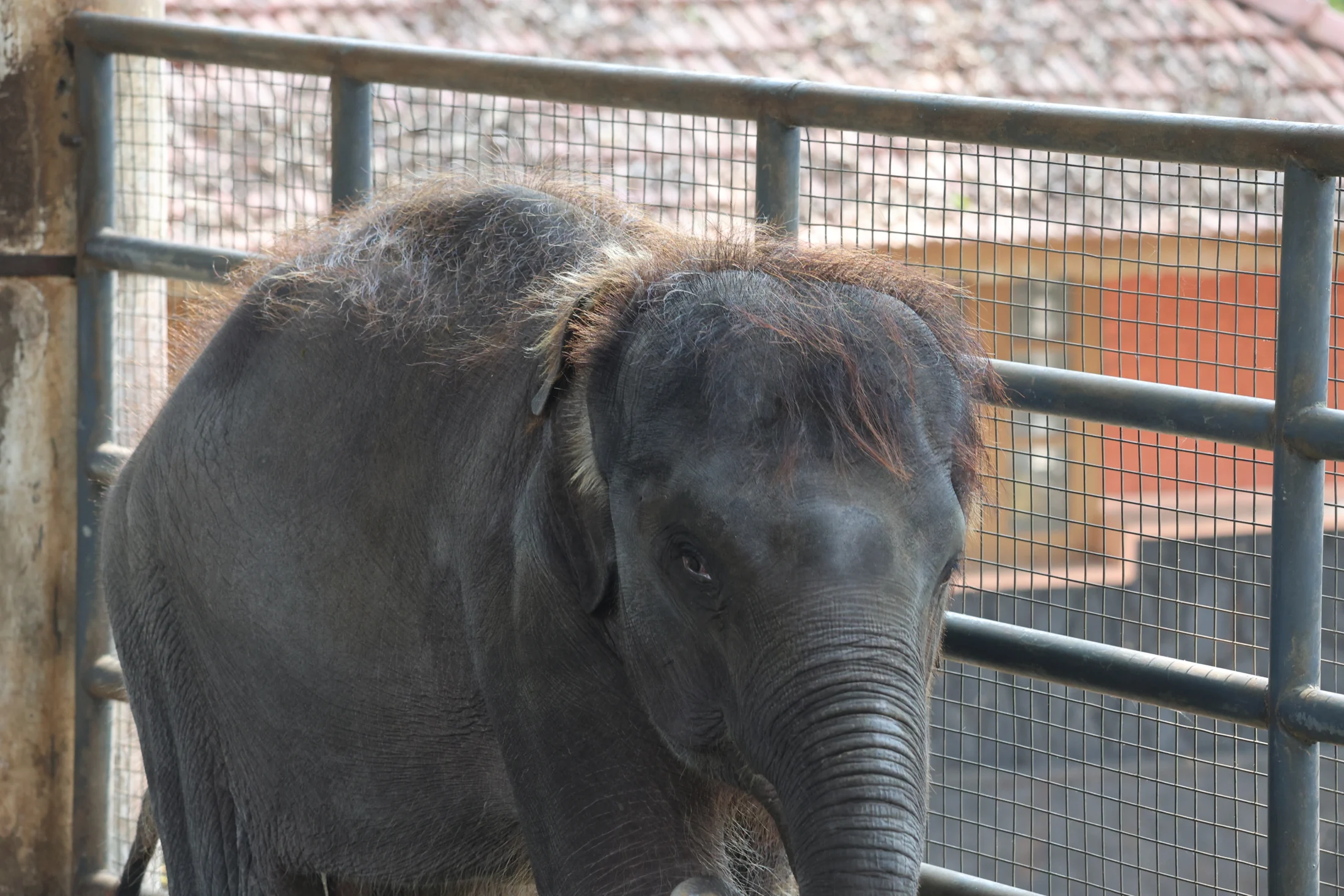
A young elephant at Konni can draw attention more quickly than the museum or the old kraal. The small trunk, face and enclosure make the encounter immediate. Yet a photograph reveals very little about how that particular animal arrived, its health or its daily care. The most useful starting point is the camp’s documented role, followed by what staff explain about the animals actually present.
A role beyond the old training story
Kerala Tourism describes Konni as a place where young elephants separated from their groups, injured or otherwise in need of care have been brought. This is a different part of the institution’s story from the historic capture of adult wild elephants. Keeping the two strands separate helps explain why a visitor can encounter both a historic kraal and a contemporary care setting in the same campus.
The category of an animal’s arrival should not be guessed from its size or appearance. A young elephant behind mesh is not automatically an orphan, and an animal’s quiet behaviour does not establish that it is relaxed or ready for contact. A name, age or rescue story belongs to the specific animal only when the camp supplies that information.
Watch the staff’s working space
An elephant enclosure is a workplace. Gates, barriers and clear passages help staff move around animals and carry out daily tasks. The visitor’s position is therefore part of the encounter: standing behind the indicated boundary allows observation without turning a care activity into a demand for a closer photograph.
The mesh in this image is part of that separation. It also changes what the photograph can tell us. We can see the elephant’s head and trunk, but not a complete view of the enclosure or its routine. A careful caption describes the visible animal and setting; it cannot supply a medical history or a judgement about the entire facility.
Feeding is a separate arrangement
The Forest Department lists an Anayoottu programme separately from ordinary camp admission. That distinction matters because seeing elephants does not grant permission to feed them independently. Any authorised feeding activity must follow the camp’s current arrangements and staff direction, rather than visitors bringing food to an enclosure on their own.
Nor does a feeding listing establish a right to touch, ride or pose alongside an elephant. Those are separate activities with separate implications. The ordinary visit can be worthwhile through observation, the museum and the kraal without treating physical contact as the measure of success.
Give the individual animal its own story
If staff provide an animal’s history, listen for the concrete details: where it was found, why care was needed and what the current routine involves. Those facts are more meaningful than a generic rescue narrative applied to every young elephant. Konni’s institutional role supplies the background; the animal’s own documented circumstances supply the individual story.
Sources: Kerala Tourism’s Konni account and the Forest Department ecotourism programme.
Plan the visit: Konni Elephant Camp.