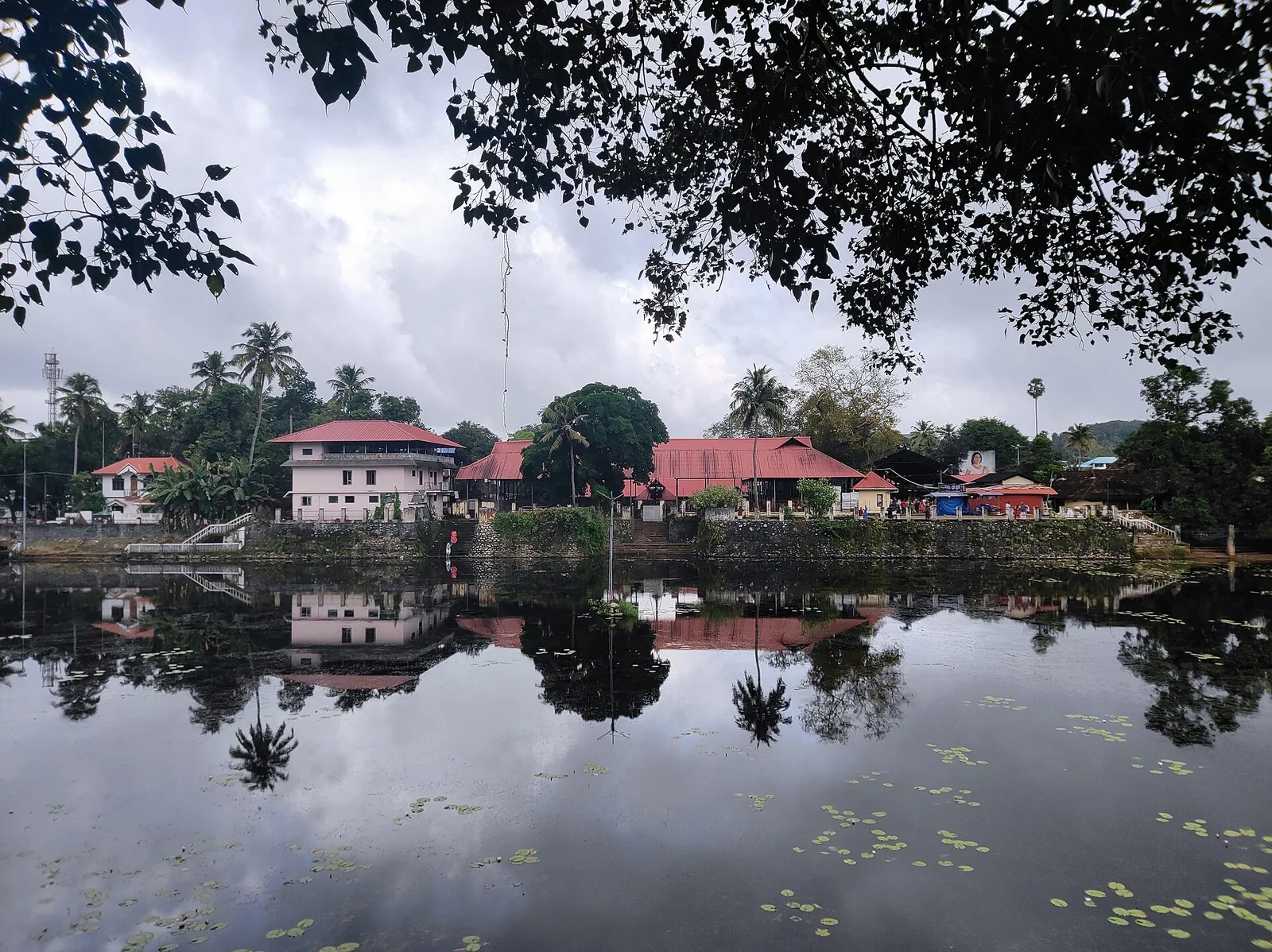
Ask anyone in Kerala about Kottarakkara and you will be told about the Ganapathi temple. Kerala Tourism’s own page about that temple opens by telling you the main deity is Lord Shiva.
Both are correct. The main sanctum holds Shiva; the Ganapathi shrine is a sub-shrine. And the sub-shrine has comprehensively eclipsed the sanctum in the public mind, to the point where the temple’s formal name — Sree Mahaganapathi Kshethram — records the eclipse rather than the dedication.
The part that makes this interesting
Temples with this problem usually have an explanation that smooths it over. Kottarakkara has one that does the opposite: it says this was always going to happen.
In the tradition, the Ganapathi idol is installed by Perumthachan, and at the moment of installation the chief priest observes that although the father is the main deity here, the son will become the more famous one in this temple.
Read that again with the modern situation in mind. A foundation legend that forecasts the demotion of the temple’s own principal deity, and is then vindicated so completely that the building is named after the sub-shrine. Most foundation stories exist to explain why a place is important. This one exists to explain why the important thing in it is not the thing you would expect.
We do not know when the temple was founded. No source we would rely on gives a date; it is described as centuries old and that is as far as anyone goes. So the prophecy cannot be dated either, and it is best read as the tradition’s account of itself rather than as a recorded remark.
About Perumthachan
A word of caution attaches to that name, and it is general rather than specific to Kottarakkara.
Perumthachan is the legendary master carpenter of Kerala, and he is credited with an extraordinary number of the region’s finest timber structures — across a geography and a span of time that no individual craftsman could plausibly have covered. An attribution to Perumthachan is best understood as the tradition’s way of saying that this is very fine old work, in the manner of the great builders. It is a compliment with a name attached, not a construction record.
What the attribution does tell you is what the tradition values here: not royal patronage, not a miracle, but craftsmanship and an idol well made.
And the unniyappam
It is Perumthachan, in the same tradition, who first offers unniyappam to the Ganapathi. And unniyappam is what you will be handed today.
It is small, dark and round, fried in ghee, made from rice with jaggery and banana, cardamom and pieces of coconut. It is made at this temple in serious volume, and it has done something almost no other Kerala temple offering has managed: it has escaped the temple. Unniyappam is a food people make and buy across Kerala without any thought of Kottarakkara, and yet a great many Malayalis know the two words as a pair before they know anything else about the town.
That is a real form of fame, and it belongs to the sub-shrine rather than the sanctum. Which is, once again, exactly what the priest is supposed to have said.
What to actually look at
The building is straightforwardly, satisfyingly Kerala, and rewards a slow circuit. Long ranges of tiled roof with carved gabled dormers set into them. Walls of close-set timber slats standing above laterite. A tall gold-clad dhwajastambham in the forecourt. Rows of footwear outside the outer railing, because here it comes off at the gate and not at the sanctum door.
But the best of the site is the tank. It is large and rectangular, with laterite retaining walls dropping straight into the water and lily pads across the surface, and at dusk the whole red-roofed complex lies reflected in it. Walk round it. In this part of Kerala the tank is not decoration attached to a temple — it is part of the institution, and here it is the thing that gives a temple in the middle of a busy taluk town some air around it.
Frequently asked questions
Which deity is in the main sanctum?
Shiva. Kerala Tourism’s own page states that the main deity is Lord Shiva, with a sub-shrine dedicated to Lord Ganesha. The sub-shrine is what the temple is famous for, and it has given the temple its popular name.
What is the prophecy story?
In the temple’s foundation tradition, when the Ganapathi idol was installed by Perumthachan the chief priest observed that although the father is the main deity here, the son would become the more famous. It is a foundation legend rather than a dated event — and it is an accurate description of the temple today.
Why is unniyappam associated with this temple?
Tradition credits the first offering to Perumthachan. It is made here in quantity and is one of very few Kerala temple offerings to have become a regional food in its own right — a small ghee-fried sweet of rice with jaggery, banana, cardamom and coconut.
How old is it?
Unknown. No source we would rely on gives a founding date; it is described only as centuries old. The seventeenth-century dates that circulate in connection with Kottarakkara belong to the Ramanattam story, not to the building.
What is the best part of the visit?
The tank, especially at dusk — laterite walls straight into the water, lily pads, and the whole complex reflected. Then the building itself: tiled roof-ranges with carved gabled dormers, timber slat walls above laterite, and the gold-clad flagstaff in the forecourt.