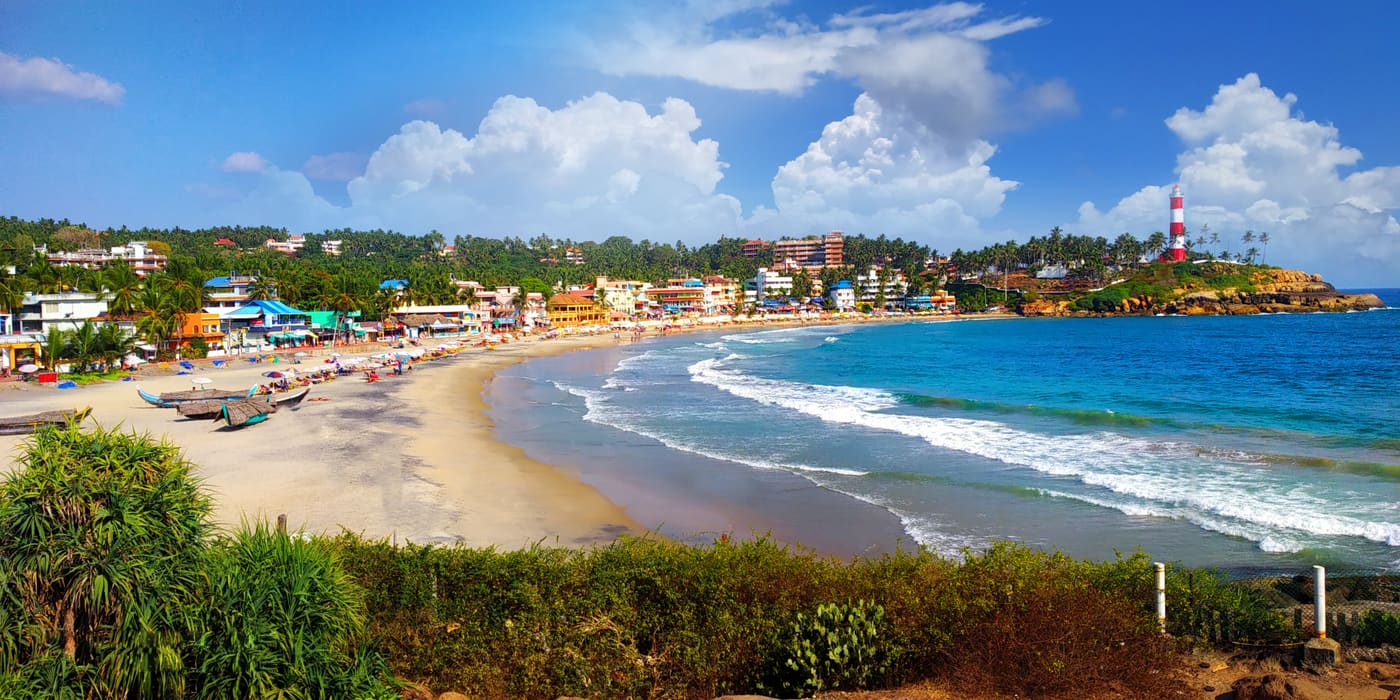
Both places can be reduced to “Kerala beach” on a booking screen. Arrive and the difference becomes physical. Kovalam’s shore folds around rocky points into Lighthouse, Hawa and Samudra coves. Varkala rises into a laterite cliff above Papanasam, where a beach day shares space with a place of ritual importance. Choosing between them is less about declaring a winner than deciding which route and setting you want to live with for a night or two.
If you have one day from Thiruvananthapuram
Kovalam is the more natural coastal add-on to a capital-city stay. Kerala Tourism names its three main beaches and places them within the same coastal town. That does not make every cove a seamless walk: rocky separations and hotel entrances can change the route. Choose one beach as the centre of the day, then add another if the public path and the weather allow. The three-beach guide explains what differs between Lighthouse, Hawa and Samudra.
Varkala makes more sense as a deliberate journey north, particularly if the cliff is the reason for going. The Kerala Tourism Varkala access note puts Varkala railway station around 3 km from the beach. That last transfer matters with bags or in rain; a train ticket alone does not deposit you at the cliff. For an unhurried day trip, check the actual train and return connection rather than assuming the beach is beside the platform.
If the view from your room matters
At Kovalam, a “beach hotel” can mean a Lighthouse Beach lane, a Hawa-side approach or a quieter Samudra address. The Kovalam hotel guide lists exact locations; ask whether the quoted room actually faces the water and how you reach the sand from its entrance. A photograph of a resort pool or another room is not a room-view guarantee.
Varkala’s cliff-edge cafés and stays give the town a different walking pattern, but a Varkala address may also be inland or on another cliff stretch. Kerala Tourism describes the red laterite cliff and Papanasam shore. Before booking, ask whether your room is on the cliff, near a usable descent, or a road journey away. The Varkala hotel comparison is a starting list, not a promise of cliff access.
A beach for swimming is a day-of-visit decision
Neither destination can promise calm water for the dates on your calendar. Kerala Tourism warns that Varkala’s waves can be strong; its Kovalam descriptions also ask visitors to follow beach safety guidance. Check the local flags and lifeguard advice on the particular stretch that day. Do not read a travel article’s word “safe” as a forecast for the next monsoon swell.
At Papanasam, leave room for people visiting the shore for ceremonies rather than treating the entire beach as a recreation area. At Kovalam, a working shore and tourist cove can sit close together. Respect those uses and choose activities through an identifiable operator with current conditions explained.
Make the choice that fits the whole trip
Choose Kovalam when the capital, airport-side logistics and a cove-based beach stay are central to your plan. Choose Varkala when you want the cliff landscape, a separate rail-linked town and time for Papanasam’s cultural setting. With several nights, either can work; the exact accommodation entrance will affect your day more than a generic ranking of the beaches. The Varkala planning guide and Kovalam beach guide can turn that choice into a practical route.