There is a memorial stone on the beach at Kappad, sixteen kilometres north of Kozhikode, and it says that Vasco da Gama landed here, at Kappakadavu, in the year 1498. It is the single most photographed sentence in Kerala’s tourism landscape. The historian M. G. S. Narayanan has said in public that it is a misconception, and that Gama landed at Panthalayani — Koyilandy — because there was a port there and Kozhikode did not have one. It does not have one even now.
This is not a case of a historian against the sources. It is a case of one source against another, and the older of the two is the one written on the ship.
What the Roteiro says
The Roteiro is the anonymous journal of the first voyage, often attributed to Álvaro Velho, and it was written by somebody who was there. On the night of 20 May 1498 the fleet anchored two leagues from the city of Calicut, and the journal explains why with a candour that is almost embarrassing: the pilot mistook Capua, a town at that place, for Calicut. Capua is Capocate, which is Kappad. The fleet was in the wrong place by accident. The journal records no one going ashore there. The first Portuguese to set foot in India was a convict sent by boat to Calicut on 21 May, expendable by design.
On 27 May a pilot came out with orders to take the ships to a place called Pandarani. The reason is recorded without decoration: the anchorage where they lay was bad, with a stony bottom, whilst the anchorage they were being taken to was good, and it was customary for ships coming to this country to anchor there for the sake of safety. And then the journal adds, in its own voice, that this was quite true.
That is the whole argument in one line, written on the spot by a man who was looking at the seabed. Anyone who has seen Kappad knows what he meant — a moss-blackened headland shouldering into the sea, reefs strewn through the shallows. It is a beautiful beach and a bad anchorage, and the Zamorin’s own pilot moved a foreign war fleet up the coast because of it — about six kilometres, to a roadstead thirteen miles north of Calicut itself.
The landing, the detention, and the eighty-eight days
On 28 May da Gama went ashore with thirteen men to meet the Zamorin. On the Roteiro’s evidence that is the first recorded occasion on which Vasco da Gama set foot on Indian soil, and it was from the Pandarani anchorage that he did it.
The journal’s own chapter headings carry the rest. "Detention at Pandarani" covers 31 May to 2 June. Coming back from Calicut by palanquin in heavy rain, the party lost the road and wandered inland. At Pandarani the local official refused Gama a boat back to his ships, and the journal says that as it seemed to the captain that they harboured some evil design, he sent three men in advance. They were held overnight in a Moor’s house. The next heading is "The Portuguese Merchandise at Pandarani", and a factor was left ashore there with the goods.
Ravenstein, editing the journal for the Hakluyt Society in 1898, summarised it in a sentence worth quoting because of the emphasis he chose: on 27 May a pilot of the Zamorin guided him to an anchorage off Pandarani, thirteen miles to the north, on the ground of its greater safety, and at that anchorage the Portuguese remained no less than eighty-eight days, until 23 August.
Why the anchorage was good, which is a strange story of its own
This coast has offshore mud banks, and they do something counter-intuitive: they flatten monsoon surf. Colonel R. H. Sankey of the Madras Engineers described the effect in a letter of 13 February 1881 — ships can run into the patches of water so sheltered at the very height of the monsoon, when the elements are raging, and not only find a perfectly still sea but be able to land their cargoes. Then he asked the question that ties his letter to this page: possibly the snugness of some of the harbours frequented by the Chinese junks, such as Pandarani, may have been mostly due to banks of this kind.
The bank was still doing it three centuries after Gama. In 1793 the East India Company cruiser Morning Star sheltered on it and wrecked there, and the commissioners of enquiry cited da Gama’s precedent as the reason they had gone in.
The other side, stated fairly
Gaspar Correia, the only major sixteenth-century chronicler who actually lived in India, has the ships first casting anchor at Kappad — and Logan followed Correia, writing that he thought it clear the fleet first shored at Kappatt. Two things weaken that. Correia dates the arrival to 26 August 1498, three months adrift of the journal written during the voyage. And Logan himself went on to accept that the fleet was afterwards moved to Pandarani, on the ground that the account is consistent with all the others.
There is also an indigenous source, and it is older than the printed Roteiro of 1838. The Malayalam Venkatakotta Ola of 1792 says that three of the Feringhee’s ships came to Pandarani Kollam; it being the monsoon, they anchored there and came on shore. Narayanan has argued in a Malayalam essay that the Kappad story was manufactured by the Archaeological Survey of India rather than by historians.
The formulation that is true
Kappad keeps the arrival. Koyilandy gets the landing. The fleet’s first anchorage, on 20 May 1498, was off Kappad, reached in error. On 27 May the Zamorin’s pilot moved the ships north to Pandarani for safer holding. From there, on 28 May, Gama went ashore to meet the Zamorin — and there the Portuguese stayed for eighty-eight days, until 23 August, negotiating, trading, and for three of those days effectively detained.
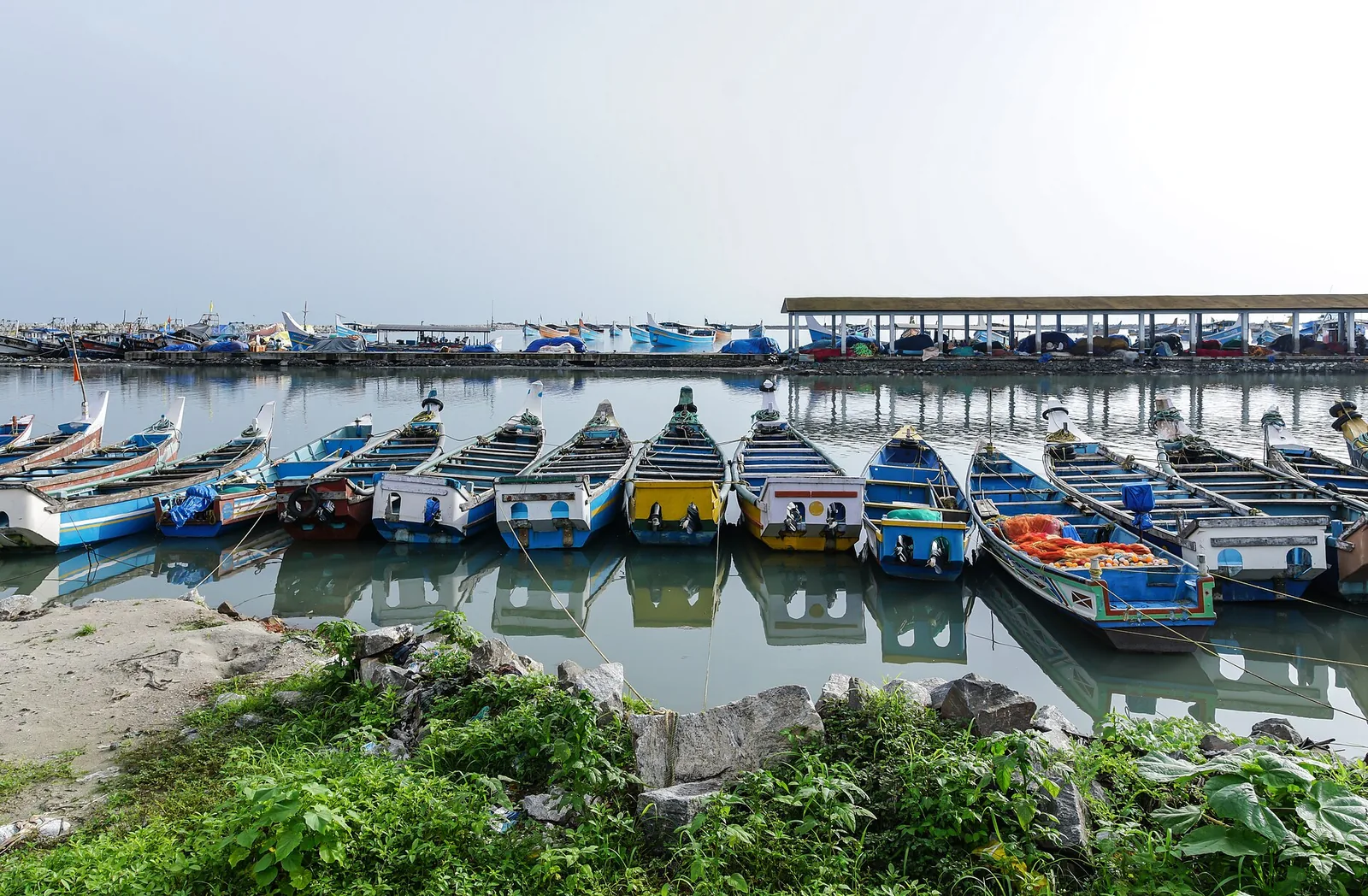
What neither page should do is present the memorial’s "landed here, 1498" as uncontested. And what makes Koyilandy strange to visit is that the town where all of this happened has nothing at all to say about it: no marker, no board, no museum. You stand at a fish harbour and take it on trust.
Frequently asked questions
So did da Gama land at Kappad or not?
His fleet anchored off Kappad first, on 20 May 1498, by mistake — the pilot had taken it for Calicut. The voyage journal records nobody going ashore there. His own first recorded landing is 28 May, from the Pandarani (Koyilandy) anchorage.
Why were the ships moved?
Because the holding ground at Kappad was stony and bad. The Zamorin’s pilot took them about six kilometres north to Pandarani — thirteen miles north of Calicut, in Ravenstein’s reckoning — which the journal says was the customary anchorage for ships coming to this coast, for safety.
How long did they stay?
Eighty-eight days, from 27 May to 23 August 1498, at the Koyilandy anchorage.
Is there anything to see at Koyilandy about this?
No. There is no marker, no fort, no excavated port and no museum. The fishing harbour is on the water where it happened, and that is all.