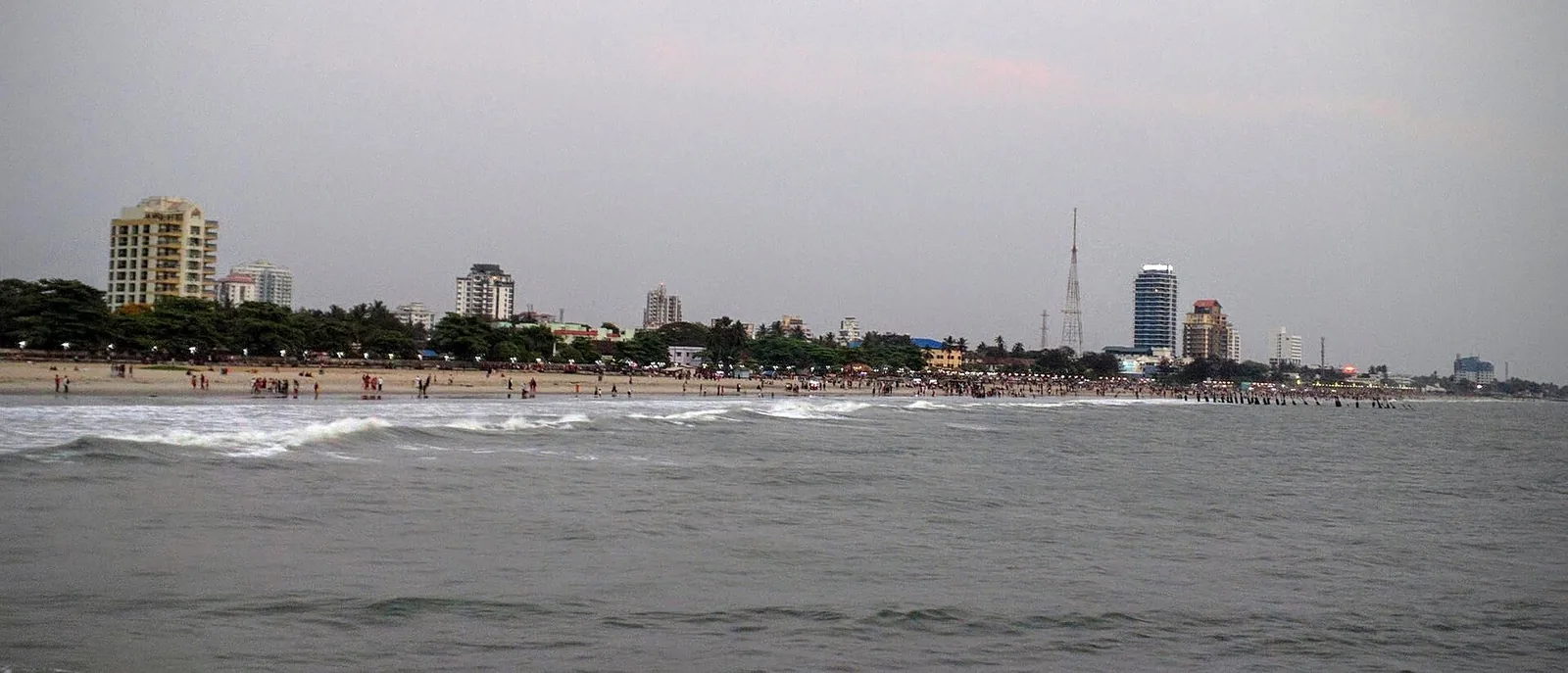
Ask a visitor what happened at Kozhikode Beach and a surprising number will tell you that Vasco da Gama landed here in 1498. It is the single most repeated fact about the Kozhikode seafront and it is not correct. The landing took place at Kappad, some sixteen kilometres up the coast, where a modest stone monument marks it. Understanding why the story migrated to the city beach turns out to be more revealing than the correction itself.
What actually happened, and where
Da Gama’s ships arrived off the Malabar coast in May 1498, having come round the Cape of Good Hope and crossed the Indian Ocean with a pilot picked up in East Africa. The party went ashore at Kappakadavu — Kappad — and travelled from there to the city to seek an audience with the Zamorin. The Kappad Beach page covers that landing and its aftermath properly.
The reason the ships did not simply pull in at Calicut is the same reason there are pier ruins on the beach today: there was nothing to pull in to. Calicut was a roadstead. A captain arriving on an unfamiliar coast with three vessels and no chart anchors where the holding looks good and the surf looks survivable, and Kappad offered that.
Why the story moved
Stories relocate to where the audience is. Kappad is a quiet stretch of sand with a plaque; Kozhikode Beach has the promenade, the food, the lighthouse and several thousand people on any given evening. Over time the event attached itself to the place where it is told most often, helped by the fact that the destination really was Calicut — da Gama came to see the Zamorin, and the Zamorin was here.
So the shorthand is not absurd. It is simply compressed, in the way that Plymouth Rock and a dozen other national landing-places are compressed. The correction is worth making anyway, because the geography is the story: the most consequential arrival in the history of this coast could not dock at the greatest port on it.
What this beach did witness
That said, the city beach is hardly a bystander. This shoreline was the working face of Calicut for the whole period. Every cargo that made the Zamorins rich was landed or loaded across this sand by boat. The Portuguese returned to this coast repeatedly and violently after 1498, and their bombardments of the city in the following decades were delivered from ships standing off exactly this water — the same raiding that burned the Mishkal Mosque in 1510.
If you want the place where the history is thickest, in other words, you are standing on it. It just is not where the flag went into the sand.
It is worth adding that the Portuguese connection to this shoreline did not end with a landing and a disappointing audience. Da Gama had come for a trade agreement and largely failed to get one — the gifts he brought were unimpressive to a court that dealt in pepper and gold, and the Zamorin had no particular reason to displace the Arab merchants who had served the port for centuries. What followed over the next decades was not commerce but force, as Portugal set about taking by arms the position it could not obtain by negotiation. The water in front of you is where that campaign was prosecuted.
The lighthouse and the modern seafront
What occupies the beach now is a different and much more recent enterprise: leisure. The lighthouse gives the promenade its landmark and its silhouette at dusk. Lions Park sits beside it as a small children’s amusement ground, and there is a marine aquarium on the seafront, which makes the strip unusually workable for families in a way that a plain beach is not.
This is a twentieth-century reinvention and a successful one. When the cargo left for Cochin, the beach could easily have become a derelict industrial edge, as harbour frontages did in port cities all over the world. Instead it was turned into the place the city goes in the evening, which is a rarer outcome than it sounds.
Reading the shoreline
It helps to be precise about why the correction matters, because on the face of it this is pedantry about sixteen kilometres. The reason it is worth getting right is that the two places tell opposite stories. Kappad says that the most consequential arrival in the history of the Indian Ocean happened somewhere ordinary, off to one side, at a spot chosen for the mundane reason that a ship could anchor there. Kozhikode Beach says that the city those ships had come for had been running a global trade for centuries without ever building a harbour. Collapse the two and you lose both points at once.
There is also a fairness question buried in it. The framing in which 1498 is the moment Calicut enters history gets the direction of travel backwards. This was one of the best-known ports in the world long before a Portuguese ship appeared on the horizon — known in Arabic, Chinese and Persian sources, visited by traders from Aden to Guangzhou, wealthy enough that a European expedition spent decades and a fortune trying to find a sea route to it. Da Gama did not discover Calicut. He arrived, late, at a place everyone in the maritime world already knew about, having taken the long way round.
Walk it with the layers in mind and the beach stops being a single flat thing. The piers are the 1870s, the last attempt to keep the cargo trade here. The lighthouse belongs to the era of navigation that outlasted the trade. The park, the aquarium and the food carts are the present, occupying ground that was once industrial. And underneath all of it is the medieval roadstead — a thousand years of small boats going out through the surf to ships that could not come any closer.
Then, if you have the time, go up to Kappad and stand where the ships were. It is a short drive north, it is quiet, and the contrast is the point: the event that redirected the history of the Indian Ocean began off an unremarkable beach with nobody much around, and the city it was aimed at is down the coast, still busy, still eating fried fish at sunset. The rest of Kozhikode is on the Kozhikode hub.