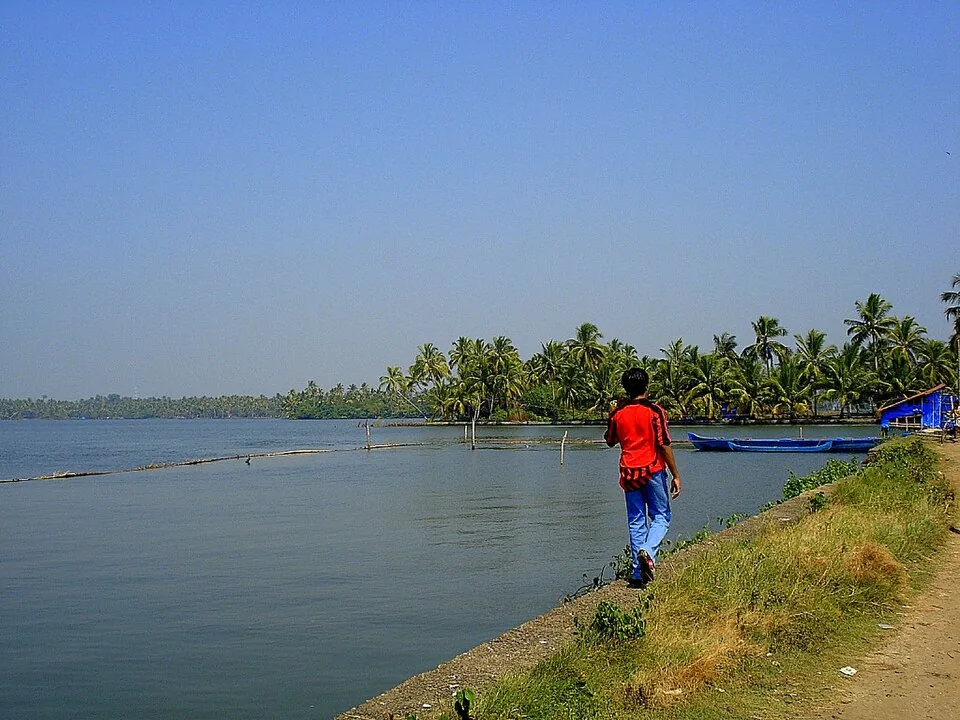
The reason Kumbalangi’s seafood homestays feel different from anywhere else you can stay near Kochi is not charm or authenticity or any of the words the brochures use. It is a planning rule, made in 2003, that said nobody could build a hotel.
The rule
When the Kerala government designated Kumbalangi as India’s first model tourism village under the Kumbalangi Integrated Tourism Village project, the scheme prohibited purpose-built tourist structures. No resorts. No cottage blocks. No gated waterfront compound. Whatever accommodation appeared would have to grow inside houses that already stood, run by the families already living in them.
Consider the pressure that rule has been under. Kumbalangi is about twelve kilometres from Kochi city centre, roughly forty from an international airport, on tidal creeks of considerable beauty. The commercial case for a waterfront resort here has been overwhelming and continuous for two decades. There isn’t one.
What that means for your night
You are a guest in a house that is also doing something else. The room is a family’s extended spare room. The kitchen is the family kitchen. Breakfast happens when the household eats. Somebody’s children may be around. The plumbing is domestic plumbing.
- Simple rooms, domestic bathrooms, no room service, no reception desk.
- Dinner cooked by the household, usually with no menu, usually late.
- Mosquitoes. You are on tidal creeks in the tropics. Bring repellent and use the net.
- Quiet after dark, and genuinely dark. Bring a torch.
- Canoes, walks and fishing arranged informally through your host, not through a desk.
If what you want is a resort, this will read as a series of shortcomings. If what you want is to be somewhere real for a night, the same list reads as the point. It is worth being honest with yourself about which you are before booking, because a mismatched guest has a bad time and makes the host’s evening harder.
Where the money goes, and why that is the whole argument
The economic idea behind the 2003 designation was that visitor money should land in fishing, farming and craft households rather than in an operator’s account. Staying overnight is what makes that work. A day-tripper buys a boat ride from one person; an overnight guest pays for a room, two meals, a canoe and a walk, and most of that reaches the household directly.
That matters more than it sounds, because the things visitors come to see — the Chinese nets worked by families, the pokkali cycle, the clam collection — survive only as long as they remain worth doing. Household-scale fishing is not romantic to the people doing it. Income that makes staying viable is the mechanism most likely to keep the village a working one.
Where it fell short
It would be dishonest to present this as an unqualified success. Reporting on the village describes a project well short of its plan, with real and growing ecosystem pressure on the creeks and mangroves that the integrated development was supposed to address and largely did not. The environmental half of the model was not delivered.
What held was the prohibition, and the prohibition turned out to be the load-bearing part. A village that keeps fishing and does not get built over is not the whole of what was promised in 2003 — but it is a great deal more than most beautiful places twelve kilometres from a city manage to keep.
Frequently asked questions
Why are there only homestays in Kumbalangi?
Because purpose-built tourist structures are prohibited under the 2003 model tourism village designation. Accommodation had to grow inside existing family homes, run by the families in them — which is why there is no resort strip twelve kilometres from Kochi.
What are Kumbalangi homestays actually like?
Simple. Extended spare rooms in family houses along the northern waterfront, domestic bathrooms, no reception and no room service. Meals come out of the household kitchen, usually with no menu. Canoes and village walks are arranged informally through your host.
Should I stay overnight or visit for the day?
Overnight, if you can. The two best hours are dusk and dawn, and a day trip misses both. It also changes where the money goes — an overnight guest pays a household for a room, meals, a canoe and a walk, which is the entire economic idea behind the village designation.
What should I bring to a Kumbalangi homestay?
Mosquito repellent and a torch, at minimum — you are on tidal creeks in the tropics and it gets genuinely dark. Also modest clothing for walking through the village, and cash, since informal arrangements for boats and walks are often settled that way.
Did Kumbalangi’s tourism model actually work?
Partly. The ban on resorts held and the village is still a working one, which is the load-bearing part. But reporting describes a project well short of its plan, with growing ecosystem pressure on the creeks and mangroves that the integrated development was supposed to address and did not.
Is Kumbalangi suitable for families or older travellers?
Generally yes, but it is domestic-scale accommodation rather than accessible-by-design. Bathrooms, steps and boat boarding are all household standard. If mobility is a consideration, describe it plainly when booking — hosts are usually candid about what their house can and cannot manage.