Nobody books a Kumbalangi seafood homestay for the room. The rooms are plain — extended spare rooms in family houses along the northern waterfront, because the village prohibits purpose-built tourist accommodation. What you are actually booking is a kitchen, and a supply chain measured in metres.
Karimeen, and why it is the one to order
Karimeen — pearl spot — is a brackish-water fish and the thing Kerala builds meals around on this coast. It has firm white flesh, a lot of small bones, and a flavour that comes specifically from living where fresh water and salt water mix, which is precisely what Kumbalangi’s creeks are.
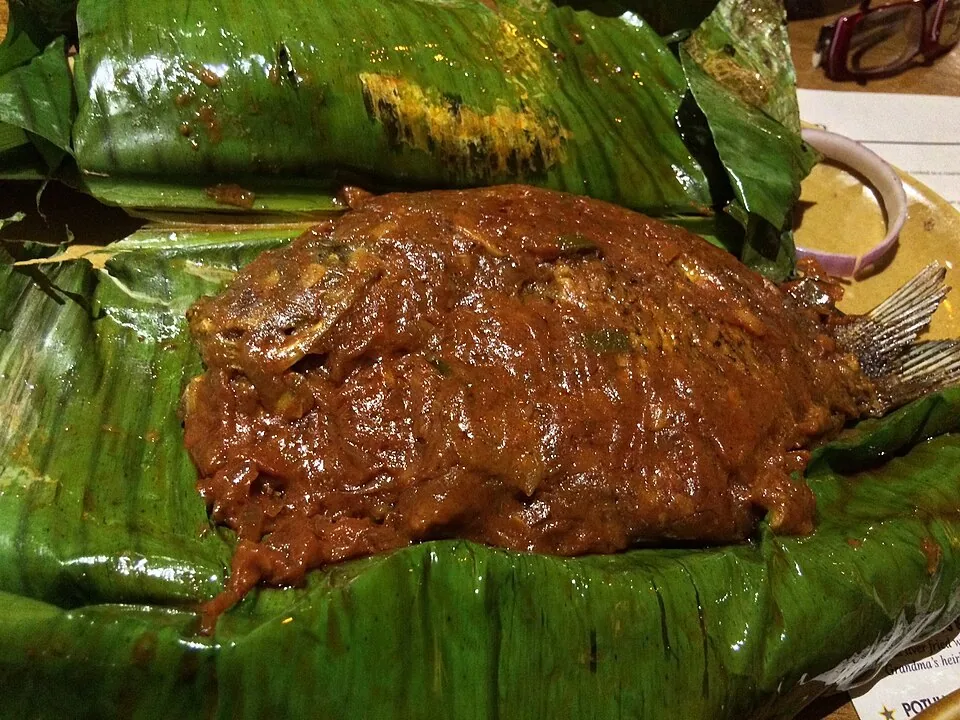
The canonical preparation is karimeen pollichathu: the whole fish scored, coated in a masala of shallots, ginger, garlic, chilli and curry leaf, wrapped in a banana leaf and cooked slowly so that it steams in its own moisture inside the leaf. It arrives as a black parcel that you open at the table. The leaf is not decoration — it is the cooking vessel, and the smell when it opens is most of the experience.
The prawns have a story worth knowing
The prawns on your plate very likely came out of a pokkali field. Those fields grow salt-tolerant rice through the monsoon, and are then flooded with brackish water for the prawn season, in a rotation that uses no fertiliser, no pesticide and no prawn feed — the prawns live on the decomposing rice stubble, and the next rice crop lives on what the prawns leave behind.
A prawn raised in a field fertilised only by rice stalks is not the same animal as pond-farmed stock, and the households here will tell you so at some length. Whether you can taste the difference is a fair question and you should form your own view — but the provenance claim is unusually well founded, because you can walk to the field.
- Clams (kakka) — gathered by hand from the mud, often the same morning, usually done by women.
- Mud crab — the expensive item on any Kumbalangi menu, and generally worth it.
- Toddy — fermented coconut sap, sweet when fresh and sour by evening. Buy through your host.
- Whatever the nets brought up: a small mixed catch, cooked simply.
- Rice, thoran, and a coconut in almost everything, because this is Kerala.
How the meal actually happens
Dinner is late and it is cooked in the household kitchen by whoever cooks in that household. There is usually no menu. You are told what the water gave up that day and asked if there is anything you cannot eat, and then that is what appears — which is a much better system than a menu, provided you arrive without a fixed idea of what you want.
Tell your host in advance about allergies and about vegetarianism, and mean it. A seafood homestay can cook vegetarian food perfectly well, but it needs to know before the boat comes back, not at eight in the evening.
Why the rooms are simple, and why that is deliberate
When Kumbalangi was designated India’s first model tourism village in 2003, the scheme banned purpose-built tourist structures. No resorts, no cottage blocks, no gated waterfront. Any accommodation had to grow inside houses that already existed, run by the families already in them.
That single rule produced everything about the experience — the plain rooms, the household cooking, the fact that the person serving your dinner has an opinion about the sluice gate at the end of the lane because their income depends on it. It is hospitality as a side business rather than as a product. It is less smooth than a hotel and it is the entire reason to come.
The rhythm of a stay
Arrive in the afternoon. Take a canoe out at dusk and watch the Chinese nets being worked. Eat late. Sit out afterwards looking at black water. Go out again at first light, when the creeks are stillest. And if you are here between March and May, keep a moonless night free and ask about kavaru — the bioluminescence that made this village famous.
Frequently asked questions
What is karimeen pollichathu?
Pearl spot fish, scored and coated in a masala of shallots, ginger, garlic, chilli and curry leaf, wrapped in a banana leaf and cooked slowly so it steams inside the parcel. The leaf is the cooking vessel, not garnish, and it is the signature dish of the Kumbalangi backwaters.
Where does the seafood in Kumbalangi homestays come from?
From the water around the house. Karimeen from the creeks, clams gathered by hand from the mud often the same morning, mud crab from the traps, and prawns largely from the pokkali fields. It is about the shortest supply chain you will eat on in Kerala.
What makes pokkali prawns different?
They are raised in fields that grow salt-tolerant rice through the monsoon and are flooded with brackish water for the prawn season, in a rotation that uses no fertiliser, pesticide or prawn feed — the prawns feed on decomposing rice stubble. It is a genuinely closed organic cycle rather than a marketing claim.
Are there hotels in Kumbalangi instead of homestays?
No. The 2003 model tourism village designation prohibits purpose-built tourist structures, so accommodation is inside existing family homes along the northern waterfront. The plain rooms and the household cooking both follow directly from that rule.
Can homestays cater for vegetarians or allergies?
Yes, but tell them well in advance — ideally when booking. There is usually no menu; you are served what the water produced that day, cooked in the family kitchen. That flexibility works only if the household knows before it shops and before the boat comes in.
Is there a menu, and when is dinner?
Generally no menu, and dinner is late. Your host will tell you what came out of the water and ask what you cannot eat. Arrive without a fixed idea of what you want and it is one of the best meals in Ernakulam.