There is a small oddity at the heart of the Kuravan and Kurathi statue that almost nothing written about it mentions: it is a monument to somewhere else, and it faces the wrong way to see it. The group sits on a mound at Ramakkalmedu looking east, out over the Tamil Nadu plain. Kuravanmala and Kurathimala are thirty kilometres to the west in a straight line and forty-four by road, behind your shoulder as you photograph the statue.
Two hills and a gap
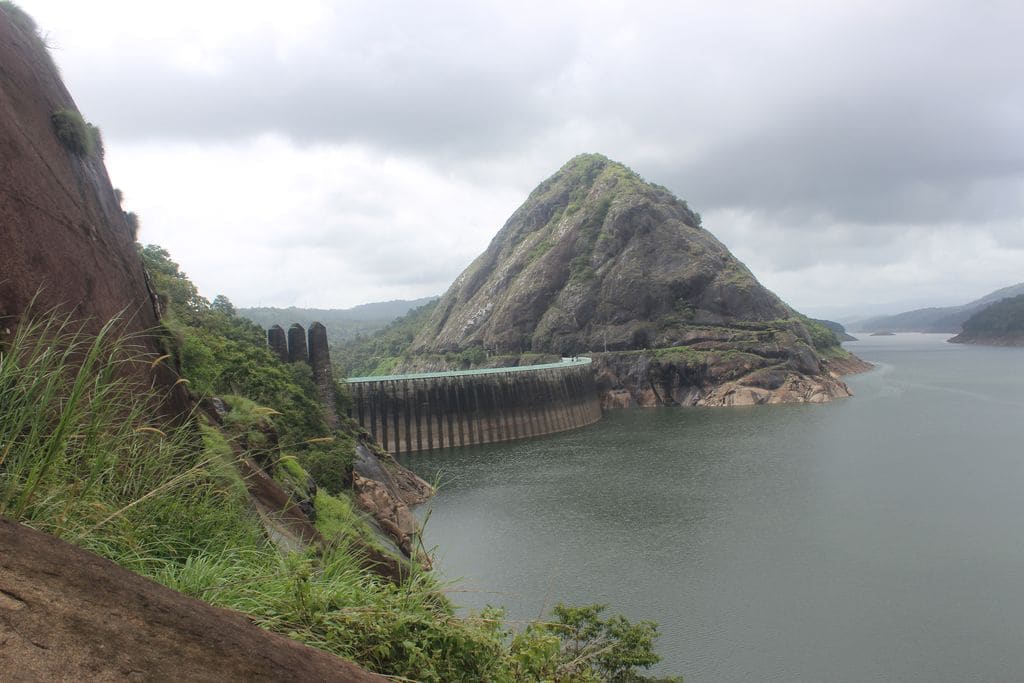
Malayalam Wikipedia’s article on കുറത്തി puts the connection in a single line, under the heading of place names: “കുറവൻ - കുറത്തി മലകളെ തമ്മിൽ ബന്ധിപ്പിച്ചു പണിത കമാന അണക്കെട്ടാണ് ഇടുക്കി ഡാം” — the Idukki Dam is the arch dam built joining the Kuravan and Kurathi hills. Two granite masses named for a man and a woman of the Kuravar, with the Periyar running between them.
The article on Idukki district makes the same point from the other end, and it is the one that explains the whole geography of the place: the largest arch dam in India is built in the ഇടുക്ക് — the tight place, the narrow gap — between the hills called Kuravan and Kurathi, and the district takes its name from that gap. Idukki is not named after a town or a river or a ruler. It is named after a space between two rocks.
What is in the gap
The Kerala State Electricity Board keeps a board at the site headed “Salient Features of Idukki Dam”, and it is the most useful single document about the structure. State: Kerala. Taluk: Idukki. Village: Idukki. Panchayath: Mariyapuram and Vazhathope. Latitude 09°50′35″N, longitude 76°58′34″E. Length of dam at top, 365.76 m — 1,200.00 ft. Height from deepest foundation, 169.16 m — 555.00 ft. Maximum base width 19.81 m; top width 7.62 m. Full reservoir level 732.43 m. Type of dam: concrete double curvature parabolic thin arch. River: Periyar.
🔴 One figure on that board disagrees with Kerala Tourism by twenty-five centimetres. The tourism department’s newsletter says: “At 168.91 m, it is one of the highest arch dams in Asia.” KSEB’s own board says 169.16 m. The two numbers are a digit transposition apart, and only one of them converts to a round number of feet — 169.16 m is exactly 555.00 ft, printed on the board beside it. That is a clue about which way the error runs rather than a proof, and both figures are printed here.
The dam is not alone. The Idukki hydroelectric project comprises three dams — the Idukki arch dam, the Cheruthoni gravity dam a kilometre west that carries the only spillway for the whole reservoir, and the Kulamavu dam — and was completed with aid from the Government of Canada, with M/s Surveyor, Nenniger and Chenevert as technical consultants. It was commissioned on 12 February 1976 by Prime Minister Indira Gandhi.
Can you see it from the statue?
No. Thirty kilometres of high range stands between the two, and the statue is oriented the other way regardless. What you can do is stand on the mound with your back to the plains and know which direction to look, which changes the sculpture from an ornament into an argument.
And if you have the day, drive it. Forty-four kilometres and about fifty minutes west by road brings you to the gorge itself. Note before you go that the arch dam’s crest is closed to visitors for most of the year — Idukki’s tourism council runs Hill View Park on the Vellappara shoulder above the reservoir precisely because the dam itself is usually shut, and that is the dependable way to see the wall between the two hills.
The other reading
There is a version of this story in which the hills are the couple — two lovers who came up into these mountains and were turned to stone, so that the dam is built between their bodies. It is an attractive way to introduce the dam and it circulates widely in conversation and on travel pages.
It is worth being honest that we could not find it stated as a recorded ഐതിഹ്യം in any Malayalam source we searched. What Malayalam Wikipedia does record, in its article on കുറത്തി, is a different and older belief: “ഒരിക്കൽ പാർവ്വതീ പരമേശ്വരന്മാർ കുറത്തിയായും കുറവനായും ജനനമെടുത്തു” — once, Parvati and Parameswara were born as Kurathi and Kuravan. Kurathi is worshipped as a deity in northern Kerala alongside hill-gods such as Muthappan, Pottan and Gulikan, and she appears as a character in Theyyam, in Padayani and in the Porattu Nadakam and Kurathiyattam folk plays. The pair on the ridge at Ramakkalmedu are not only two people. They are figures that Kerala has been performing for a very long time.