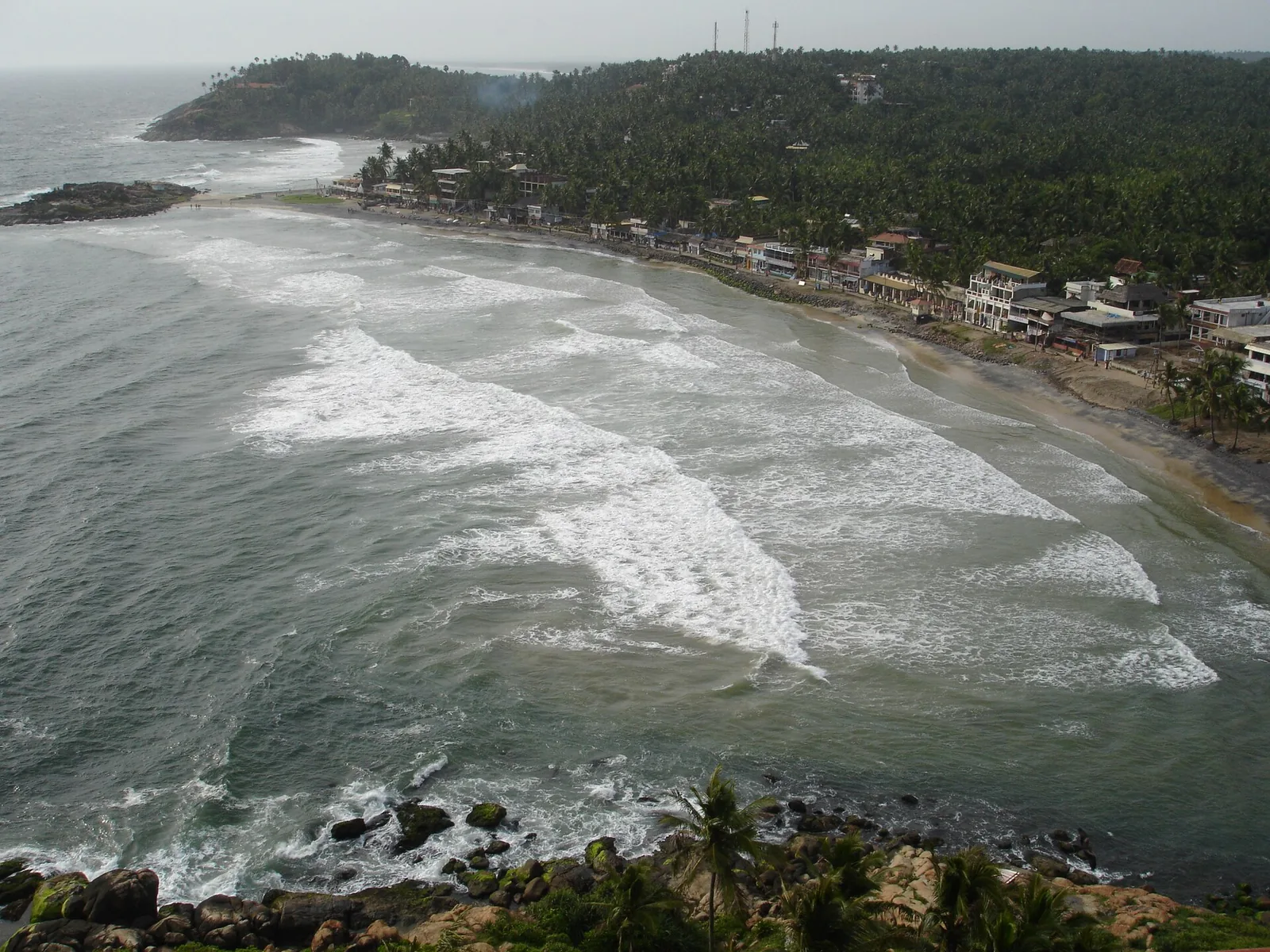
Lighthouse Beach has the shape of a safe beach. It is a crescent, closed at both ends by rocky headlands, with an amphitheatre feel that reads instinctively as shelter. That impression is the single most dangerous thing about it.
What the shape hides
The headlands frame the bay; they do not calm it. This is open Arabian Sea coast facing due west with nothing between here and Africa, and the swell arrives with its full energy. What the curve does is concentrate that water and give it somewhere to go.
The seabed compounds it. Kovalam shelves steeply in places — the drop from standing depth to out-of-your-depth can happen in a stride or two, and it moves through the season as sand shifts. People get caught out not by swimming far out but by walking a few steps further than they meant to.
Rip currents, and what they actually feel like
Water pushed onto a beach by breaking waves has to return, and on a bay like this it returns in narrow, fast channels rather than evenly along the shore. That is a rip. It runs seaward, often beside a rock spur or through a gap in the breaking pattern, and it is strong enough that no swimmer should expect to out-swim it directly.
From the sand a rip often looks like the calmest part of the bay — a smooth, darker lane where the waves are not breaking. That is exactly why swimmers choose it. The gap in the surf is not a safe channel; it is the current going out.
If you are caught in one, the standard advice holds: do not swim against it back towards the beach. Swim parallel to the shore until you are out of the channel, then come in. If you cannot, float and raise an arm rather than exhausting yourself.
The flags, and the limits of the cover
Kovalam has lifeguard cover, and it is a genuine service — but it is narrower than most visitors assume. It is seasonal, it operates set hours rather than dawn to dusk, and it covers the flagged zone only. A beach with lifeguards somewhere on it is not a supervised beach along its whole length.
Swim between the flags. Treat a red flag as an instruction, not a suggestion — it is usually flown because of something the guards can see and you cannot. And accept the honest limit on the southwest monsoon, roughly June to August: this is not a rough-but-manageable sea in those months, it is not swimmable, and the flags will say so.
The unglamorous rules that actually work
Never swim alone, and never after drinking — the promenade's whole design encourages a long lunch followed by a dip, and that combination accounts for a depressing share of incidents on holiday coasts everywhere.
Keep children within arm's reach rather than within sight, because the steep shelf removes the margin that a gently shelving beach gives you. Watch where the local fishermen put their boats in and where they do not; they are reading the water constantly, and their choices are information.
And if you want to swim rather than be thrown around, walk north. Samudra is quieter and the crowds thinner, though the same sea rules apply — the difference is the number of people, not the strength of the water.
Frequently asked questions
Is it safe to swim at Lighthouse Beach?
With care, and only in the flagged zone. The beach shelves steeply, rip currents form, and the sheltered-looking crescent shape does not reduce the swell — this is open west-facing Arabian Sea coast. Swim between the flags, never alone, and treat a red flag as an instruction.
How do I spot a rip current?
Look for a smooth, darker lane where the waves are not breaking, often beside a rock spur. It reads as the calmest water in the bay, which is why swimmers head for it — but that gap in the surf is the current running seaward.
What do I do if I am caught in one?
Do not try to swim straight back to the beach against it. Swim parallel to the shore until you are clear of the channel, then head in. If you cannot swim clear, float, conserve energy and raise an arm to signal rather than fighting the water.
Are there lifeguards all the time?
No. Cover is seasonal, runs set hours rather than all day, and applies to the flagged zone only. A beach that has lifeguards somewhere on it is not supervised along its whole length, which is the assumption that most often gets people into trouble.
Can you swim during the monsoon?
No. Through the southwest monsoon, roughly June to August, the sea here is not swimmable rather than merely rough, and the flags will reflect that. It is a good season for the coast in other ways, but not for going in the water.
Is Samudra Beach safer for swimming?
It is quieter, not safer. The same steep shelf and the same Arabian Sea swell apply along this whole shoreline. What changes at Samudra is the number of people around you, which cuts both ways: fewer crowds, but also fewer people to notice if you get into difficulty.
