Begin with the deity’s specific identity
Malayalapuzha’s principal deity is Bhadrakali. The government temple account describes her fierce form alongside devotees’ understanding of a protective mother. These are aspects of the same goddess in this shrine, rather than evidence of two unrelated principal deities.
The same account identifies the sacred image’s material technique as Kadu Sarkara Yogam. That detail gives the temple an unusually specific subject for a visitor to understand before arriving. It separates the image from the assumption that every Kerala temple deity is a single piece of carved stone.
A composite image, not a visible-material guessing game
The published description presents a combination of organic and mineral ingredients. The important point for a visitor is the composite character of the image and the named tradition attached to it. It is not an invitation to reproduce a recipe, test the surface or inspect the deity as a museum object.
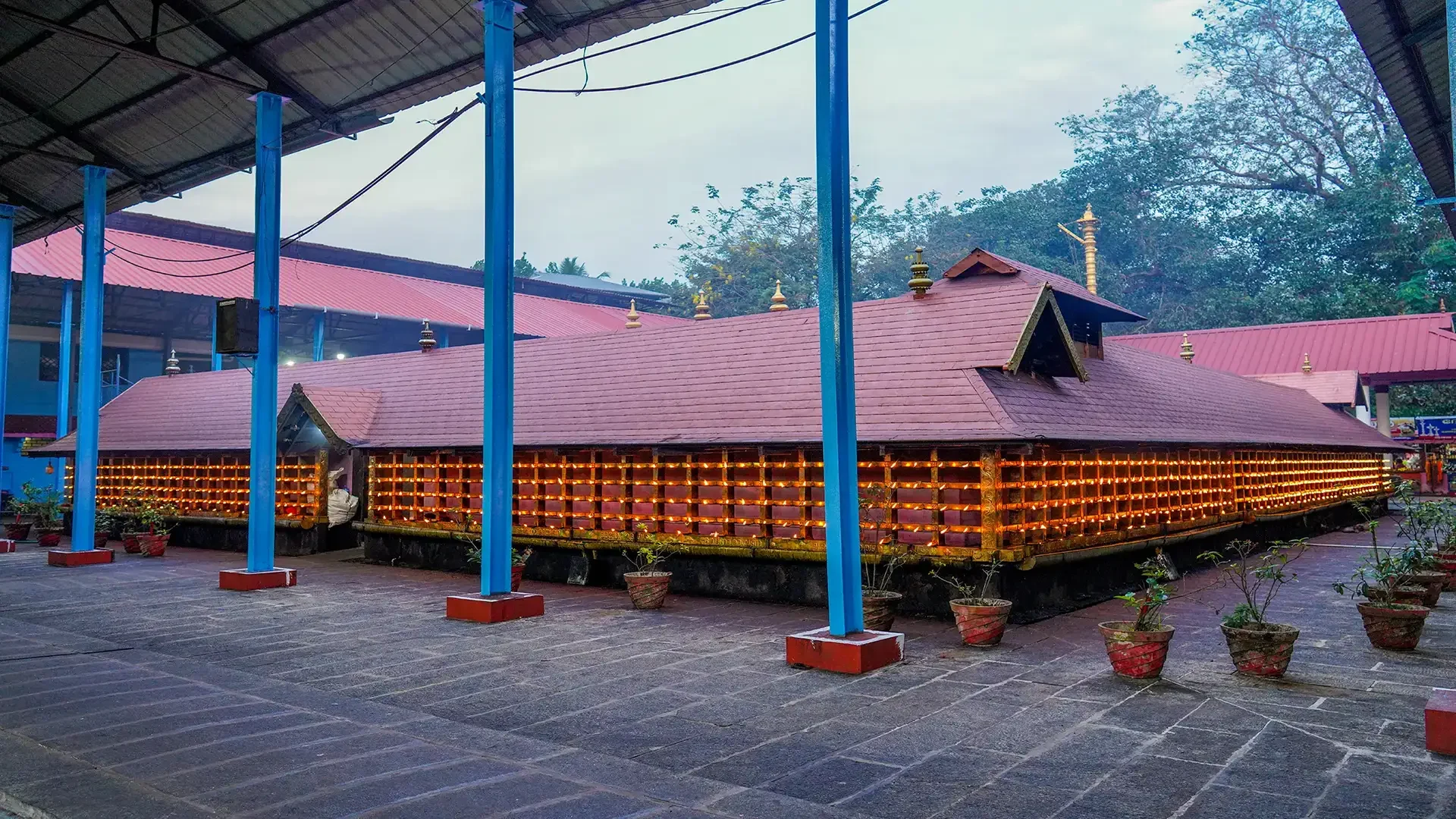
The material identification comes from the temple’s government account, not from the exterior photograph used with this story. That photograph shows a roofed enclosure, lamps and columns. It explains the worship setting while respecting the distinction between an accessible architectural view and a sacred image that is not depicted in the frame.
This distinction also matters when reading online galleries. A photograph of the entrance cannot establish the material of the deity, while a description of the deity cannot establish permission to photograph the sanctum. Each kind of information has its own purpose.
Architecture holds the material tradition within worship
The government account identifies a rectangular sanctum and associated structures including the mukhamandapam, namaskara mandapa, chuttambalam and balikkalpura. Together they organise ritual space around the deity. Their names are more useful when understood as parts of that arrangement than as a list of separate tourist objects.
The visible lamps and overlapping roof planes can be appreciated from permitted positions without blocking the passage. Notice the change from an exterior view to the more contained spaces of worship. The architecture creates thresholds, and the visitor’s movement should follow the temple’s directions through them.
Kadu Sarkara Yogam adds depth to that experience because it encourages a more precise question: what kind of sacred image is worshipped here? The answer belongs to Malayalapuzha’s own account rather than a generic history of Bhadrakali shrines across Kerala.
For darshan, the practical response remains straightforward. Follow the current entrance, dress and photography rules, use authorised offering arrangements and allow worshippers to move without obstruction. Understanding a material tradition should enrich the visit without turning it into a search for prohibited close access.
The strongest memory may be the relationship between an unseen or briefly encountered sacred image and the visible structures that contain its worship. At Malayalapuzha, the named composite technique makes that relationship particularly distinctive.
Sources: Kerala government: Malayalapuzha Devi Temple.
Plan the visit: Malayalapuzha Devi Temple.