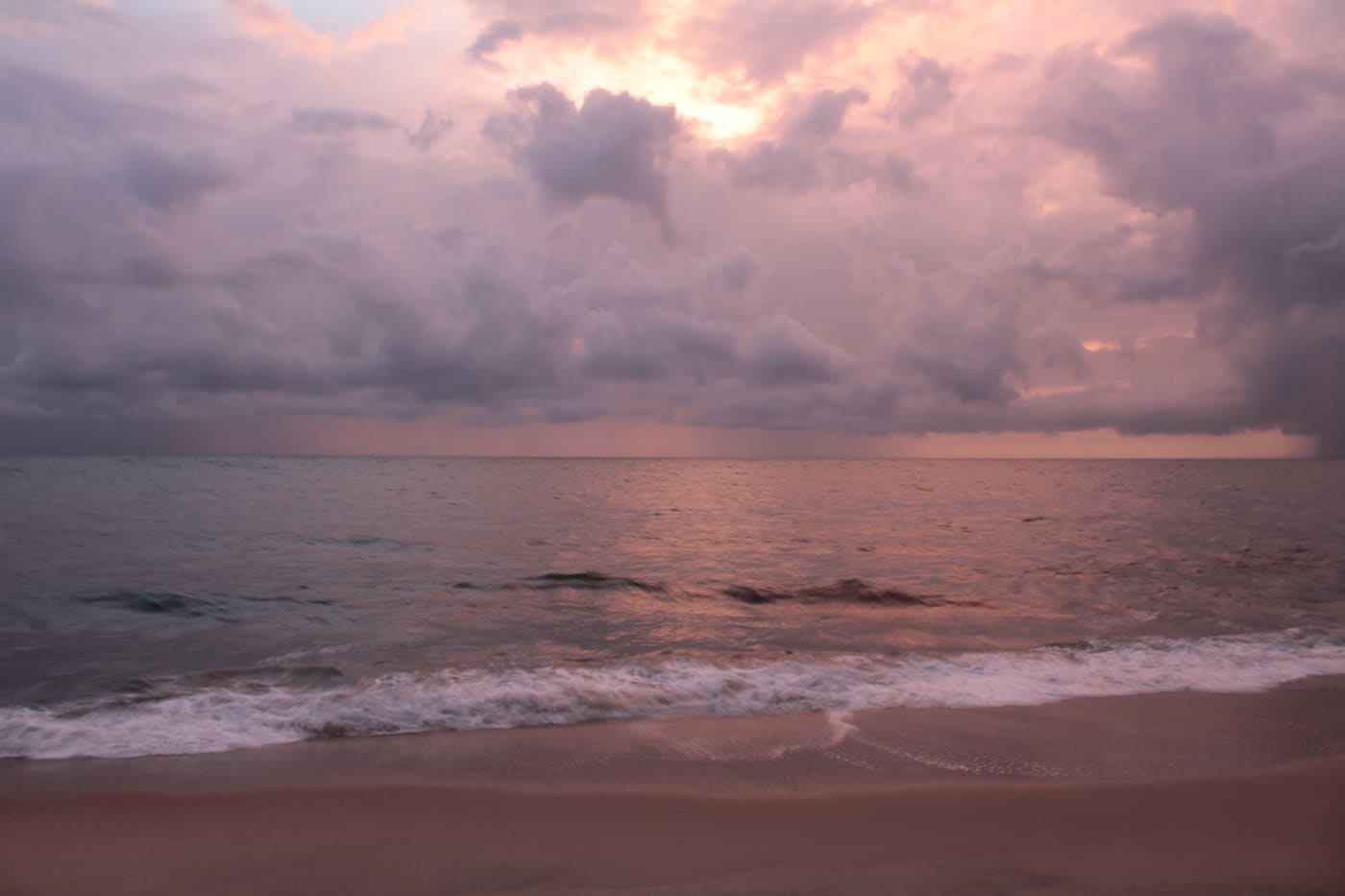
Most people reach Marari after a day on the backwaters, and the change is the first thing they notice. The water stops moving past you. Instead there is a long line of sand, coconut palms behind it and the open Arabian Sea in front. The name on the signboards is a short form. As Kerala Tourism explains, "Marari" is short for Mararikulam, the fishing village that lies along this coast.
That village is still the reason the beach feels the way it does. Early in the day the fishing boats go out and come back, and nets are pulled in on the shore. Kerala Tourism calls watching the fisherfolk at their daily work "an interesting sight", and says some fishermen may even take you out on their boats if they think the sea is safe. So the best tip for Marari is to come early. Mornings are when the working village is busiest and the sand is at its quietest.
Do not expect a busy holiday strip. Kerala Tourism says plainly that there are no water sports or beach shacks here, though you can rent beach chairs and umbrellas. What fills the day instead is slow: a walk, a swim when the sea is calm, an Ayurvedic treatment, or a cycle ride through the village to see its unhurried life. The CGH Earth resort beside the beach notes that fishermen bring in and auction their catch nearby each morning, and that is the hour when you can walk a long way with the sand almost to yourself.
Come back at sunset and Marari changes character. Photographs on Wikimedia Commons from evenings in 2022, 2024 and 2025 show the same shore full of local families: kites in the air, rows of rented umbrellas and chairs, children on the sand and people standing in the shallows, with the fishing boats pulled up behind them. So the "deserted beach" you read about is true of the morning, not the whole day. That is no bad thing; it just means you choose your hour. Come early for quiet, come at sunset to see Marari at its liveliest, or walk away from the main road access along the sand, where the evening crowd soon thins.
Timing matters on this coast. The weather is warm and humid all year, but Kerala Tourism names December to March as the best time to visit, when the beach and its surroundings stay mostly dry. In the monsoon the sea turns rough. Ask local people about conditions before you go into the water, and stay within your depth.
Getting here is simple. Kerala Tourism lists Alappuzha railway station as the nearest, about 15 km away, and Cochin International Airport about 75 km away. From Alappuzha town an auto or taxi is the easy way. The DTPC Alappuzha office can help with local questions.
Marari also works well as a base. Kerala Tourism suggests pairing it with a backwater cruise in Alappuzha, Alappuzha beach and its lighthouse, and the International Coir Museum. Closer by, the old coastal church at Arthunkal and the beach at Andhakaranazhi make easy outings.
Before you leave the sand, it helps to know that the village behind it has a story of its own. Its name comes from a temple about two kilometres inland, and once a year that temple’s god is carried all the way to this beach. Read the day the god walks to the sea.
Frequently asked questions
What does Marari mean?
It is short for Mararikulam, the fishing village along this coast (Kerala Tourism).
When is the best time to visit Marari Beach?
December to March, when the area stays mostly dry (Kerala Tourism).
How do I reach Marari Beach?
The nearest railway station is Alappuzha, about 15 km away, and the nearest airport is Cochin International, about 75 km away (Kerala Tourism).
Is Marari Beach crowded?
Mornings are quiet. On fine evenings local families, kite flyers and rented umbrellas fill the shore near the main access point.
Are there water sports at Marari Beach?
No. Kerala Tourism says there are no water sports or beach shacks, but beach chairs and umbrellas can be rented.