Every account of the Mattancherry spice markets tells you the world’s first pepper exchange was here. Almost none of them tells you what the exchange actually was, and none of them tells you that it stopped.
What the exchange was
The India Pepper and Spice Trade Association, IPSTA, sits in Kochi. It ran organised pepper futures from 1957. It was recognised as a commodity derivative exchange under the Forward Contracts (Regulation) Act of 1952, and the Government of India granted it permanent recognition for futures trading in pepper on 8 December 1961.
That makes it the oldest commodity exchange in India and the first recognised regional commodity exchange for black pepper. It is not the same thing as the world’s first pepper exchange — pepper was brokered on this coast for centuries before any institution formalised it, and no primary record we can find pins that superlative down — but it is a great deal more than tourism copy.
What it meant on the ground is that for roughly half a century the price of Indian pepper was discovered here. A grower in Idukki, an exporter in Rotterdam and a broker on Bazaar Road were all looking at a number set in this city. That is a different kind of importance from having warehouses.
Mineral oil
A futures market is not really a market in pepper. It is a market in the promise that a specified quantity of a specified grade will be delivered against the contract. Everything rests on the delivery system: if what comes out of the warehouse is not what the contract says, the contract is worthless and so is the price.
In 2012 a batch of pepper was seized after being found adulterated with mineral oil. Trust collapsed. Disputes and litigation followed, and organised pepper futures effectively froze.
The numbers trace the ending precisely. Reported turnover on IPSTA’s platform was ₹12.58 crore in 2014–15 and ₹63.13 crore in 2015–16 — small, but alive. There has been no trading on it since April 2016. SEBI issued an order in respect of the exchange on 10 January 2018.
Two different declines, told as one
Bazaar Road’s contraction is usually explained in a single sentence about global competition, and that sentence is true about the warehouses. International demand shifted, Southeast Asian markets competed, spice industries grew in Latin America and Africa, godowns closed and much of the Gujarati and Kutchi trading community left. None of that was Kochi’s doing.
The exchange is a separate story with a separate cause. It did not lose to Vietnam or Brazil. It lost to an adulteration scandal and the litigation that followed — an internal failure in the machinery that made the market trustworthy. A quarter can keep its warehouses and lose the pricing, or keep the pricing and lose the warehouses. This one lost both within about a decade, for two unrelated reasons.
What is left, and how to see it
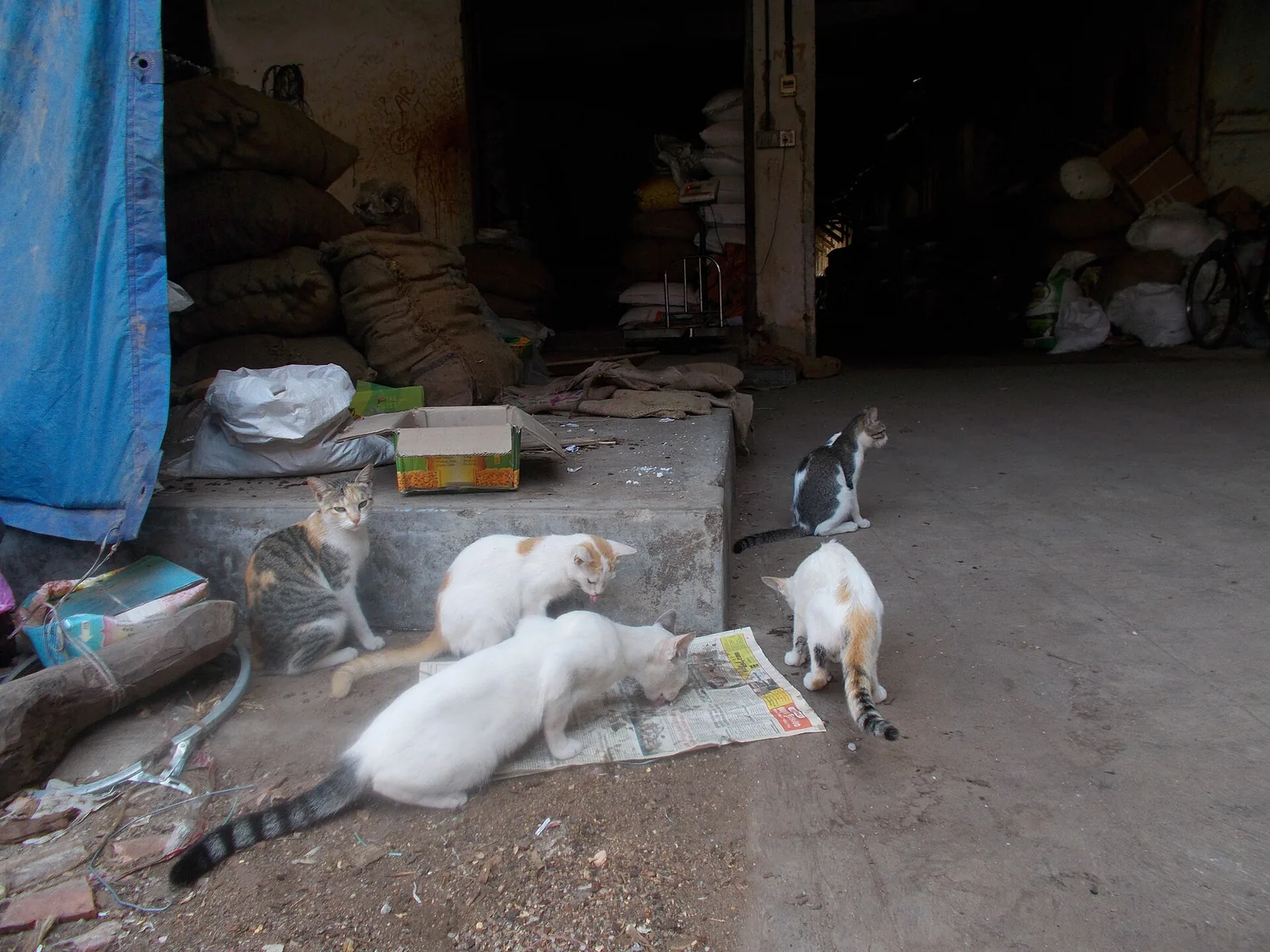
Real trade continues. Walk the street on a weekday morning and there are consignments being graded on godown floors, handcarts, lorries reversing badly, porters with a kol behind the ear tallying loads, and cats stationed at the doors keeping rats off the sacks. Arrive at four in the afternoon and you will find shutters, antique dealers and cafes, and conclude that nothing happens here.
The buildings themselves have largely been repurposed — several sea-facing godowns went to Kochi-Muziris Biennale venues, others to galleries and cafes, many to the antique trade feeding Jew Town at the southern end. It is an odd rescue: art preserving the architecture of the trade it replaced.
None of which is a reason not to come. It is a reason to come in the morning, and to read the street in the tense it is actually in.
Frequently asked questions
What is IPSTA?
The India Pepper and Spice Trade Association, based in Kochi. It ran organised pepper futures from 1957, was recognised as a commodity derivative exchange under the Forward Contracts (Regulation) Act of 1952, and received permanent government recognition for futures trading in pepper on 8 December 1961 — India’s oldest commodity exchange and the first recognised regional commodity exchange for black pepper.
So was the world’s first pepper exchange in Mattancherry?
India’s first is documented. The world’s first is not, and we would rather say so. Pepper was brokered in this quarter for centuries before any organised exchange existed, which is where the claim comes from, but plausibility is not a primary record.
Why did the exchange stop trading?
In 2012 a consignment was seized after being found adulterated with mineral oil. A futures market depends entirely on the delivery system being trustworthy; when that failed, disputes and litigation followed and organised pepper futures froze. There has been no trading on the platform since April 2016, and SEBI issued an order in respect of the exchange on 10 January 2018.
Is there still a spice trade on Bazaar Road?
Yes, reduced. Consignments are still graded, sacked and sold from godown floors, and an international pepper trade retains a presence in the quarter — but most godowns are shut and much of the Gujarati and Kutchi community that ran the business has gone. Go on a weekday morning; by late afternoon the street reads as empty whether or not it is.
Why did the warehouses close?
For reasons outside Kochi: international demand shifted, Southeast Asian markets competed, and spice industries grew in Latin America and Africa. That is a separate decline from the exchange’s, which had an internal cause. The two are usually told as one story and they are not.
What happened to the buildings?
Many were repurposed. Several sea-facing godowns became Kochi-Muziris Biennale venues after the Biennale began in 2012; others are galleries, cafes, or antique shops supplying the Jew Town trade at the southern end of the street.