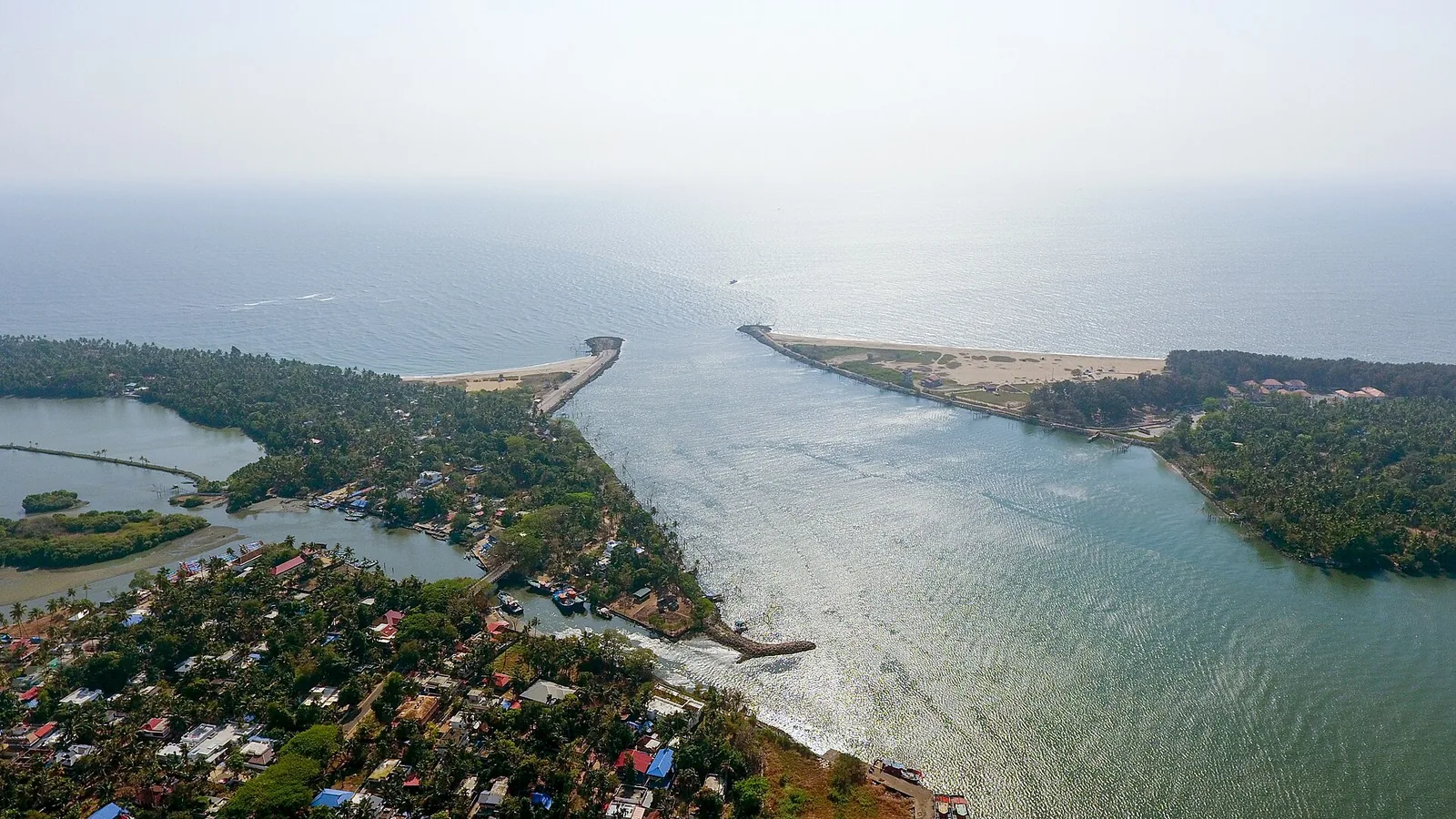
Most visitors to Vypin drive past Munambam harbour on the way to Cherai Beach and see a car park full of lorries. Come at six in the morning instead and you get the single best piece of unstaged theatre on the Kochi coast: several hundred people, a few dozen boats and several tonnes of fish, resolving themselves into prices in about ninety minutes flat.
What is actually happening
Munambam is the largest fishing harbour in Kochi, sitting at the northern tip of Vypin where the Periyar river empties into the Arabian Sea. There is a large government harbour, a smaller private one, and boat-building yards along the bank. It is not a market in the retail sense. It is a landing and auction site — the point where fish stops being caught and starts being sold.
The sequence runs like this. Boats cross the bar and come alongside. The catch is offloaded in baskets and crates, sorted fast on the quay by species and size, and iced. Buyers — agents for Kochi markets, hotels, processors and exporters — inspect and bid. Money and ice move in opposite directions. Within a couple of hours the fish is on a lorry heading for Ernakulam, and the quay is being hosed down.
Why the timing is non-negotiable
Everything at a fishing harbour is governed by two clocks that have nothing to do with tourism: when the boats can cross the bar, and how long fish stays worth money. Get there late and you have missed it — not because it closed, but because the product spoiled or left. Aim to be on the quay by six; first light is better still.
- Early morning, and it is not negotiable. By mid-morning there is very little to see.
- Wear shoes you do not mind ruining. The quay is wet, iced and slippery throughout.
- This is a workplace. Stand out of the way of anyone carrying a crate — they will not stop.
- Ask before photographing faces. Nobody minds the boats; some people mind being the subject.
- The fish for sale is wholesale, in quantity. Buying one fish for your hotel is not really what happens here.
The trawlers, and the argument under them
The fleet you are looking at is a twentieth-century creation. Fishing on this coast was artisanal into the 1950s — small boats, traditional gear, communities holding rights collectively — and the turning point usually cited is the Indo-Norwegian Project, which built Kerala’s first trawling boats for offshore fishing at Kollam in 1954. Mechanisation transformed the catch, the capital required and the politics of who owns the sea, and that argument has never really been settled anywhere on this coast.
The monsoon trawling ban — a closed season imposed each year to let stocks spawn — is the most visible expression of it. During the ban the mechanised fleet is tied up and the harbour is a much quieter place. If your dates fall in the ban, do not expect the scene described here.
What to do with the rest of the morning
Munambam works best as the first stop of a northern Vypin run rather than a destination. Pallipuram Fort — by the usual reckoning the oldest surviving European building in India, and free — is a few minutes south. Cherai Beach is a short drive beyond that, and is where you go afterwards for breakfast and a swim. Doing it in that order gives the day a shape: work, then history, then sand.
And if you want to understand why any of this is here, look north-east across the water while you are on the harbour wall. That far bank is Kodungallur, where Arab traders were landing in the seventh century and where the mosque that claims to be India’s first still stands. The boats on this quay are the last working end of that same sea road.
Frequently asked questions
What time should I go to Munambam harbour?
Six in the morning, or first light if you can manage it. The boats land, the catch is sorted and auctioned, and the lorries leave, all inside roughly ninety minutes. By mid-morning the quay is being washed down and there is little to see.
Is Munambam the largest fishing harbour in Kerala?
It is the largest in Kochi, which is the claim the record supports. You will also see it described as the largest in Kerala; the state has a long coast and many harbours, and we cannot stand behind the wider superlative.
Can I buy fish at Munambam harbour?
It is a wholesale landing and auction site rather than a retail market — fish moves in crates to agents, hotels and processors. Small purchases are sometimes possible but are not what the place is for. For eating, the beach shacks and the Cherai stretch are a better bet.
Is there an entry fee or a guide?
No ticket, no gate and no official guide. It is a working government fishing harbour that you can walk into. That also means there is nobody managing visitor safety, so keep clear of the working areas and the crane and lorry movements.
What is the trawling ban and will it affect my visit?
Kerala closes the mechanised fishery for a period each monsoon to let stocks spawn. During the ban the trawler fleet is tied up and the harbour is far quieter than described here. Check the current dates before planning a dawn trip around it.
What can I combine with Munambam harbour?
It is the natural first stop of a northern Vypin morning: harbour at dawn, then Pallipuram Fort a few minutes south — free, and by the usual reckoning the oldest surviving European building in India — then Cherai Beach for breakfast and a swim.