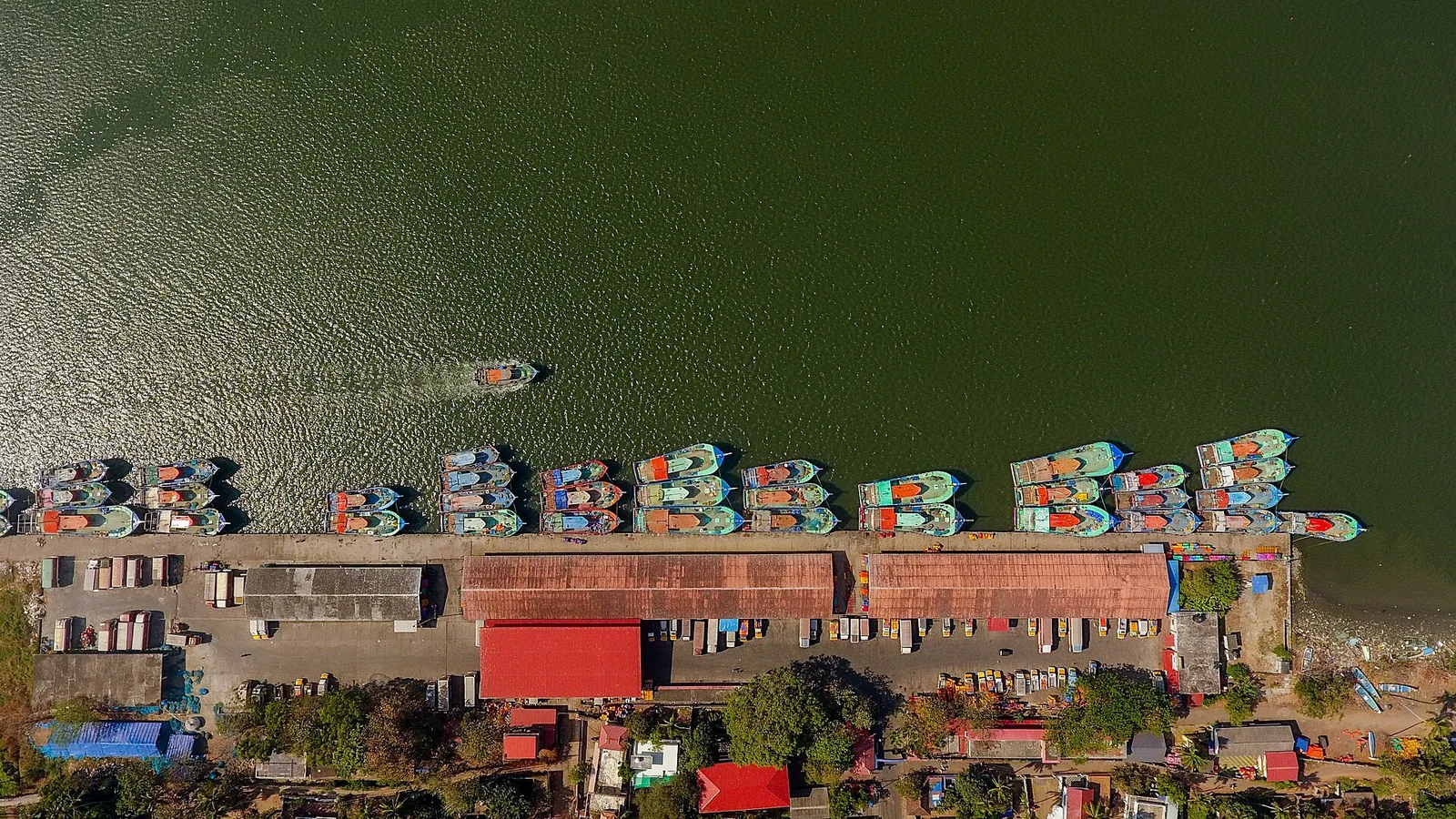
Stand on the quay at Munambam at four in the morning and you are watching what looks, unmistakably, like a Kerala fishing harbour. Boats built here, owned here, tied up along a Kerala quay, selling into a Kerala market.
Listen instead of looking. Very little of what you hear is Malayalam.
The number
Munambam has the highest concentration of migrant labour of any mechanised fishing harbour in Kerala — around 78 per cent of the workforce. Across the state’s fisheries sector as a whole the figure is about 58 per cent, which is to say that Kerala’s marine catch is already brought in mostly by people from outside Kerala, and Munambam is where that has gone furthest.
The composition is specific and it has changed recently: roughly 43 per cent from Tamil Nadu, 31 per cent from West Bengal, 13 per cent from Odisha and 10 per cent from Assam.
Two shifts sit inside those percentages. Men from Colachel, on the Tamil Nadu coast just south of Kerala, dominated these boats until about 2020 and are now increasingly working harbours nearer home. And the Bengal, Odisha and Assam share is largely post-pandemic — a workforce that arrived within the last five years and now makes up more than half of the migrant crews here.
Why the local men left
Not because the work disappeared. The fleet is bigger and the boats are far larger than they were: the first trawlers of the Indo-Norwegian Project, built at Kollam in 1954, were about twenty-two feet and went out for one to three days, while boats built at Munambam today run to a hundred and twenty feet and stay out for ten to twenty-five days on six-hundred-horsepower engines.
They left because other things opened. Kerala’s education and employment record is the state’s proudest statistic, and one of its ordinary consequences is that the sons of fishing families took other work. A fortnight at sea in a steel hull is hard, dangerous and unsociable, and where a local alternative exists people take it. The same substitution has happened in construction and in plantation work across Kerala; it happened on the boats too, and rather faster.
The word syrang
The captain of a Munambam boat is the syrang, and the word is a great deal older than the boat.
It is the Anglo-Indian serang, from the Persian sarhang, meaning commander — the term used right across the Indian Ocean for the native boatswain in charge of a lascar crew on European ships. In the ports of the sailing era, ghat serangs worked as brokers, supplying whole crews complete with their own petty officers. The rank, the word and the labour arrangement all predate the trawler by centuries.
And the succession has run the same way as the crews. Most serangs on this fleet are now Tamil, many of them men who came as deckhands and learned the trade from Malayali serangs before them. A boat carries roughly fifteen to eighteen people: the syrang, an assistant, an engine driver, a net specialist, a cook and general crew.
What to look at, knowing this
The hull colours, first. Boats are painted by home state — Kerala blue, Karnataka red, Tamil Nadu green — with licence numbers painted up and renewed annually. A wall of moored trawlers stops being decorative and becomes a chart of where the south-west coast’s fleet is registered, which is a different question from where its crews come from, and the gap between those two answers is the whole story.
Then the vans. Crews arrive by daily van rather than walking down from the village, which is the plainest visible sign that the harbour’s labour and the harbour’s neighbourhood are no longer the same thing.
None of this makes Munambam less worth an early morning; it makes it more interesting than the postcard. The boats crossing the bar at first light are the working end of a sea route that has been moving people and goods along this coast for two thousand years. The crews on them have simply changed direction again, as they have several times before.
Frequently asked questions
Who crews the trawlers at Munambam?
Mostly workers from outside Kerala. Munambam has the highest concentration of migrant labour of any mechanised fishing harbour in the state, around 78 per cent, against roughly 58 per cent across Kerala’s fisheries sector overall. The split is about 43 per cent Tamil Nadu, 31 per cent West Bengal, 13 per cent Odisha and 10 per cent Assam.
When did that change?
Recently, and in two stages. Workers from Colachel in Tamil Nadu dominated these boats until about 2020 and increasingly prefer harbours closer to home now. The West Bengal, Odisha and Assam workforce arrived largely after the pandemic and already accounts for more than half the migrant crews here.
Why did local men stop going to sea?
Because other work opened up. Kerala’s education and employment record means the sons of fishing families have alternatives, and a fortnight at sea in a steel hull is hard, dangerous and unsociable work. The same substitution by migrant labour has happened in construction and plantation work across the state.
What is a syrang?
The boat’s captain. The word is the Anglo-Indian serang, from Persian sarhang, meaning commander — the Indian Ocean term for the native boatswain in charge of a lascar crew, and older than trawling by centuries. Most serangs on this fleet are now from Tamil Nadu, many having learned the work from Malayali serangs.
How big is a crew?
Roughly fifteen to eighteen people per boat: the syrang, an assistant, an engine driver, a net specialist, a cook and general crew. Trips run ten to twenty-five days, and a boat may come in with something in the order of fifteen tonnes in insulated compartments.
What do the hull colours mean?
Home state. Kerala boats are blue, Karnataka red, Tamil Nadu green, with licence numbers painted up and renewed annually. It tells you where the boat is registered — not where its crew is from, which is a different and more interesting question.