North-east of the city, along the Periyar river, lies a far older layer of Kochi’s history than the colonial seafront — a belt of pilgrimage and ancient-trade sites that reward a day away from Fort Kochi.
Kalady and Adi Shankaracharya
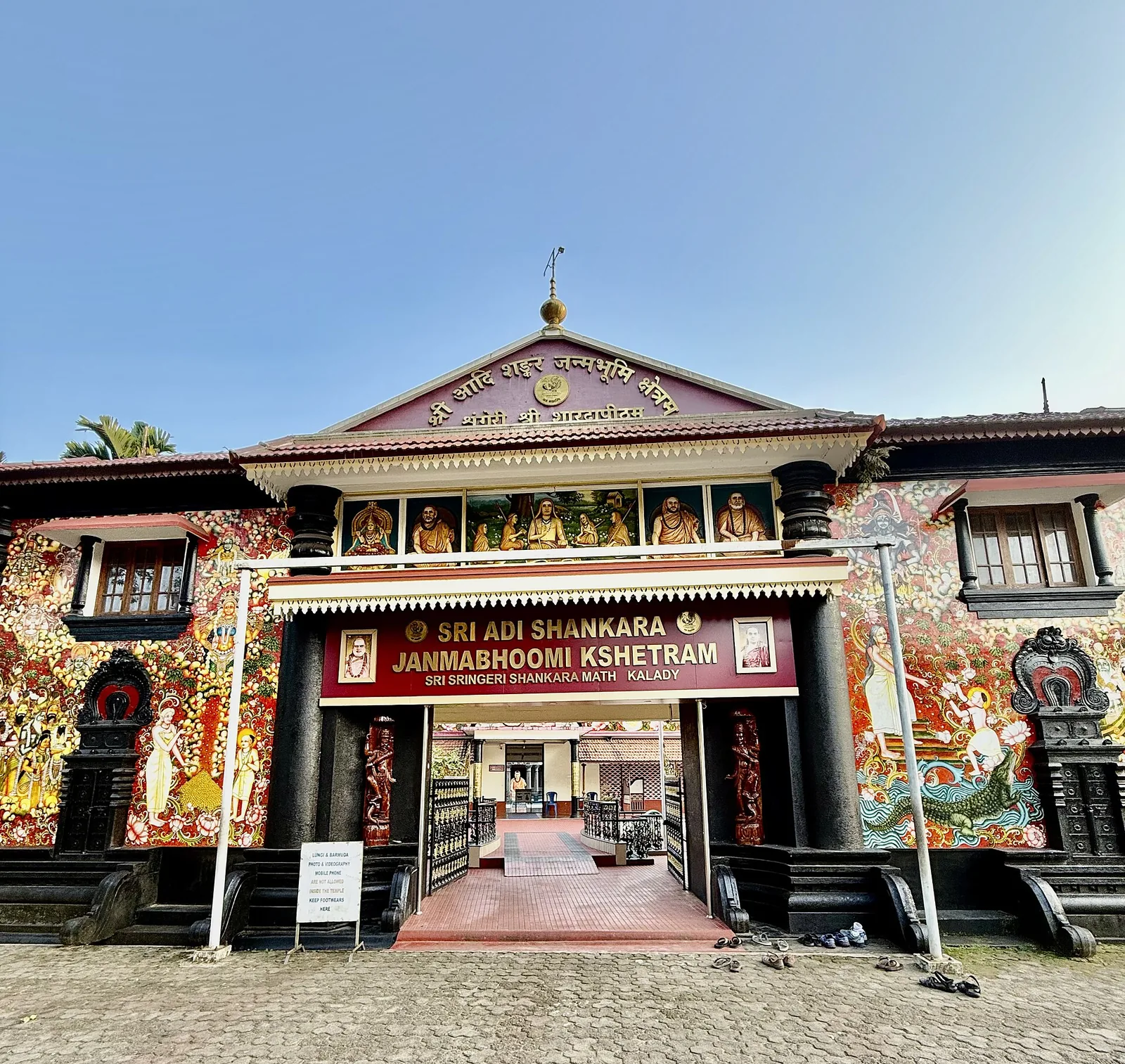
Kalady is revered as the birthplace of Adi Shankaracharya, the 8th-century philosopher who shaped Advaita Vedanta. The nine-storey Keerthi Sthambha Mandapam memorial and the riverside temples make it an important pilgrimage stop on the Periyar.
The Malayattoor pilgrimage
Nearby, Malayattoor Church is a hilltop St Thomas pilgrimage site associated with the apostle’s traditional visit to Kerala. The annual Malayattoor Perunnal draws very large crowds who climb the hill to the church.
The Muziris region
This is also the edge of the ancient Muziris region — the legendary Roman-era spice port whose remains and heritage sites straddle the Ernakulam–Thrissur border around Kodungallur and Pattanam. The Muziris Heritage Project links museums and monuments across that belt. For the colonial chapter of Kochi’s story instead, see the Kochi heritage walk.
Frequently asked questions
Who was Adi Shankaracharya and why is Kalady important?
Adi Shankaracharya was an 8th-century Indian philosopher who consolidated the Advaita Vedanta school and founded monastic centres across India. Kalady, on the Periyar river near Kochi, is revered as his birthplace and is marked by the Keerthi Sthambha Mandapam memorial and associated temples.
What is the Malayattoor pilgrimage?
Malayattoor is a hilltop church associated with St Thomas the Apostle’s traditional mission to Kerala. It is a major Christian pilgrimage site; the annual Malayattoor Perunnal after Easter draws huge crowds who climb the hill on foot.
Can you still see Muziris?
Not as a single site — Muziris was an ancient port whose exact location was lost. Archaeological work at Pattanam and heritage sites around Kodungallur, on the Ernakulam–Thrissur border, are linked by the Muziris Heritage Project into a network of museums and monuments you can visit.